Films by Carmen Kirchweger

Director, Editor
THE STRANGE SOUND OF HAPPINESS

Germany 2017, 89 min
by Diego Pascal Panarello

After years drifting, Diego returns to Sicily. His dream of becoming a musician has not worked out. He has no job and no plans for the future but the sound of an ancient musical instrument, the mouth harp, points the way. From the torrid coasts of Sicily, Diego journeys to the frozen flatlands of Yakutia in Siberia where he becomes part of a prophecy from a century ago. The ‘sound of happiness’ is at last there.––––––––––––––––––––––––––After twenty years, the failed musician Diego returns to his Sicilian hometown of Augusta with no money, job or perspectives. In a dream he has a vision of a Jew’s harp, called Marranzano in Italian. The half vibrant, half buzzing sound of this small musical instrument echoes in the chant of the omnipresent cicadas – and in the sound of an electric shaver. After some initial research at the local souvenir shop, Diego soon finds himself in freezing Yakutia, where the Jew’s harp is called Khomus and considered a lucky charm. In Siberia Diego also meets the most famous Khomus player in the world, a generally respected blacksmith with a striking resemblance to the master from “The Karate Kid”, and learns about the rich mythology of the instrument. People say, for example, that one of the best Marranzani flew into space one night to be played by a Russian cosmonaut. Diego’s research on the universal history of the Jew’s harp merges with the story of his personal pursuit of happiness, while his journey is driven in equal measure by self-questioning, ethnographical interest and associative enthusiasm. (DOK Leipzig, Esther Buss)

The Strange Sound of Happiness

ISLAMIC ECONOMICS I – From Bazar to Wall Street

2012, 104 min
by Jörg Bundschuh, Matthias Heeder, Nigel McCarthy

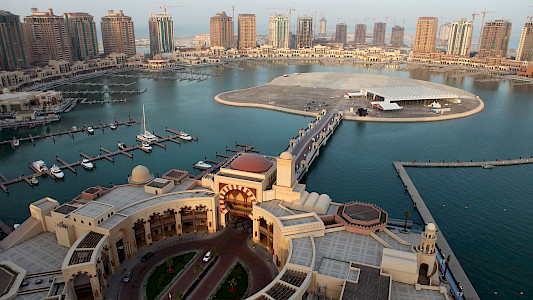
From Bazar to Wall Street:After the financial crisis and the events of the Arab Spring the Western world has been exposed to an alternative, religion-influenced system of economics called Islamic Finance. Indeed, in the shadows of our conventional financial system, Islamic states have developed another option that appears to have been less affected by the crises of recent years. But what is really behind this concept, how did it emerge, and what makes it different from the standard system? From the corporate law firms of London, Europe's centers of Islamic Finance, to the experts and key figures in Turkey, Bahrain, Qatar, Dubai and Abu Dhabi, we find out more about the differences, similarities, and problems within a system that Western economists believe will have a decisive influence on the 21st century.The Price of Paradise:The world’s highest concentration of Muslims is in Southeast Asia, Indonesia alone has about 200 million believers. In Malaysia, Indonesia but also in Singapore Islam is far more liberal than its counterpart in the Arab states, and as such it seems to play a smaller role in daily life, but it is here that a religion-based Islamic Banking concept is showing its most robust growth – figures that Western banks could only dream of. The basics of the system forbid interest charges, and proscribe dealings in industries related to pork products, weapons, gambling or pornography. With its promise of backing all banking transactions with real values, can Islamic Finance and Banking provide the security that Western banks and their increasingly speculative methods no longer guarantee?

ISLAMIC ECONOMICS

Germany 2006, 92 min
by Christa Graf

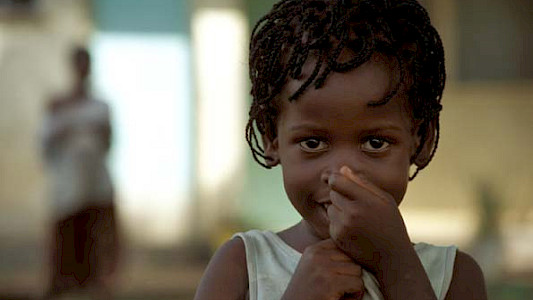
In Uganda, AIDS-infected mothers have begun writing what they call Memory Books for their children. In front of the small brick house Dennis and Chrissi brush their teeth every evening in the dim glow of the oil lamp. The 10-year-old watches his little sister conscientiously as they get ready for bed. Since their mother died of AIDS two years ago they are both orphans, two of more than two million of their kind in Uganda. There are few countries in Africa that have more households run by orphaned children and, despite extensive efforts by the government to raise awareness, experts on the subject predict that nearly 35% of Uganda's population is infected with HIV. When the parents die, the children are forced to look after themselves. A very special project has emerged in Uganda as a result: Memory Books, written by infected parents, mostly mothers, and their children. Aware of the illness, it is a way for the family to come to terms with the inevitable death that it faces. Openly, honestly and compassionately, the books give the children a chance to prepare themselves for life on their own. Values and traditions are passed on in the form of stories, fairytales and songs and the family's history is recorded with the children\'s favorite memories or their parent\'s wishes for the future. The books not only capture immeasurably valuable memories, but also allow members of the family to process some gruesome realities and prepare for the future. Hopelessness and desperation are confronted through the collaborative effort of remembering and recording, a process that inspires unexpected strength and even solace in the face of death. These books will likely be the most important guidelines that these orphans have to lead them through life. German, English, French (dubbed versions), Spanish, Italian (original version with subtitles)

Memory Books