Germany 2020, 52 minby Henry M. Mix, Boas Schwarz
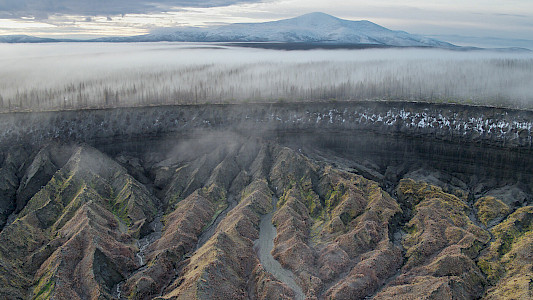
Large areas of Arctic Russia and Siberia used to be no-go zones for decades. For the first time, our team was able to enter some of these zones to discover dramatic degradations in Siberia’s waters, soil and air. The film is highly topical, alarming and provides gripping imagery from a little known and rarely seen frontline of climate change. It features the sheer dimension of the transformations and sheds a light on serious consequences for Siberia’s native human population and wildlife. Gigantic canyons, “mega slumps”, are opening up where endless taiga forest used to be. Hundreds of massive rifts are blasting off from the deep, exhaling methane, which has a 30 times stronger greenhouse effect than carbon dioxide. Rivers run low and large dunes in dry riverbeds make parts of Central Siberia look like the Sahara. Forest fires are rushing over the taiga every year and the once ice-locked Northeast Passage becomes navigable. Enormous layers of permafrost are thawing and are revealing remains of ancient times, including hitherto unknown microbial life forms resembling giant viruses, which are now coming back to life. They contain up to 8000 times more genetic material than all known viruses and its pathogenic potential for humans living today is still unknown. The future of many wildlife populations is at stake. Wild reindeer change their annual migration. Desperate for food, polar bears are rambling across villages and even cities. The reproduction rate of the rare Arctic Ivory gull is decreasing. Last but not least, the life of arctic reindeer herders, which has remained almost unchanged for thousands of years, is under pressure. Their livelihoods are virtually melting away. In the Russian Arctic, climate change is not a question anymore. It is happening, now and at a worrying pace. Scientists say, that the tipping point was reached already years ago. Pandora’s box has been opened. [Albatross]
On Thin Ice
2018, 104 minby Annette Scheurich, Klaus Scheurich
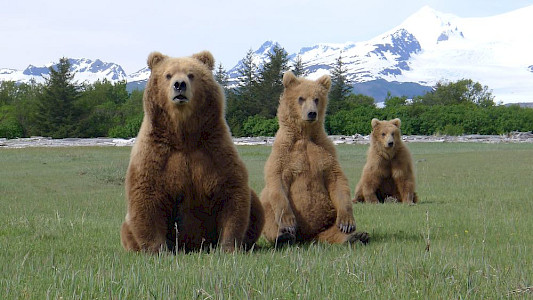
Grizzly bears – up to 2.5 metres tall with top weights of 550 kilos, equipped with sharp claws and predators’ jaws to match. We’ve all heard stories of aggressive bear attacks and close encounters… But what are brown bears really like? Renowned bear biologist Chris Morgan is passionate about uncovering their true nature and has studied them for years. In this stunning two-part documentary, Chris is on the trail of the brown bears on the Katmai Coast in Alaska, where he can get closer to them than anywhere else to witness their social lives and survival techniques in intimate detail, revealing a surprisingly sensitive, tolerant, even tender side to the imposing Grizzly.Offering entertaining and informative insights, Chris commentates the bears’ behaviour and explains the peculiarities of Katmai’s unique habitat and its impact on the local population of grizzlies. Always close to the action, his passion for bears shines through and guides us through an engaging and gripping narrative, packed with surprises and intimate bear moments. The two episodes – The Hunger Challenge and The Private Life of Bears – focus on different central aspect of the bears’ lives, from survival to social life, and together provide a rounded, gripping and visually stunning insight into the unusual lives of the Katmai bears.
Grizzly Encounters with Chris Morgan
Germany 2015, 52 minby Herbert Ostwald
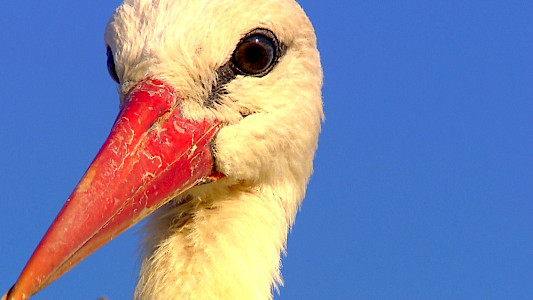
Widely known as heralds of good luck and happiness, storks are very popular animals. This is especially true for Ruehstaedt, a tiny picturesque village in Germany. Every year the rooftops here are home for up to 40 pairs of White Stork, which in turn attract about 30.000 visitors per year to the remote village.For one breeding season the film portrays the fascinating coexistence of man and storks in Ruehstaedt.
Storks - A Village Rooftop Saga
Germany 2011, 52 minby Herbert Ostwald
They steal handbags, open cars and have no respect for humans. The last baboons of the Table Mountain region have become a real plague. The resident population is split into sympathetic protectors and fierce opponents. The animals are deliberately run over by cars, shot and poisoned. According to scientists the baboons have to relearn that humans are a threat in order to survive. Thus a special force has been recruited from the townships: the „Baboon Police“. Day and night the „officers“ follow the marauding baboon troops trying to chase away the monkeys with slingshots, sticks and whips. The documentary follows the „Baboon Police“ and their marauding monkey clans. Is there still a chance for humans and baboons to live in peaceful neighbourhood?
BABOON BANDITS - Monkey Alert in South Africa
Bitte aktivieren Sie Javascript, um auf unsere Website zugreifen zu können.