2022, 101 minby Bertram Verhaag
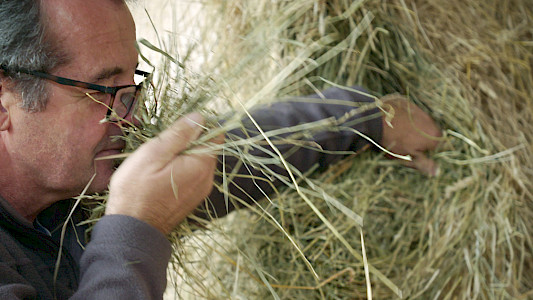
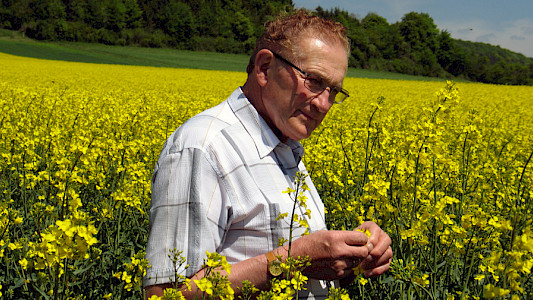
Yes we can! A change in agriculture! NOW!How blind does a society still have to become before it turns against the Agricultural Industry and its fatal consequences? A different kind of agriculture is more than overdue - a CHANGE in agriculture! NOW! An ecological lighthouse project in Hohenlohe (BW) has been showing for 35 years how things can be done differently. Founder of the BÄUERLICHEN ERZEUGERGEMEINSCHAFT SCHWÄBISCH-HALL (BESH) is Rudolf Bühler, a Hohenlohe farmer rebel in the 14th generat
YES WE CAN... Agricultural Change NOW!
2016, 95 minby Bertram Verhaag, Bertram Verhaag
.
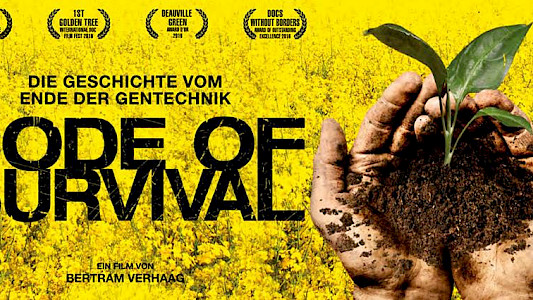
CODE OF SURVIVAL
Germany 2014, 52 minby Bertram Verhaag
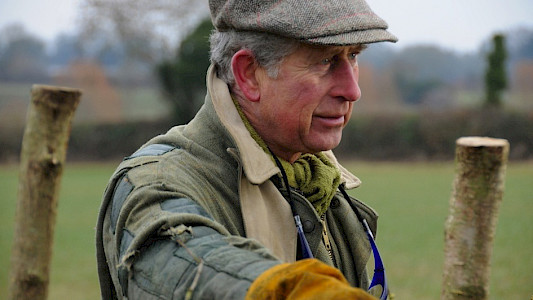
“Is this what paradise looks like? With lush poetic images, Bertram Verhaag takes us on a trip to southern England, to Prince Charles’ organic farm. Be prepared to dismiss a many preconceptions after seeing this film; preconceptions against Prince Charles and against organic agriculture.” (ehp June 2013) This film depicts a Prince, who has the vision to feed the world with organic agriculture and heal damaged nature. Alongside his charismatic farm manager David Wilson, he has been pursuing
The Farmer and his Prince
Germany 2010, 88 minby Bertram Verhaag
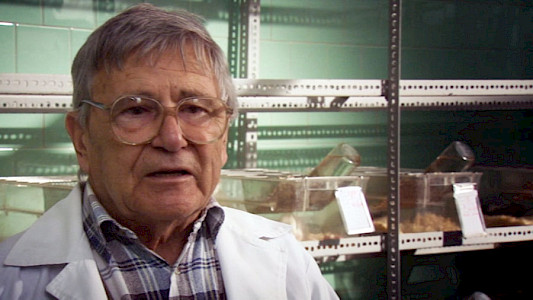
Árpád Pusztai and Ignacio Chapela have two things in common. They are distinguished scientists and their careers are in ruins. Both scientists choose to look at the phenomenon of genetic engineering. Both made important discoveries. Both of them are suffering the fate of those who criticise the powerful vested interests that now dominate big business and scientific research. Statements made by scientists themselves prove that 95% of the research in the area of genetic engineering is paid by the
Scientists under Attack
Germany 2010, 45 minby Bertram Verhaag
In 1998, scientist Dr Árpád Pusztai gives an interview, in which he claims that he wouldn’t eat genetically modified food without its harmlessness beeing proved by long-term tests. He himself has made tests where rats fed with GM potatoes suffered serious diseases, damaged immune system and retarded organ growth. Soon he is under attack by the GM food industry: He‘s forbidden to give out any further information regarding his research, his papers are confiscated and he is denied access to his lab
Arpad Pusztai - Whistleblower
Germany 2009, 65 minby Bertram Verhaag
Imagine that a storm blows across your garden – and that now, without your knowledge and without your consent, foreign and genetically-manipulated seeds are in your vegetable patch which you have nourished and maintained for many years. A few days later, representatives of a multi-national corporate group pay you a visit at home, demand that you surrender your vegetables - and simultaneously file a criminal complaint against you, resulting in a fine of USD 20.000,00 – for the illegal use of pate
Percy Schmeiser - David versus Monsanto
Germany 2008, 52 minby Bertram Verhaag
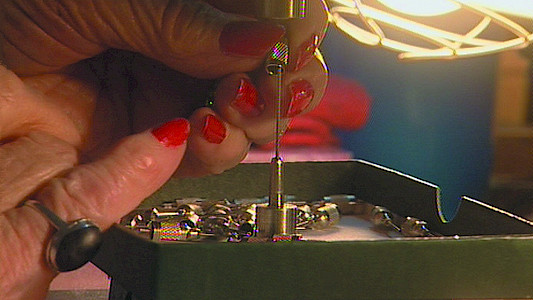
The average age of employees at the Vita Needle Company, a needle and tubing factory near Boston, is an amazing 74 years. Anyone who can make it up the front steps gets hired. In their previous lives, Mary, Marion, Paul, Tom, Ann and Rosa were engineers, nurses, bakers and waiters. Now, they’ve decided against spending their sunset years bored, lonely and inactive. At Vita Needle, they’ve come together and found a new home – and the security of a job for life. Not only that, but they’re busy con
Pensioners Inc.
Germany 2008, 30 minby Bertram Verhaag
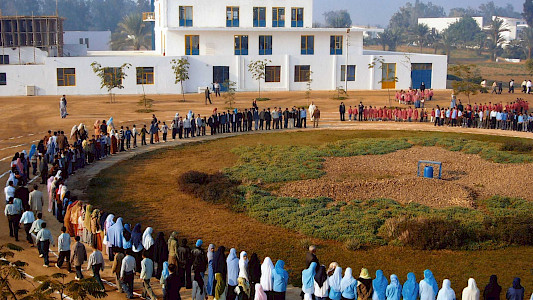
Visitors to SEKEM come away full of enthusiasm for the things they have seen, heard and experienced. 28 years after SEKEM’s founding, what was once an uninhabited expanse of desert 60 kilometres northeast of Cairo has been transformed into a fertile, organically-cultivated landscape. SEKEM is the brainchild of Egyptian entrepreneur Ibrahim Abouleish, a remarkable visionary but also a realist. Through his project, he has pioneered a system of biodynamic farming according to stringent Demeter sta
SEKEM - Born Of The Sun
Germany 2008by Bertram Verhaag
The fascination with and enthusiasm for plastic is just as great as the list of problems, risks and studies associated with its use is long. Most types of plastic that we use every day are nearly non-degradable - and as time goes by, they release many of their often hormonally efficacious additives into the environment. Then, spread by wind, water or illegal waste disposal in the ocean, they are found throughout our entire planet – even in oceanic regions far removed from civilisation. Even toda
Life in Plastic...
Germany 2006by Bertram Verhaag
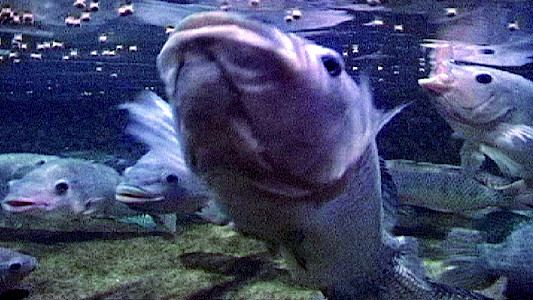
You can find it in buffets, with pasta, on bread, steamed in dill sauce or cooked on the grill. Salmon has become big business. It’s 2004, and Canadian company AQUA BOUNTY is about to obtain market approval for its sterile, genetically manipulated giant salmon. The fish grows to six times the size of its wild relatives – and in only half the time. What's more, it's almost inevitable that individual fish will escape from Aqua Bounty's farm - with devastating consequences for the world's wild sal
Monster Salmon
Germany 2006by Bertram Verhaag, Gabi Kröber
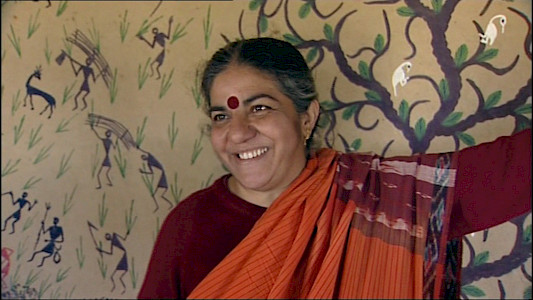
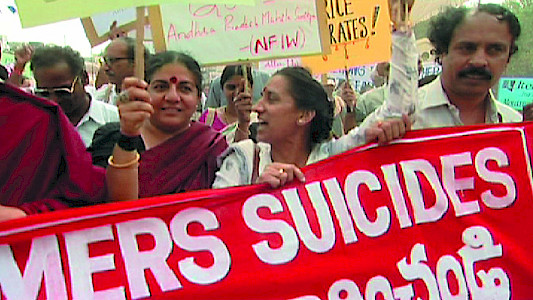
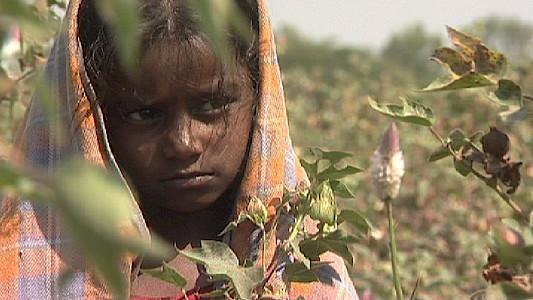
Having harvested disastrous crops of Monsanto’s genetically modified “BT” cotton, many Indian farmers face ruin. The GM cotton, first approved in 2002, was sold at quadruple the price of other varieties – along with the promise of higher crop yields and a reduced need for chemical inputs. Yet the anticipated bumper crop failed to materialize. In fact, the disease and insect-ridden plants forced the farmers to use even more expensive chemicals, driving their bank debts higher and higher. For many
Vandana Shiva - Seeds and Seedmultinationals
Germany 2004, 60 minby Bertram Verhaag
In the mid-eighties science, with the help of genetic technology, finds the key to mastering the earth and especially its creatures. Suddenly, everything seems possible! Years later we embark on a global journey to explore the progressive and continual genetic manipulation of plants and animals: Due to a disastrous crop with genetically modified cotton many Indian farmers face ruin, have to sell one of their kidneys or resort to committing suicide. In Canada genetically modified canola seeds bl
Life running out of control
Germany 2004by Bertram Verhaag
In the mid-eighties, science, with the help of genetic technology, finds the key to mastering the Earth and its creatures. Suddenly, everything seems possible! Twenty years later, we embark on a global journey to explore the progressive genetic manipulation of plants, animals and human beings: In India, a disastrous crop of genetically modified cotton leaves many farmers facing ruin. They resort to selling a kidney - or committing suicide. In Canada, genetically modified canola seeds blow onto
Germany 2003by Bertram Verhaag
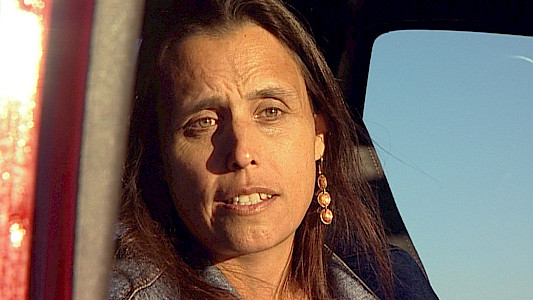
Where’s Winona? This question chases after Winona LaDuke almost everywhere she goes, because this dynamic woman is constantly in motion. Winona is an Anishinaabe from the Mississippi Band of the White Earth reservation in northern Minnesota. Her mother was a Jewish artist; her father, a Native American who was a stuntman in numerous Hollywood Westerns before he became famous in New Age circles as the visionary Sun Bear. Aged just seventeen, Winona travelled to Geneva to speak out about indigeno
Thunderbird Woman - Winona LaDuke
Germany 2002by Bertram Verhaag
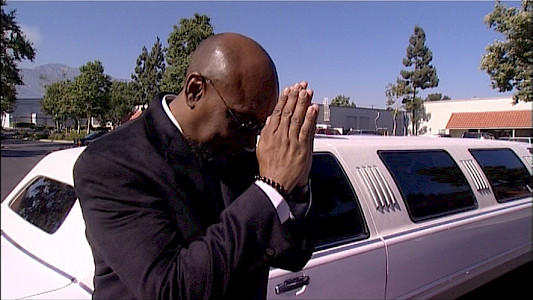
A film about business and money. About searching for the meaning of life. About racism and social and ecological responsibility. A film about the love of life and about spirituality. A film about people doing whatever they do with their whole heart and entire strength. A film about AL BARNUM. AL BARNUM has made it. An Afro-American by birth and brought up in a working-class neighbourhood of Philadelphia, he first worked as a teacher first before switching to a more lucrative job, as a chauffeu
86000 Seconds
Germany 2001by Bertram Verhaag
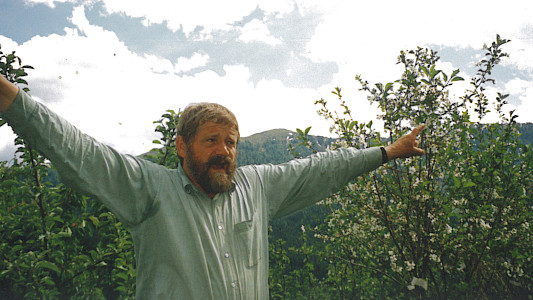
In the southernmost tip of Salzburg – Austria’s “Siberia” – farmer and forester Sepp Holzer has undertaken a radical agricultural experiment on his mountainous land. Going against all the conventional rules – and despite annual average temperatures of 4.5 °C and an altitude of between 900m and 1400m – Holzer has created an edible paradise. He’s caused quite a stir in the process. In forty years of observing nature, unrelentingly joyful experimentation and battles with government agencies, he h
The Agro Rebel
Germany 2001by Bertram Verhaag, Kai Krüger
On a farm in Canada's wheat belt, farmer Percy Schmeiser is sued by agrochemical and seed giant Monsanto for damages worth a quarter of a million dollars. Schmeiser is accused of patent violation - because wind and birds have carried Monsanto's genetically modified canola onto his fields. But Schmeiser isn’t cowed. He responds with a countersuit, citing libel and contamination of his property. His case catches the public’s attention and Schmeiser finds himself in demand around the world as a fi
Killing Seeds
Germany 1991by Bertram Verhaag, Claus Strigel
After “Spaltprozesse” (“Nuclear Split”) and “Restrisiko” (“Residual Risk”) comes Bertram Verhaag’s and Claus Strigel’s third documentary film on the topic of nuclear energy: “Das Achte Gebot” (“The Eighth Commandment”). This film is not an investigation of the scientific arguments for and against nuclear energy. It doesn’t deal with graphite reactors or breeders, or with the effects of radiation. This is a film about one thing: the way we relate to one another. Its focus is on the methods used
The Eighth Commandment
Germany 1989by Bertram Verhaag, Claus Strigel
Behind the barbed wire of the security area at Wackersdorf, Bavaria, building work for the planned plutonium reprocessing plant is in full swing. The facility will soon be ready to start reprocessing spent nuclear fuel. Meanwhile, the Bavarian Ministry for the Environment, the authority responsible for the project, announces a public meeting in Neunburg vorm Wald to discuss the final seal of approval for the plant. The 881,000 people who have submitted written protests are invited to a small hal
Residual Risk, or the Arrogance of Power
Germany 1986, 98 minby Bertram Verhaag, Claus Strigel
The film gives deep insight into the ecological destruction of rural areas; it depicts the nuclear energy policies linked with the construction of a reprocessing plant and it elucidates the peril to which the people are subjected from noxious emissions. In the course of this, the endangered population of the Upper Palatinate is clearly in the foreground with regard to its personal and political process of change. Former loyal citizens are transformed into cautious radicals. People express the
Nuclear Split
You can contribute updates for the current person (Bertram Verhaag).
Bitte aktivieren Sie Javascript, um auf unsere Website zugreifen zu können.