Germany 2021, 58 minby Anja Krug-Metzinger
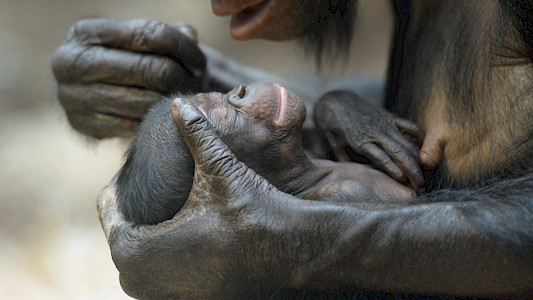
What do animal emotions tell us about ourselves? Where did the human begin and the animal end? This science documentary takes you on a moving journey through the history of feelings and the intellect - with Jane Goodall, Frans de Waal and Volker Sommer.Chimpanzees wage war, behavioural experiments demonstrate that they also show compassion, cooperation, fairness and reciprocity. They reconcile after fights and comfort each other. Chimpanzee societies have customs and traditions that vary from pl
Great Apes
Germany 2019, 128 minby Anne Andersen
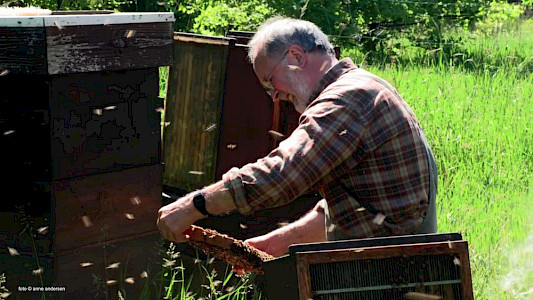
An essayistic approach to the rural beekeepers‘ fight for survival and the endurance of a lively culture that has largely disappeared from view. The filmmaker, who has kept bees herself since childhood, follows the daily working life of beekeepers in the countryside of West Mecklenburg.What is often overlooked, ignored, forgotten, comes into play in Heiner Müller‘s comedy ‘The Resettled Woman’, rehearsed by stage director Armin Petras with actors, farmers, beekeepers in Ludwigslust. The play, w
At the Edge - Beekeepers in Mecklenburg
2019, 52 minby Markus Augé
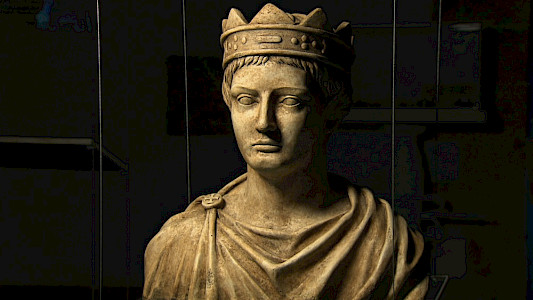
He was a patron of science and a reformer on the one hand, a brutal power-seeker on the other. Frederick II of Hohenstaufen, king and Holy Roman Emperor from 1212 to 1250, was a man full of contradictions.He was a patron of science, a reformer, and might even be called the first modern ruler. Frederick II of Hohenstaufen, ruler of the Holy Roman Empire from 1212 to 1250, was an exceptional figure on the Roman-German imperial throne. Born and raised in the multi- ethnic state of Sicily, his reign
Fredrick II - Holy Roman Emperor
Germany 2017, 88 minby Ulrike Pfeiffer
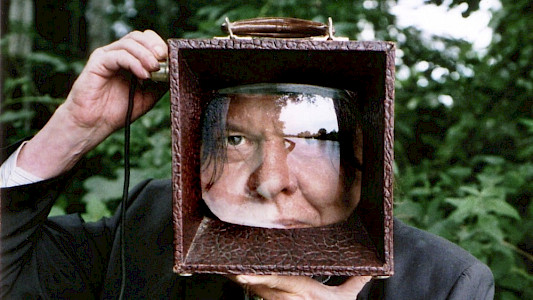
January 2017 saw the death of Werner Nekes, one of Germany's most significant experimental film-makers. He made more than 100 films, often closely linked to his gigantic collection of 40,000 cinematic artefacts. From 1967 to 1978, Nekes lived in Hamburg, at the time the centre of the innovative German film scene. In his capacity as professor at the University of the Visual Arts, he introduced his students to the ideas of radical cinema. Film excerpts tell of Nekes' "life among the pictures", alo
Werner Nekes - The Life Between Images
2016, 60 minby Beatrix Schwehm
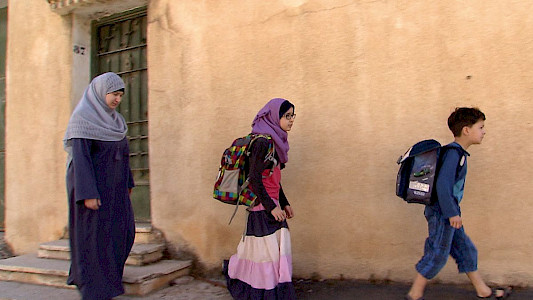
Once again, Beatrix Schwehm follows a German-Algerian family – this time as they make a fresh start in Algeria. An illuminating look at a different world. Louise is the only daughter of an artistic, liberal German family. She marries Mohamed, a Muslim from Algeria. Louise converts to Islam and lives a life of serious commitment to the faith.She misbehaves and scandalises people. The two have now been married for 15 years and live with their three children in Germany. Their older daughter Sainab
Luise & Mohamed - Leaving for Algiers
Germany 2013, 90 minby Eva Gerberding
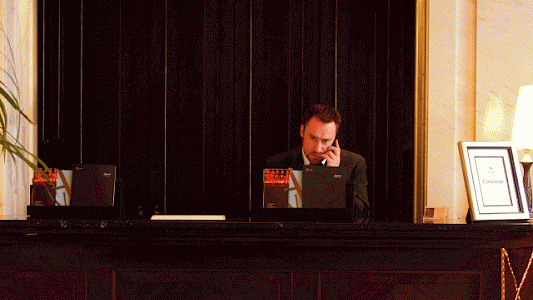
A concierge is a man for every occasion and question. No part of human nature is alien to him. He fulfils all wishes and is always of the utmost discretion. However, we are granted the privilege to have a look behind the scenes. The film CONCIERGES introduces three concierges at grand hotels to the viewer, and takes a closer look at their daily life. Berlin, Moscow, Paris - these cities have always formed a thrilling triangle and the guests of the grand hotels are a representation of this. We as
CONCIERGES
Germany 2013, 90 minby André Schäfer, Eva Gerberding
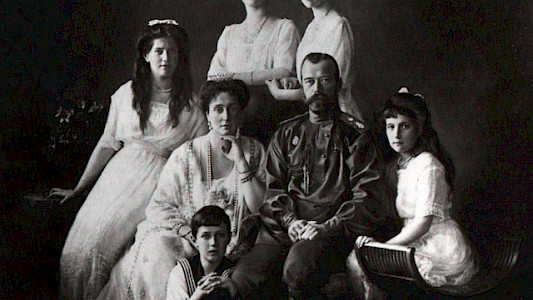
A look at the end of the last Czar and his family at the hand of the Bolsheviks, and the 4 centuries of grand, bloody and war-torn history that proceeded it - the might of the double-eagle throne fascinates us to this day. The killing lasted 20 minutes. Czar Nikolaus II. was the first to die – shot in the heart with a pistol at close range. Then the Bolsheviks shot his wife Alexandra Fyodorovna, his daughters Olga, Tatyana, Maria, Anastasia, the heir apparent Alexei, and four employees of the ro
THE ROMANOVS – Glory and Fall of the Czars
Germany, Taiwan 2012, 83 minby Monika Treut (Hyena Films e.K.)
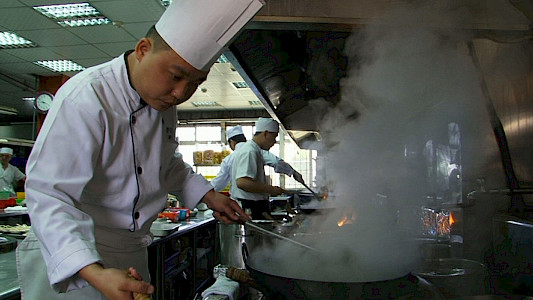
THE RAW AND THE COOKED is a documentary exploration of Taiwan's rich culinary traditions and their relationship to the island's unique culture. Taiwan has one of the best and most diverse cuisines in Asia, as food is the foremost passion of its 23 million inhabitants. Taiwan is also a densely populated island. Urbanisation is proceeding while agriculture is in decline. But, there is a growing movement for environmental protection. In our tour around the island’s coastal regions we seek out peopl
THE RAW AND THE COOKED - A Culinary Journey Through Taiwan
Germany 2012, 106 minby Philip Scheffner
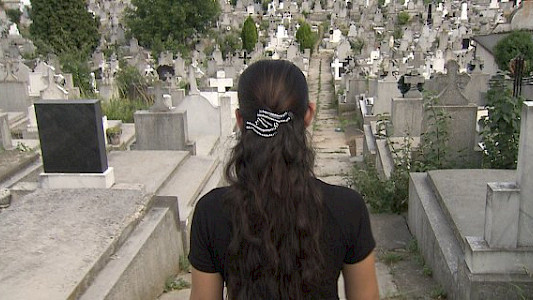
On June 29th, 1992 a farmer discovers two bodies in a corn field in the North East of Germany. Police enqiries lead to the fact that the dead men are Romanian citizens. During the attempt to cross the EU border, they have been shot by hunters. The hunters claim that they had mistaken the people for wild boar. Four years later, the trial begins. It will never be proved, which of the hunters has fired the fatal bullet. The verdict: not guilty. German Press Agency dpa reports: 'From Romania, noone
REVISION
Germany 2012, 87 minby Beatrix Schwehm
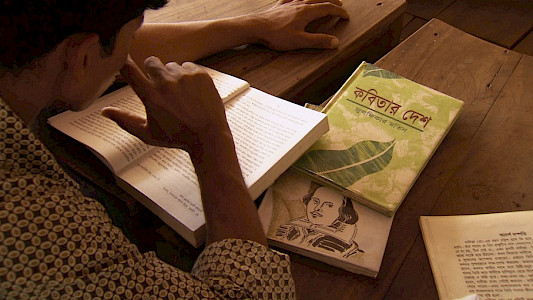
The Bengalese architect MOHAMMED REZWAN builds library boats that can bring books to people even during the monsoon season. The Mongolian author of children’s books, JAMBYN DASHDONDOG, packs two boxes full of books each summer to provide reading material to children in remote areas. The Kenyan librarian ABDULLAHI OSMAN leads caravans of camels loaded with boxes of books to the nomadic tribes bordering Somalia. Despite the heat, wind, rain or snow, they still manage their long journeys - by foot
HUNGRY MINDS - A film about the mobile libraries of this world
Germany, France 2011, 97 minby Angelina Maccarone
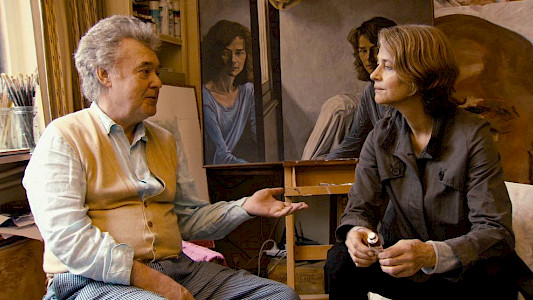
Breaker of taboos, icon avant-gardist – to capture the persona Rampling is a cinematic adventure that can only succeed by being as brave as she has been throughout her career. Staged in countless films and photographs as the classic 'object of desire', The Look takes on her perspective, we see the world through her eyes. Far beyond anecdotic trivia or linear biography Charlotte Rampling fearlessly fathoms the major questions of life with companions and soul mates such as Peter Lindbergh and Paul
CHARLOTTE RAMPLING - THE LOOK
Germany 2010, 100 minby Philip Scheffner
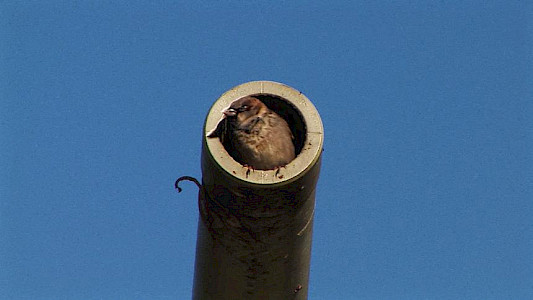
DAY OF THE SPARROW is a political wildlife documentary. It tells the story of a country where theborder between war and peace is disappearing. On November 14th , 2005 a sparrow is shot dead in Leeuwarden, and in Kabul a German soldier dies. These competing headlines are the starting point for director Philip Scheffner, to trace the war using the methods of an ornithologist. On his journey through Germany, the camera circuits a reality of the war – by capturing images of apparent peace.Dialogue
THE DAY OF THE SPARROW
Germany 2009, 58 minby Werner Koehne, André Schäfer
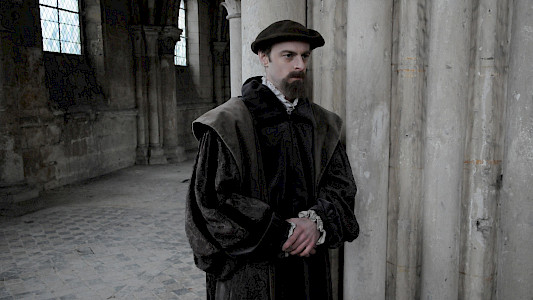
No other person has had quite as much influence on modernity as John Calvin, one of Europe's greatest reformers of the 16th century. 500 years span between his lifetime and ours. Today he has been seemingly forgotten by many, while most of those who do remember him regard him as a character shrouded by clichés. One paints him as a homourless spoil sport, while another one sets him up to be the inventor of sadomasochistic Christianity. Beyond his ever-changing image in history one thing remains:
JOHANNES CALVIN - REFORMER AND AGITATOR
You can contribute updates for the current person (Bernd Meiners).
Bitte aktivieren Sie Javascript, um auf unsere Website zugreifen zu können.