Germany 2024, 55 minby Barbara Trottnow
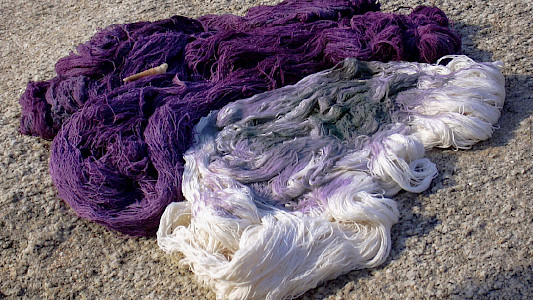
Purple is probably the most precious colour and was long reserved for the rich and powerful. It is extracted from sea snails. In Mexico, a small number of Mixtec people still know how to dye purple right onsite at the Pacific coast. In the south of France, German artist Inge Boesken Kanold has discovered how to extract a purple pigment and paint with it. These two films continue our series 'Colours as bright as nature'. We introduce people who are ensuring the knowledge of ancient natural dyeing
Purple – Rediscovered
Germany 2022, 49 minby Barbara Trottnow
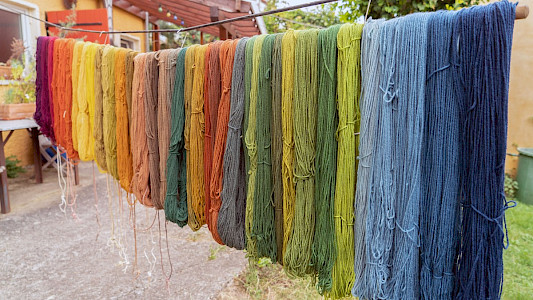
Natural dyeing with plants or sometimes with lice, being thousands of years old, is a very sustainable form of making our world a little more beautiful and colourful. A desire that has always existed!In two short films, we introduce people who successfully strive to apply and develop the old techniques, so they do not get forgotten. We present the DOBAG project in Turkey, where carpet wool is dyed with plants, and we follow Dieter Kaiser in Germany, experimenting with natural dyes for 40 years a
Colours as Bright as Nature
Germany 2022, 29 minby Barbara Trottnow
A woman dresses in men's clothes to find work. This happened in the years 1919 to 1931. For twelve years, no one noticed that the caring family father Joseph Einsmann was actually a woman called Maria.After First World War, Maria was fired from her job. Together with her friend Helene, she went to Mainz for a new start. In her luggage was her husband's suit, she had taken with her after separating. When the two women found his papers in the jacket, they came up with the idea of Maria taking Jose
Mrs Father
Germany 2019, 55 minby Barbara Trottnow
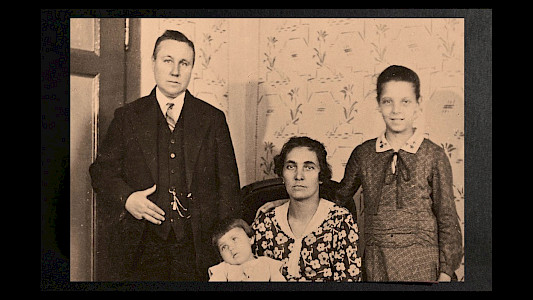
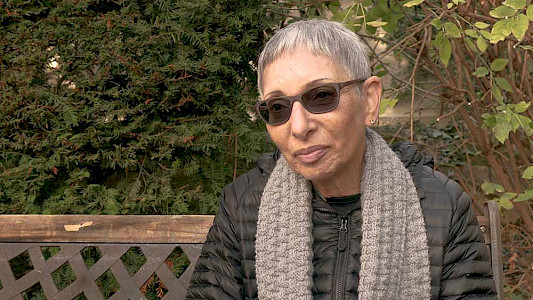
The film accompanies Joan Salomon from New York on a visit to Essenheim. Her Jewish family had to leave the German village in 1934, after the hostilities had become too strong when the Nazis came to power. Only her mother managed to emigrate to America, her grandmother and her aunt were killed in a concentration camp. On the traces of the past she meets old Essenheim women who knew her family.She was born in New York in 1945, but the past also determined her life. Her mother never forgave hersel
Visiting the Past - From New York to Essenheim
Germany 2015, 87 minby Barbara Trottnow
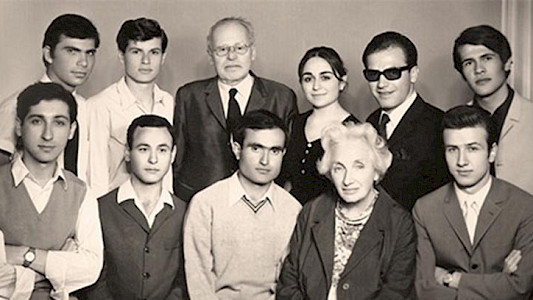
Eduard Zuckmayer migrated to Turkey in 1936. At that time he was a quite famous pianist, but the Nazis banned him from his profession. Atatürk asked him to establish the education of music teachers and bring Western music culture to the country. Eduard Zuckmayer headed the music department at Gazi University in Ankara for 32 years. The film is searching for the tracks he left in Turkey. We met former students being very proud on their professor und trying to work in his tradition. We look back
Eduard Zuckmayer - A Musician in Turkey
Germany 2013, 40 minby Barbara Trottnow
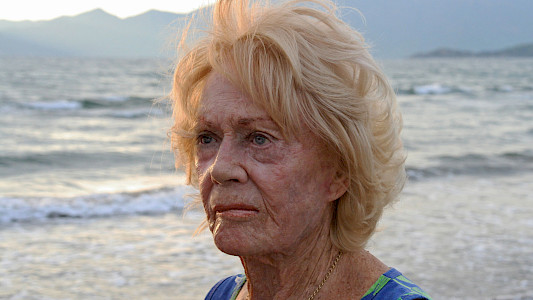
June Haimoff lives since the mid-eighties in Dalyan (Turkey) and is involved there in the protection of endangered sea turtles. When on their nesting beach a hotel should be built, she launched a global campaign, successfully, the hotel was not built and the Iztuzu beach is now part of a Special Protected Area.On site they all call her Kaptan June. Before the Englishwoman stayed in Dalyan, she sailed with her boat through the Mediterranean. In December 2012, she celebrated her 90th birthday, but
KAPTAN JUNE
Germany 2010, 87 minby Barbara Trottnow
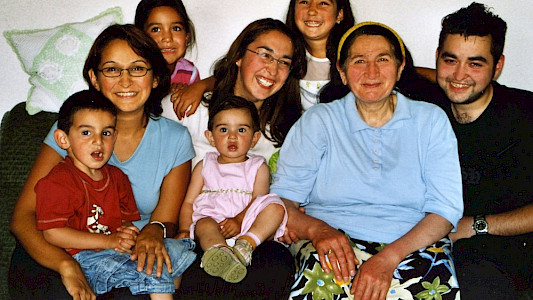
A long-term observation on Turkish women migrating to Germany because they marry a Turkish man living there. Once the men’s families have gone to Germany as foreign workers. A language school in Balıkesir (Turkey) is the starting point for the film. There the women learn German, because only with the proof of German knowledge they get a visa for Germany. The film accompanies three women of a German course on their way in a new life. It shows how they have lived in Turkey and how difficult t
German for Love
Germany 2006, 60 minby Barbara Trottnow
In 1966 Emine was only 18 when she left her Turkish village Incesu alone to work in Germany. She could hardly read, write or calculate, as she had only two years of school. Her family hoped she would help them all out of poverty.It is the story of a migration, one example standing for many.The films interest lies in Emine's remarkable frankness in sharing her life and thoughts. At the age of 56, she is looking back.An important part of the film takes place at Incesu, a remote village in Anatolia
Emine from Incesu
You can contribute updates for the current person (Barbara Trottnow).
Bitte aktivieren Sie Javascript, um auf unsere Website zugreifen zu können.