Germany 2021, 90 minby Daniel Andreas Sager
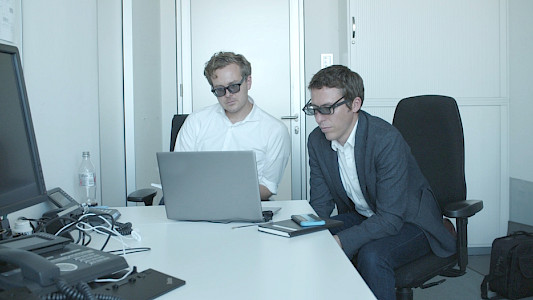
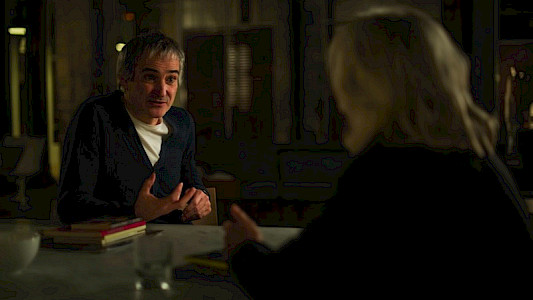
Two years after exposing the Panama Papers, the investigative journalists at Germany's Süddeutsche Zeitung are facing new challenges: the political murder of the Maltese journalist Daphne Caruana Galicia and a mysterious arms dealer linked to the Iranian nuclear missile programme. Then a secret video is leaked to them in the spring of 2019, uncovering a new scandal involving Austrian Vice Chancellor HC Strache. For the documentary film BEHIND THE HEADLINES/HINTER DEN SCHLAGZEILEN, Germany's larg
Behind the Headlines
Germany 2020, 30 minby Jens Schanze
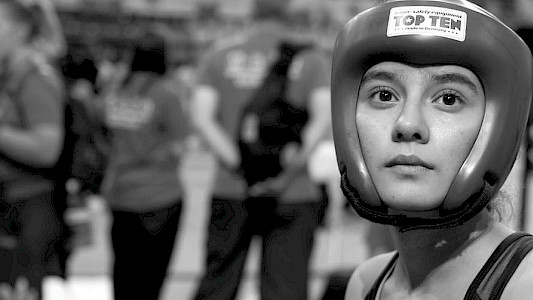
Asude lives in Lower Bavaria. Her grandparents came over from Turkey in the 1970s but have since returned back home. She's currently studying for her school-leaving examinations, but first she wants to become a kickboxing champion. Unreservedly supported by her sisters, Asude competes in the European Championship in Skopje. In her first match she meets an opponent from Turkey.
Proud of You
Germany 2020, 110 minby Marc Bauder
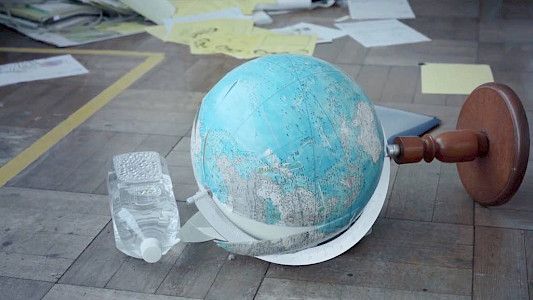
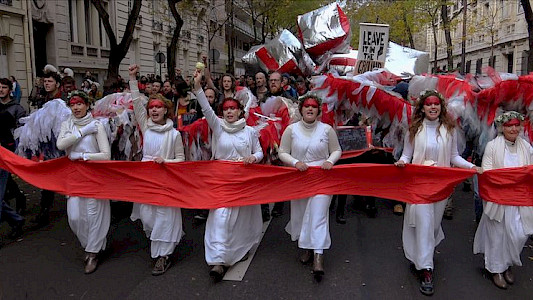
A cinematic essay - inspired by the book "who we were" by Roger Willemsen We may think that we're simply not capable of understanding the increasingly complex problems of our planet, but for these charismatic scientists, that's not enough. Whether it's on the top of the world, in the depths of the ocean, inside the human brain, at the G-20 summit, or in the heart of the International Space Station ISS, they are searching for practical ways to save our world. Considering their drive, we have to a
WHO WE WERE
2019, 96 minby Evelyn Schels
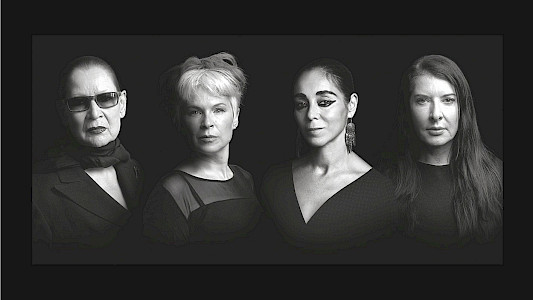
Artists Marina Abramovic, Sigalit Landau, Shirin Neshat & Katharina Sieverding have been politicized by experiences with war, violence and suppression and integrated them into their work, using the most personal feature available: their own bodies. We accompany them on an emotional journey, reexperiencing the conflicts that have shaped their consciousness. The 4 women originate from different cultures, whose struggles epitomize the grand conflicts of our time. (auTLOOK)
Body of Truth
Germany 2019, 128 minby Anne Andersen
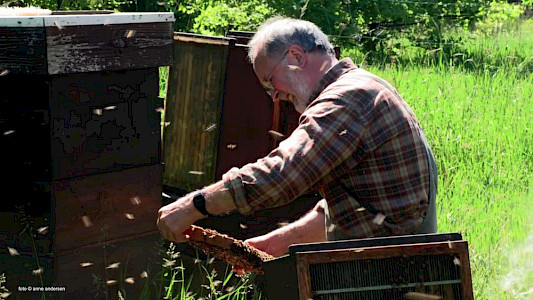
An essayistic approach to the rural beekeepers‘ fight for survival and the endurance of a lively culture that has largely disappeared from view. The filmmaker, who has kept bees herself since childhood, follows the daily working life of beekeepers in the countryside of West Mecklenburg.What is often overlooked, ignored, forgotten, comes into play in Heiner Müller‘s comedy ‘The Resettled Woman’, rehearsed by stage director Armin Petras with actors, farmers, beekeepers in Ludwigslust. The play, w
At the Edge - Beekeepers in Mecklenburg
Germany, Austria 2019, 218 minby Thomas Heise
The film picks up the biographical pieces of a family torn apart through the end of the 19th and into the 20th century.The used material is what remained of Thomas Heise’s family.It is about people who by chance found each other, only then to lose each other.Now it is their descendants, their children and grandchildren who are beginning to disappear.Fathers and mothers, sons and brothers, the affairs, the hurt and the joy in landscapes of transition – each bearing the intertwining, hallmarks of
Heimat is a Space in Time
Germany, Austria 2018, 85 minby Lilian Franck
We lack knowledge when it comes to our health. There are a very few institutions we can rely on for competence and independence in this area. Doctors, of course, and the Ministry of Health, as well. They, in turn, rely on the World Health Organization. What if the trust and responsibility that billions of people around the world relinquish and transfer, are not justified?This personal investigation tells the story of how the WHO has been infiltrated and influenced by industry, and how the member
trustWHO
Germany 2018, 90 minby Esther Zimmering
Actress Esther Zimmering's directorial debut covers three generations of German-Jewish life in Germany, the GDR and Israel. Using archive footage and interviews with her family members, Zimmering uncovers the secrets and inconsistencies in her family's history. A history which saw Esther's grandmother Lizzi and her cousin, great-aunt Lore, being the only ones in the family to survive the Holocaust and then become involved in the creation of two new states – constructing Socialism in the former G
SWIMMING POOL AT THE GOLAN
Germany, France 2018, 99 minby Margarethe von Trotta
Internationally renowned director Margarethe von Trotta takes a closer look at Bergman’s life and work and explores his film legacy with Bergman’s closest collaborators, both in front and behind the camera, as well as a new generation of filmmakers. The documentary presents key scenes, recurring themes in his films and his life, and journeys to the places at the center of Bergman’s creative achievement and the focal points of his life such as the Royal Dramatic Theatre in Stockholm, locations an
Searching for INGMAR BERGMAN
2018, 91 minby Bettina Borgfeld
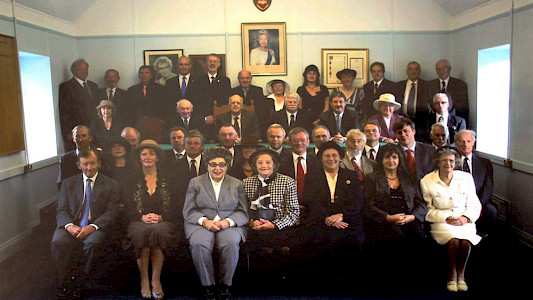
Two billionaire brothers buy themselves into the island of Sark, where only 600 inhabitants live - till then in harmony with nature and with a strong sense of community. A battle begins that unfolds a conflict in an idyllic setting. The brothers remain phantoms in the film as they never enter the battlefield themselves.
The Price of Paradise
2017, 91 minby Judith Keil, Antje Kruska
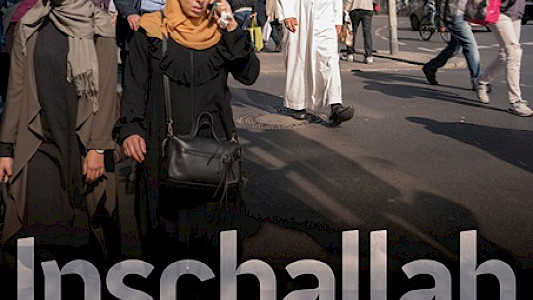
Der Film begleitet den Imam bei seiner täglichen Arbeit, in der er für Familienprobleme Rat geben soll und zugleich Stellung beziehen zu politischen Fragen der Öffentlichkeit. Dabei führt er ein offenes Haus, indem er immer wieder zu Diskussionen einlädt. Während er in seiner muslimischen Gemeinde oft gegen eine zu strenge Auslegung der Religion ankämpft, steht er in der deutschen Öffentlichkeit unter Verdacht, zu konservativ, wenn nicht sogar radikal zu sein."Dabei entwickelt der Film eine stim
INSCHALLAH
2017, 86 minby Filip Antoni Malinowski
After 21 years of continuous failure in UN climate change negotiations 195 nations, 20.000 worldwide negotiators meet at a private airport shielded by the military in the north of Paris for a last attempt to save our planet. Behind closed doors these delegates have to agree on the first global climate change agreement that shall operate for the next decades and be a milestone in multirateral diplomacy. An agreement that will impact each human on earth, born or unborn. A negotiation that will dec
Guardians of the Earth
2016, 96 minby Till Harms
687 candidates, 10 places, 9 instructors in 10 days. Year for year, the entrance exam at the National Acting School in Hanover is a special challenge for the candidates, but it is also an extraordinary endurance test for the staff. In the battle for the best talent, the examiners are just as passionately involved as the candidates themselves in filling the few coveted admissions. Up close and personal with the instructors and professors, the film focuses on an unknown side of the process, that o
The Audition
Germany, Switzerland, Colombia 2015, 97 minby Jens Schanze
Jairo Fuentes is the young leader of the community of Tamaquito, a village in the forests of northern Colombia. For centuries, they’ve hunted in the mountains, foraged for fruit and reared hens, sheep and cattle.But the Wayúu community’s way of life is being destroyed by the El Cerrejón coal mine. This vast chasm extends for 700 square kilometres, making it the world’s largest open-cast coal mine. The coal is exported all over the world. In Germany, the United Kingdom and Israel, in the Netherla
LA BUENA VIDA – THE GOOD LIFE
Germany 2012, 93 minby Dirk Uhlig, Leopold Grün (freier Filmemacher)
A small one-street village in the open landscape of East Germany, marked by the political changes of the past decade and long forgotten by the rest of society.FAR END OF THE MILKY WAY (aka RANDLAND) is a trip to the periphery of society. How do people like Maxe the farmer, mother-of-five Gabi or technician Harry, who dreams of travelling to Norway’s North Cape in his camper van and experiencing one white night there, actually live?Wealth and jobs are scarce around here, but people want to stay r
FAR END OF THE MILKY WAY
Germany 2011by Bettina Borgfeld, David Bernet
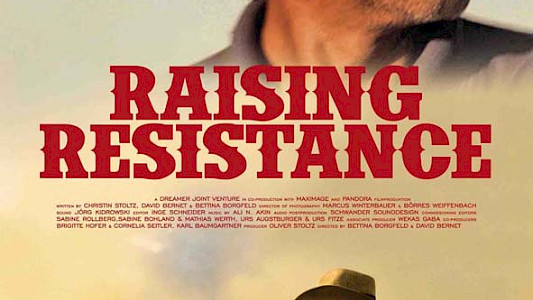
The ground in Paraguay is perfect for the cultivation of soy. In recent years, countless acres of forest have been chopped down to make room for the growing of this protein-rich bean. The land of a farmer named Geronimo is now completely surrounded by soy plantations. These are generously sprayed with pesticides - poison that only the genetically modified soy plants are immune to. Unfortunately, the pesticides spread farther than the boundaries of the soy fields. So not only is there less and le
Raising Resistance
Germany, Switzerland 2011by Bettina Borgfeld, David Bernet
Germany 2010, 91 minby Dörte Franke, Marc Bauder
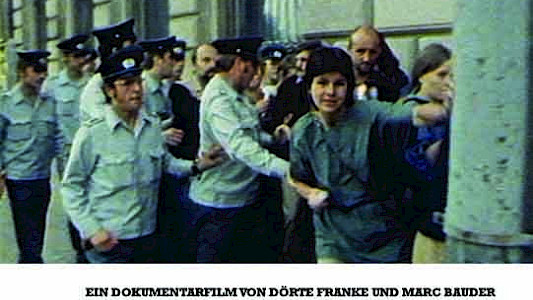
“You have no chance, but use it!” That’s roughly how the power structures in East-Berlin in December 1989 could be described. On one side the apparatus of the state, which desperately clung to power. On the other side a heap of fragmented opposition groups, from the Neues Forum to Demokratischer Aufbruch - estimates assume there were 600 activists at the time - and a population who were only just beginning to see themselves as a people. Representatives of both sides faced each other at the Round
AFTER THE REVOLUTION
Germany 2009by Bernhard Sallmann
Die Träume der Lausitz
Germany 2009, 90 minby Jens Schanze
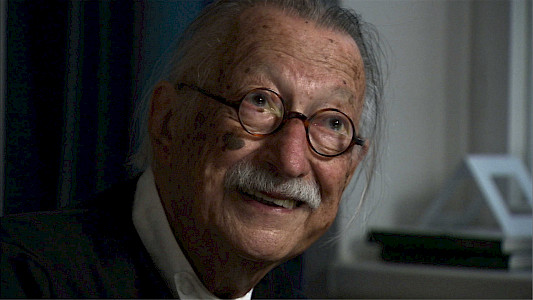
Will man go beyond biology? It's an age-old dream to create intelligent machines that equal their human creators. Computer experts all around the world, like Raymond Kurzweil and Hiroshi Ishiguro, strive to fulfill their bold visions. Meanwhile, of all people one of the pioneers of the computer age, Joseph Weizenbaum, strives against the limitless faith in the redemptive powers of technology.A fascinating yet uncanny and sometimes grotesque journey into science reality.90mins or 58mins (on reque
PLUG & PRAY - Of Computers and Other Human Beings
Germany 2007by Jens Schanze
Otzenrath 3° kälter
Germany 2007, 73 minby Dörte Franke
The documentary STUMBLING STONE (73 min) is a portrait, a road movie and the story of the largest decentralized memorial in the world. The focus is on the conceptional artist Gunter Demnig, who has set 12 000 names of forgotten Nazi victims in concrete of Germany's and Europe's pavements. The project is declined by members of the Jewish community, Neo-Nazis are fighting it, and in some cities it is illegal. But behind every stone stands a committed helper and private donations. They see a possib
Stumbling Stone
Germany 2005by Jens Schanze
Winter’s Children – The Silent Generation
Germany 2001by Jens Schanze
By 2045, twenty localities in Germany will be resettled because of brown coal open pit mining. The film Waste Land follows the inhabitants of three villages in the Rhenish coal-mining district during their last years in their old home and documents how an entire region prepares for its collective relocation. “I wish you much joy planning your new house!” That is what the director of the Rheinbraun AG calls out to several dozen people in the gym of a small town near Cologne. Floor plans for one-
Waste Land
You can contribute updates for the current person (Börres Weiffenbach).
Bitte aktivieren Sie Javascript, um auf unsere Website zugreifen zu können.