Germany 2018, 52 minby Arpad Bondy, Harald Schumann
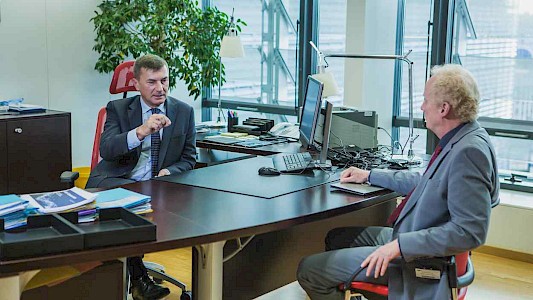
In Europe the information technology of every state administration and its institutions – military, police, fiscal authorities etc. – is based on Microsoft programmes. This exposes us to a high technical and political security risk. Is our digital sovereignty at stake?Microsoft is generally considered the dinosaur of the digital age, lagging behind data giants Google, Facebook or Amazon. However, the US Corporation is more powerful today than ever before. The power of its monopoly is nowhere more apparent than in Europe: from Finland to Portugal, from Ireland to Greece, the information technology of every state administration and its institutions – military, police, fiscal authorities etc. – is based on Microsoft programmes. But since digital systems are constantly expanding and increasing in importance, countries are becoming more and more dependent on this single company. And increasingly vulnerable to the weak points inherent in Microsoft. The worldwide “WannaCry” cyber attack, for example, occurred as a result of security vulnerability at Microsoft. This dependence causes continually rising costs – around 50 billion euro in licensing fees every year – and prevents technical progress in state authorities. It systematically undermines European procurement and competition laws and leads inevitably to the company having an overwhelming political influence. And it exposes state IT systems along with citizens’ data to a high technical and political security risk. Is Europe’s digital sovereignty at stake?
THE MICROSOFT DILEMMA
Germany 2013, 58 minby Arpad Bondy
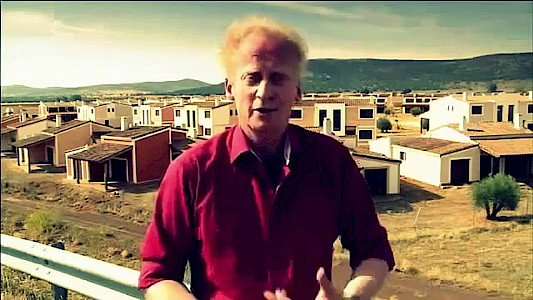
Billions of euros were poured into European financial institutions to prevent them from failing. But where is this money really going? Who do the ailing banks owe? 50 billion euro to Greece, 70 billion to Ireland, 40 billion to Spain – one Euro state after another has found itself forced to prop up its banks by pumping in huge sums of money to cover the losses that the financial institutions themselves incurred from bad loans. But where are these billions of euro actually going? Who is benefiting? Award-winning business journalist Harald Schumann criss-crosses Europe asking this simple question and receives some intriguing answers. The rescued parties are not in the poorer Euro countries but predominantly in Germany and France. A large share of the money ends up with the creditors of the banks who want or have to be rescued. And although these investors have obviously invested very poorly, they are being protected against any losses at the expense of the general public. Why is this happening? Who is receiving the money? Harald Schumann succeeds in making this complicated topic understandable for everyone, while putting forward his own – both knowledgeable and courageous – opinion. Maybe the most passionate film ever made on the banking crisis.
THE SECRET BANK BAILOUT
Germany 2012, 89 minby Peter Heller (c/o filmkraft)
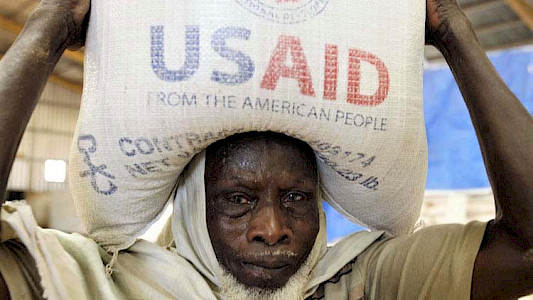
500 billion US dollars in a half-century - and no end to the aid is in sight. Prominent "do-gooders" of the entertainment industry such as Bono, Bob Geldorf, Angelina Jolie and Madonna, pressure the politicians to pump more development aid into Africa. An ever-increasing number of African economic experts and sociologists have begun to criticise this flood of aid. Our documentary film project follows the voices of protest that are being raised in Africa. Working in cooperation with scholars and journalists from West and East Africa, we will attempt to present the problems of development aid from an "African" perspective.
SWEET POISON
Germany 2004, 108 minby Andres Veiel
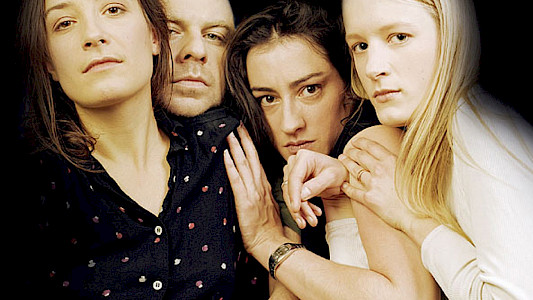
Four acting students are the focus of Andres Veiel’s long-term observational documentary. We meet Stephanie, Karina, Constanza and Prodromos while they are preparing for their acting school auditions. The selection procedure takes months; it is a trying, nerve-racking time spent vacillating between hope and anxiety. All four make it into the school, but their initial euphoria about commencing their studies – including group exercises, role play and obligatory fencing lessons – is soon followed by deflation in the face of merciless criticism of even the slightest shortcoming by their tutors. In this way, their passion for their chosen vocation is constantly put the test.The four students couldn’t be more different: Karina appears to have very few problems; Stephanie, however, has to endure several auditions. Constanze immerses herself in her roles, whilst Prodromos always seems to be at odds with himself, his roles and his dreams. Andres Veiel: “We observe the struggles of the protagonists; how they try not to get stressed out or lose sight of themselves by worrying about the discrepancy between their expectations and their abilities. We accompany them on their search for identity and an image, but we also follow their progress towards maturity as actors and as individuals. Then, at the end of their studies, comes the real test: trying to gain a foothold in the profession. All of a sudden, they find themselves faced with a new set of questions. What is the nature of success? How high is the price for achievement? And what has become of their original dreams and aims, seven years on?”
Die Spielwütigen - Addicted To Acting
1990, 90 minby Harriet Eder, Thomas Kufus
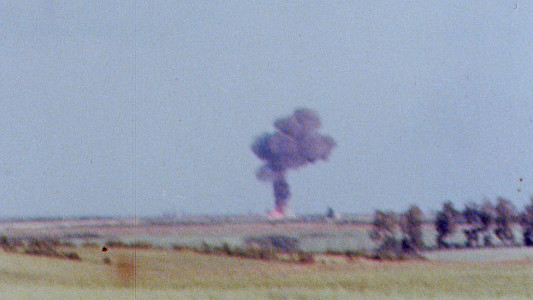
Unique film material, never previously screened, shot by six German soldiers as they invaded the Soviet Union in WW II. The specific angle - that of amateur film-makers - and the use of 16mm colour film, means the film provides a completely different picture of the Eastern Front.The men who took the pictures have been traced and interviewed. Their enthusiasm about the technical quality of the pictures gives the film a cruel insight into the perfection of the Nazi machine. [IFFR 1994]
My Private War
Bitte aktivieren Sie Javascript, um auf unsere Website zugreifen zu können.