Germany 2022, 45 minby Antje Christ
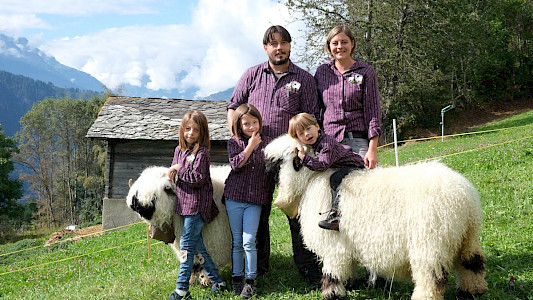
We spend a year filming the Swiss Schnydrig family and their 50 Blacknose sheep: from the birth of the lambs and migration to alpine pastures to the annual highlight: the Blacknose Beauty Contest.Fabienne and Kilian Schnydrig and their three children live 1400 metres high up in the village of Mund, in the Swiss canton of Valais. For generations, people in this region have bred a special type of sheep, the Valais Blacknose. The sheep have adapted to the rugged terrain of the Swiss Alps and lived in the area for many centuries. In the past, the Blacknose was reared for its meat and wool. Today, breeding is an ambitious hobby which the people of Valais pursue with exceptional passion. Hence their concern about the growing number of wolves in the region. Last year, over 300 sheep were killed. To protect their animals in the high mountain region, the Schnydrig family is erecting kilometre-long fences again this year and hiring a shepherd to stay on the alpine pasture all summer and round up the sheep at night to protect them against attacks from wolves. When the Blacknose sheep return to their shelters in the autumn, the best time of year begins for the breeders. At the week-long Shepherd Festival, everything revolves around the Blacknose sheep. The animals are washed, combed and smartened up for the annual beauty contest. This is also the time when villagers and their relatives come together to celebrate Valais traditions.
The Best Looking Blacknose Sheep
Germany 2019, 52 minby Antje Christ
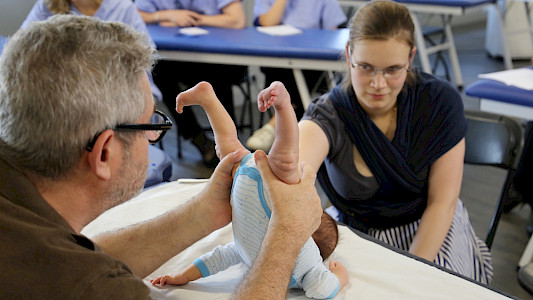
Osteopathy is gaining more and more supporters, and yet the manual healing method with its holistic approach is controversial and not recognised everywhere. We show where it can help and where it has its limits.Osteopaths can feel tension in the body and gently release blockages, treating the musculoskeletal system and internal organs with their hands only. They view the body as a unit and try to activate its self-healing powers. Their work is based on cause-and-effect chains, the basic idea that the musculoskeletal system, skull and spinal cord, as well as all internal organs, are all linked as a system, connected by fine tissue networks – the fasciae. Osteopaths thus often find the cause of pain far away from the symptom, in a completely different part of the body. Knee problems might be treated by dealing with the hips or back, or migraines viewed as a problem with blood flow in the liver. More and more patients are turning to osteopaths as an attractive alternative to conventional medicine. Critics point out the lack of studies backing up their claims, and the profession is not officially recognised everywhere. Yet researchers around the world are increasingly able to prove the positive effects of osteopathy. We travel to the USA, birthplace of osteopathy, as well as to Europe, and show what happens under the osteopath’s hands, where the manual healing method can help and where it has its limits.
Osteopathy - Healing Hands
Germany 2018, 90 minby Antje Christ, Dorothe Dörholt
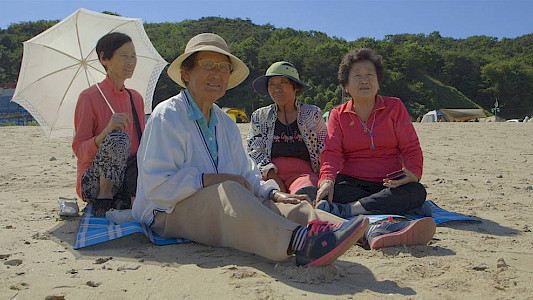
Today, Asia is „missing“ 170 million women. The fight for women as tradable commodities has begun.Asia is „missing“ 170 million women because parents are choosing to give birth to boys and aborting daughters. This „gendercide“ is the result of politically motivated population control policies imposed by the West more than 30 years ago. Today, millions of men of marriageable age are unable to find wives and more than ever before women are being traded like commodities. In China, mothers who were once expected to abort female foetuses are today desperately advertising their sons at marriage markets. In India, villagers who refuse to give birth to daughters themselves are pooling their money to buy a bride at auctions to marry one man but also serve other bachelors in the village. With the growing surplus of men, crime rates are rising and threatening the internal stability of these nations. Scientists expect other regions like Africa and the Arab world to follow suit as sex determination technology becomes ubiquitous and affordable. We are facing a humanitarian crisis which some scientists believe may threaten world peace. Zoning in on personal stories from South Korea, China, India and Vietnam, the film explores the regional and global consequences of this gender imbalance in Asia. With previously unseen archive material and eyewitness reports, the film also looks back at the years after the Second World War and examines the dubious role of international organisations and their influence on worldwide family planning. A revelatory documentary that weaves together elements of politics, economics and medicine, showing women – both then and now – as the plaything of political and criminal interest groups.
Missing Women
2017, 52 minby Antje Christ
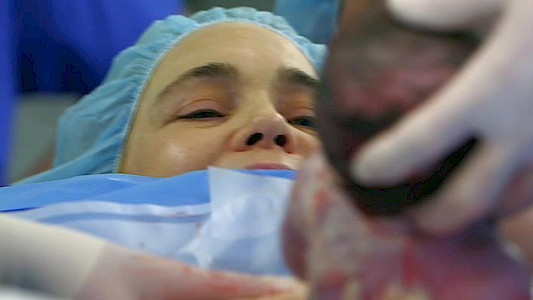
Within just twenty years, the number of caesarean sections performed in industrial nations has more than doubled. Caesareans undoubtedly save lives. But in some countries, more children are born by c-section than vaginal delivery – a development that can have consequences. Caesarean sections have always posed a high risk for mothers. But recent research now reveals they can also be the cause of various illnesses in the child, such as type 1 diabetes, asthma and allergies. At the same time, the theory that exposure to different germs during a natural birth can help prevent diseases is becoming more widely accepted. Nevertheless, in Brazil, for example, more children are born surgically than by vaginal delivery, many by so-called caesarean delivery by maternal request. In China too, many women choose to have a c-section – although for a different reason. Here, superstition is still widespread, so parents choose what they hope will be a favourable date for the birth of their child. This film takes a look at reasons behind the different c-section rates in the neighbouring countries of Germany and France as much as in China and Brazil.
C-SECTION CONTROVERSY
Germany 2016, 44 minby Dorothe Dörholt
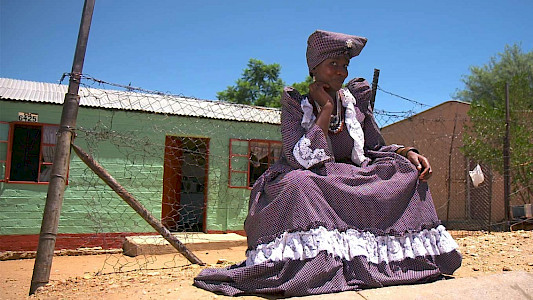
At the beginning of the 20th century, the German colonial power attempted to wipe out the Namibian Herero tribe. Some of them survived and, as a mark of triumph, adopted the dress style of their enemies. 22-year-old designer McBride Kavari wants to modernise this costume, which has been worn with pride to this day, thereby incurring the wrath of the tribe elders.
New Clothes - Dark History
2016, 52 minby Antje Christ
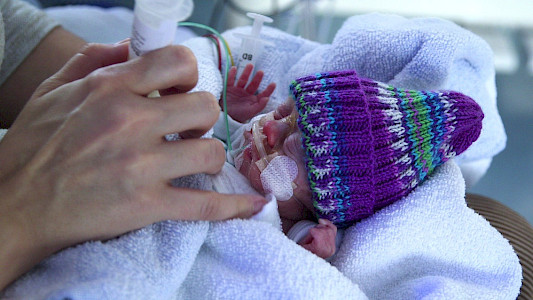
More and more babies are born too early: 15 million premature births worldwide. Some of them come into this world at only 22 weeks and weigh less than 500 grams: the "extreme preemies”. Not that long ago, few people would have believed that such prematurely born babies stood a chance of survival. Today, survival rates for these tiny beings have increased significantly. Following the cases of four extremely premature babies in Germany, France, Great Britain and Japan, this scientific documentary takes a look at international treatment methods in neonatology. It shows the results of recent brain research, presents a long-term study and also follows the worldwide ethical discussion on when life begins. Globally, doctors have a lot of freedom to decide the age at which a child can be kept alive. While doctors in Japan have been legally required to save lives from 22 weeks since 1995, in China premature babies younger than 28 weeks rarely survive. Within Europe too, there are stark differences. And intensive medical treatment has its price. The care of a premature baby can cost up to € 150,000. For some, this factor, too, should be taken into consideration when a decision is made about when life should begin.
A Handful of Life - Extreme Preemies and Theis Cahnces
Germany 2016, 45 minby Antje Christ
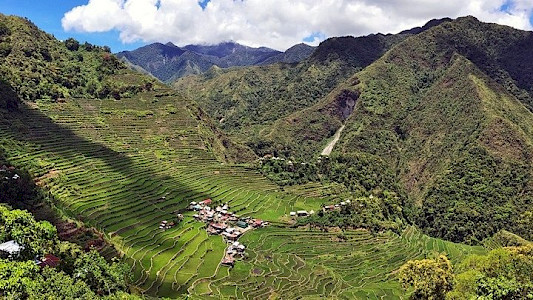
Over 2,000 years ago, the Ifugao mountain people began building a unique natural landscape: the world-famous rice terraces in the Philippine Cordilleras. Through a sophisticated system of bamboo shoots, canals, dams and sluices, water is routed downwards through the terraces from field to field. This unique rice-growing concept was declared a UNESCO World Heritage Site in 1995. However, working high up in the fields is arduous and brings little financial reward. Many of the younger Ifugao no longer wish to pursue this backbreaking way of life and leave their villages for tourism jobs in neighbouring towns. People come from all over the world to see the very thing that the young Ifugao want to leave behind: the rice terraces and traditional Ifugao way of life. But if the fields are not cultivated constantly, they soon fall into disrepair. Will it be possible to maintain the terraces while also doing right by the young generation of Ifugao? Apart from the breathtaking landscapes of Hungduan or Batad, the film features scenes from the Imbayah Festival in Banaue and explores the various efforts being made to keep alive the unique cultural landscape and rich tradition of the Ifugao.
Close to Heaven - The Rice Terraces of the Philippines
Bitte aktivieren Sie Javascript, um auf unsere Website zugreifen zu können.