2023, 90 minby Moritz Springer
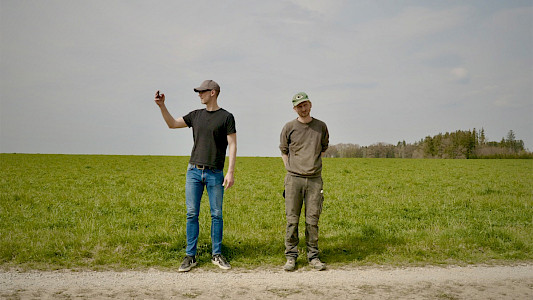
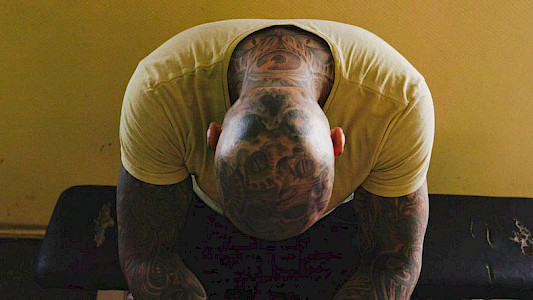
Far beyond merely offering an alternative model for agriculture, a collective of potato-growers straddles the line between an inspiring vision and sobering reality.Over a period of nine years, this documentary observes the Kartoffelkombinat, a collective of potato-growers in Munich, on its way to becoming Germany’s largest agricultural cooperative. The efforts of the organization’s two founders have been in service of a grander vision: finding an alternative to the capitalist mode of production.
The Combine
Germany 2023, 92 minby Grit Lemke
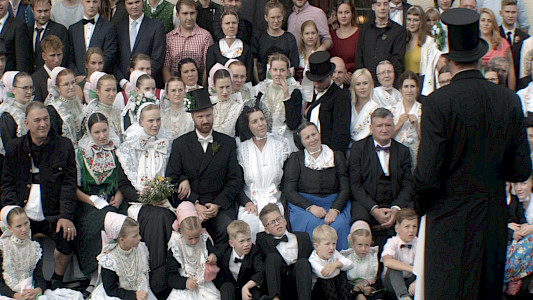
What makes us who we are? In search of her own roots, the director explores an indigenous people in Germany: the Sorbs, the smallest Slavic people. Their language and culture are severely threatened by centuries of oppression. But a new generation no longer wants to accept this: They are committed to self-determination, come to terms with the trauma of losing their villages because of lignite mining or redefine being Sorbian as alternative, anti-fascist and feminist. And the German Anna becomes
We call her Hanka
Germany 2019, 79 minby Annekatrin Hendel
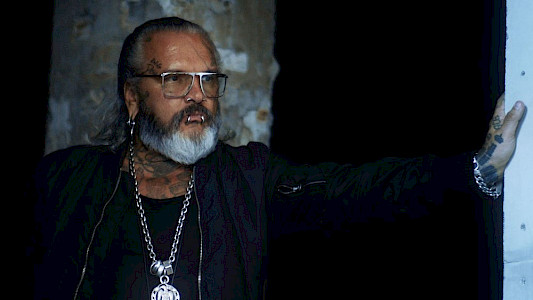
Sven Marquardt might be the most famous bouncer worldwide. But beside standing in front of the legendary techno club Berghain in Berlin, he is also a well-known and skilled photographer. Long before the Berlin Wall came down, Marquardt portrayed the subcultural East-Berlin scene. His black and white photography illustrates it as voluptuous, laid-back, dirty and existential. Even if shot by daylight, his work is permeated by darkness, ecstasy and night.with: Sven Marquardt, Dominique Hollenstein
Beauty and Decay – Sven Marquardt
Germany 2018, 103 minby Annekatrin Hendel
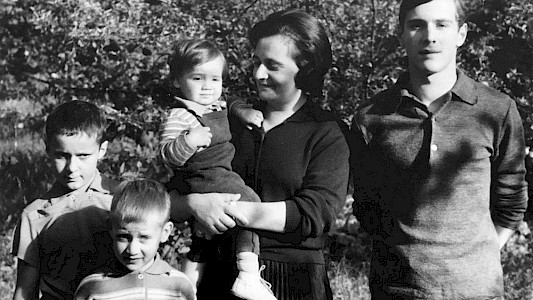
A perfect GDR functionary-family who, post 1945, lived the German dream of constructing socialism in the Soviet occupied zone: the passionate anti-fascist Horst Brasch, his wife, and their four children. Then, in 1968, eldest son Thomas was imprisoned for subversive agitation, thereby putting an end to his father's career. Thomas Brasch, the talented young poet and filmmaker, pursued a successful career in the West and two of his films competed at Cannes. The "Enfant terrible" died in 2001, and,
The Brasch Family
Germany 2017, 79 minby Annekatrin Hendel
Take your broken heart, make it into art.Annekatrin Hendel (VATERLANDSVERRÄTER, ANDERSON, FASSBINDER) paints an intimate picture ofher friend, costume designer, singer, painter, and photographer Ines Rastig (1965–2016).Hendel takes on script, directing, cinematography, and sound herself. The footage is shot in January 2016 in a singular hotel room with a view of the Baltic Sea; two months after Ines Rastig was diagnosed with lung cancer and four months before her death.A film about contradiction
FIVE STARS
Germany 2017, 90 minby Martin Farkas
“After all, these are not good memories, fun memories. And really, that time is buried.” Between 30 April and 4 May 1945, several hundred civilians commited mass suicide in the Pomeranian town of Demmin. There was desperation between the ideological void and the fear of the Red Army. Whole families drowned, hanged or poisoned themselves. The nervousness of the old citizens of Demmin whom Martin Farkas visits is still noticeable: not a hand that stays motionless during the interview – they are ru
Living in Demmin
Germany 2015, 92 minby Annekatrin Hendel
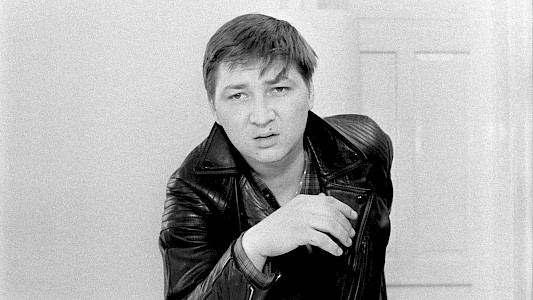
A portrait of the controversial German filmmaker Rainer Werner Fassbinder (1945-1982), who had a unique talent for engaging with the German soul.The German filmmaker Rainer Werner Fassbinder stirred up a lot of controversy with his cult films. Renowned and reviled, he worked like a man obsessed on his oeuvre of 42 feature films, a long-running TV series and 26 plays – until his sudden death at the age of just 37. The provocative filmmaker would have turned 70 in 2015. In this biopic, actors and
FASSBINDER
Germany 2014, 90 minby Annekatrin Hendel
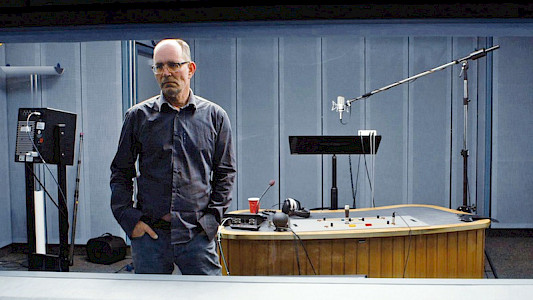
He was the charismatic pop star of East Berlin’s oppositional literary scene in Prenzlauer Berg in the eighties, a close acquaintance of Christa Wolf, Franz Fühmann and Heiner Müller. He was also a zealous informer working for the GDR’s secret police: Sascha Anderson, born 1953. Twenty years on, the pain he inflicted on friends and colleagues is as deep-seated as ever and the finely woven web of lies, half-truths and legends he unfurled around him still raises tempers. Annekatrin Hendel sits S
ANDERSON
Germany 2011, 97 minby Annekatrin Hendel
Once with the Stasi, always with the Stasi? Once you were in the agent controller's grasp you could never escape - that's what they say, anyway. Writer Paul Gratzik was an unofficial informer for the GDR State Security Service for twenty years, broke with them in the 80's and exposed his identity. "Vaterlandsverräter" ("Traitors to the Fatherland") is a portrait of an exceptional man. On one hand it is a psychological profile of one of an extraordinarily paradoxical figure, a "man of extrem
VATERLANDSVERRAETER
You can contribute updates for the current person (Annekatrin Hendel).
Bitte aktivieren Sie Javascript, um auf unsere Website zugreifen zu können.