2023, 95 minby Maria Binder
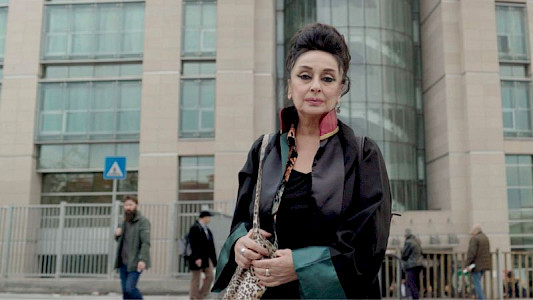
EREN portrays a woman who has been fighting for fundamental rights and peace in Turkey for more than 30 years. As a lawyer and human rights defender, Eren Keskin is one of the main actors and plaintiffs for women's, LGBTIQ and minority rights, opposing torture and sexualized violence. Her strong sense of justice knows no taboos, shaking even the foundations of the Turkish state. Now she has been designated an enemy of the state and has to defend herself. She faces a life sentence in more than a
Eren
Germany 2021, 22 minby Angelika Levi
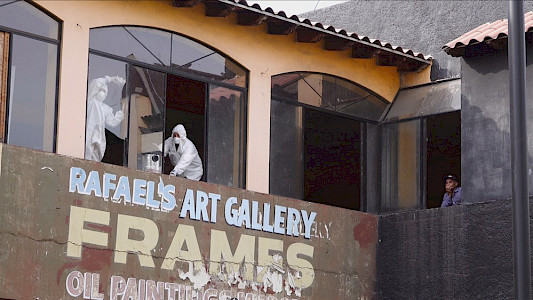
From September 2001 to April 2002, Nan and Nancy, along with other Latino women, cleaned in Manhattan for the asbestos company 'Branch' in the hermetically sealed zone of 'Ground Zero.' The women had neither work or residence permits in the United States, and their protective masks did not have asbestos filters. At the Ped-West border crossing in Tijuana, Mexico, refugees perform their narratives. They play asbestos workers, US soldiers, Red Cross helpers and firefighters. They are migrants fro
Ahorita Frames
2020, 96 minby Tanja Cummings
Some of the world’s last remaining Holocaust survivors meet every week at Café Zelig in Munich, Germany. They get together to laugh and celebrate holidays, to argue and discuss various topics, but they also hold moments of silence and mourning. Some of them—and some of their children—undertake a journey into their past, back to their old home country Poland. And they talk about the difficulties they had—and still have—finding their way back to life in Germany.
Cafe Zelig
Germany 2015, 54 minby Angelika Levi
Rent Eats the Soul" documents during two years neighborly organizing and protest on the southern Kottbusser Tor. The film portrays movingly the protagonists of the protest. It links the housing problem to the history of migration and emphasizes a connection between racism and urban displacement.During the night of May 26 in 2012, some residents of social housing at Kottbusser Tor, a majority ethnic Turkish neighbors, built a protest house. They called it "Gecekondu", translated from Turkish mean
Rent eats the Soul
Indonesia, Germany 2012, 75 min
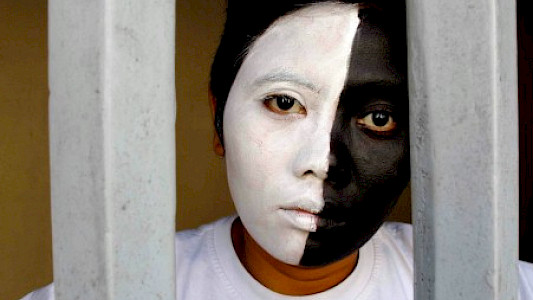
Srikandi is a female figure from the Indian Mahabharata epic that changes gender to live and fight as an equal among men. This character is a role model for eight highly personal perspectives on lesbian, bisexual and transidentity life in Islamic Indonesia. The film, which began as a collective project, moves from personal essay into a radical conceptual exploration of queer politics and maps out self-confidently the situation in which a generation of women are beginning to find a voice. Politic
CHILDREN OF SRIKANDI
You can contribute updates for the current person (Angelika Levi).
Bitte aktivieren Sie Javascript, um auf unsere Website zugreifen zu können.