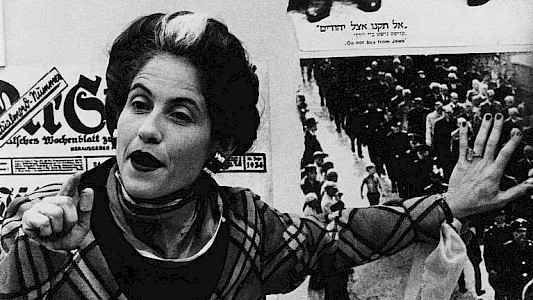
Germany 2024, 115 minby Andres Veiel
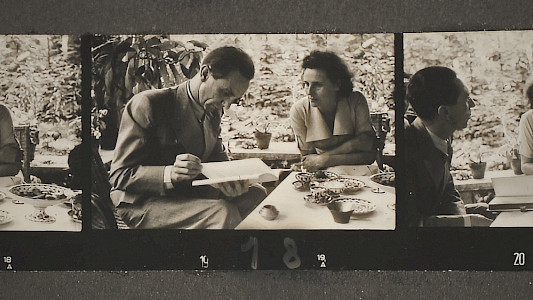
A captivating insight into the private estate of Leni Riefenstahl, who became world-famous with her Nazi propaganda film TRIUMPH OF THE WILL but kept denying any closer ties to the regime.Leni Riefenstahl is considered one of the most controversial women of the 20th century as an artist and a Nazi propagandist. Her films TRIUMPH OF THE WILL and OLYMPIA stand for perfectly staged body worship and the celebration of the superior and victorious. At the same time, these images project contempt for t
RIEFENSTAHL
Germany 2017, 107 minby Andres Veiel
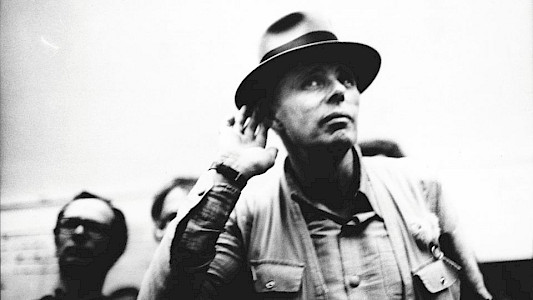
Joseph Beuys, the man with the hat, the felt and the ‘fat corner’. Thirty years after his death he feels like a visionary who was, and still is, ahead of his time. He was the first German artist to be given a solo exhibition at the Guggenheim Museum in New York whilst at home in Germany his work was often still derided as the ‘most expensive trash of all time’. Once asked if he was indifferent to such comments he retorted: ‘Yes. I want to expand people’s perceptions.’Andres Veiel lets the artist
BEUYS
Germany 2004, 108 minby Andres Veiel
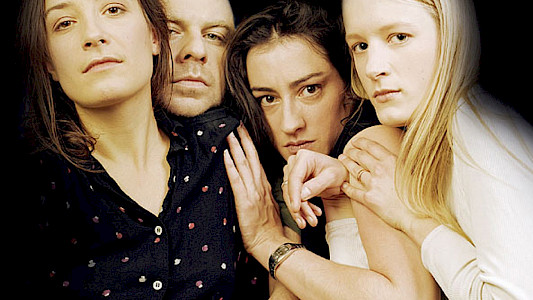
Four acting students are the focus of Andres Veiel’s long-term observational documentary. We meet Stephanie, Karina, Constanza and Prodromos while they are preparing for their acting school auditions. The selection procedure takes months; it is a trying, nerve-racking time spent vacillating between hope and anxiety. All four make it into the school, but their initial euphoria about commencing their studies – including group exercises, role play and obligatory fencing lessons
Die Spielwütigen - Addicted To Acting
Germany 2001, 107 minby Andres Veiel
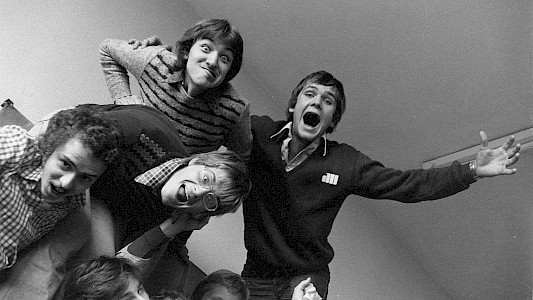
BLACK BOX GERMANY steps back into German history, it shows the Federal Republic of Germany of the 70s and 80s. The country is polarized due to the power struggle of the German state and the “Red Army Fraction”, and thus on a constant brink of civil war. Society is torn, the fronts are irreconcilable. The life stories of both Wolfgang Grams and Alfred Herrhausen are tragically linked to this era. Grams is the one who takes up arms for moral rigor; Herrhausen, however, seizes power and dies when p
Black Box Germany
Germany 1996, 96 minby Andres Veiel
Rudi, Tilman and Thilo are dead – of their own free will. In the provinces of Swabia, Andres Veiel faces up to the tragedy of his former classmates and comes to the disturbing conclusion that every suicide ensnares its survivors in an intricate web of guilt and self-pity.
THE SURVIVORS
Germany 1993, 96 minby Andres Veiel, David Maayan
An explosive stage production against the Holocaust. Three Israeli actors: Khaled, the Palestinian; Madi, the Jew; and Moni, the child of Israeli Jews and himself a practising othodox Jew. Using highly vivid images they face up to their history – going right up to the pain barrier. (DOK.fest Munich)with: Madi Smadar Maayan, Khaled Abu Ali, Moni Yosef, David Maayan, Miri Zemach, Naama Mamber, Anat Kirschner
BALAGAN
Germany 1991, 81 minby Andres Veiel
In the end of the 20s Inca Köhler-Rechnitz concludes her theatrical education. She fancies with a role from the summer night dream in the Görlitzer municipal theatre - and receives immediately an offer. However, days before the beginning of the first playing time her husband refuses the then necessary approval. In the 30s it is threatened as a half Jew before the deportation in a concentration camp.Only 60 years later she stands with the old amateur dramatic society DIE HERZSCHRITTMACHER for the
WINTERNACHTSTRAUM
You can contribute updates for the current person (Andres Veiel).
Bitte aktivieren Sie Javascript, um auf unsere Website zugreifen zu können.