
The Soil of the Namib

by Christian Zipfel
  • 2023 Time Prints KG
  • 2023 Time Prints KG
  • 2023 Time Prints KG
  • 2023 Time Prints

    Synopsis

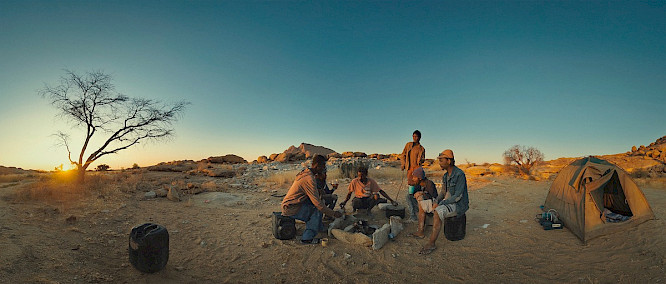
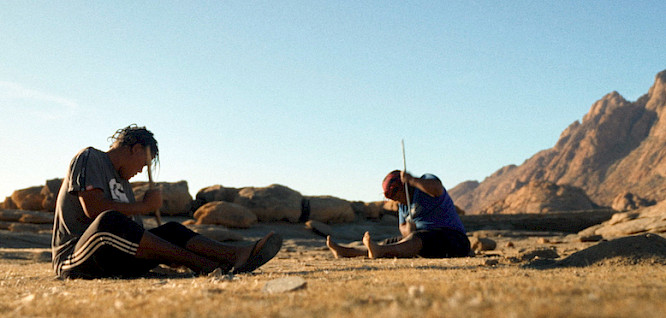
    Far away, in the middle of the Namibian wasteland, on former German-colonial soil. Due to a lack of prospects, some Namibians dig for gemstones in illegal, dangerous mines. The transmedia series THE SOIL OF THE NAMIB tells their story in four documentary parts: A short film DREAMS, which follows three workers on their search, and three complementary 360° episodes. LAND deals with the issue of land theft and the identity of the local people. WRAITHS recounts the start of the diamond rush in Namibia and the ghosts of the past. And DARK takes viewers into shoulder-width, illegal mine ducts and accompanies two workers during their sweaty underground search.

    Festivals

    2023
    Festival du nouveau cinéma – FNC Montreal
    39 Warsaw FF
    27 Ji.hlava IFF
    2024
    45 FF Max Ophüls Preis Saarbrücken

    Director’s Statement

    The German government only recognised the colonial crimes in Namibia as genocide in 2021. Media reports and educational work on the topic of colonialism still go largely unnoticed in Germany. There is a great temporal and spatial distance between the present day and the historic events, which presumably contributes to the repression and unwillingness of Germany to acknowledge the past, which causes discussions about the topic to stagnate.
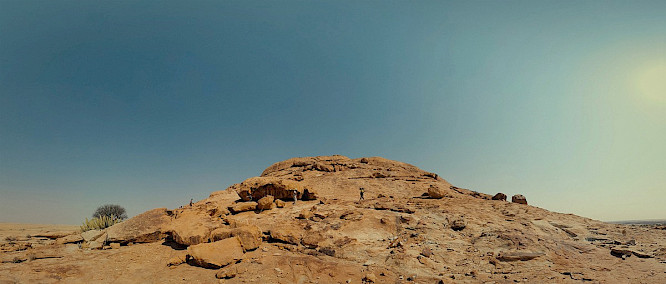
    Though these difficult topics are often avoided in Germany and Europe, this is not the case in formerly colonised countries like Namibia. The colonial era has left open wounds and its consequences are still being felt. The transmedia series THE SOIL OF THE NAMIB was filmed on location in Spitzkoppe and Kolmannskuppe (Kolmanskop). Two places scarred by mining, bearing German names, that have been robbed of their original identity by colonisers. Mining began in 1908 during German colonial rule with the discovery of diamonds. At that time, Kolmannskuppe became one of the richest places in Africa in terms of population. We questioned why the soil of the Namib, which could have enabled so much wealth, brought prosperity mainly to a white minority. And at the same time, why this unequal distribution continues to this day. What does it mean for the local people to work in the illegal mines? How do they look at their current situation and how do they look at their colonial past?