NUTSHIMIT - on the land

by Sarah Sandring
  • (c) 2010
  • (c) 2010
  • (c) 2010
  • (c) 2010

    Synopsis

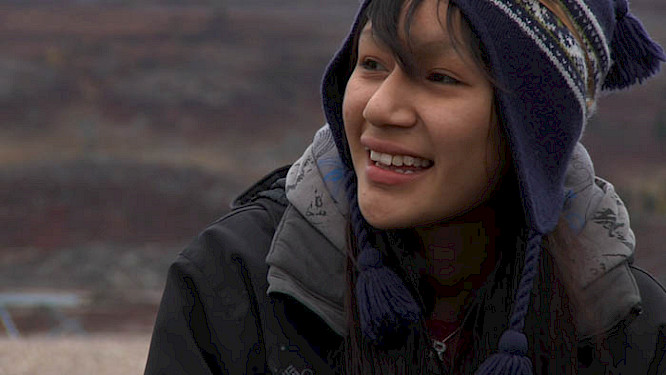
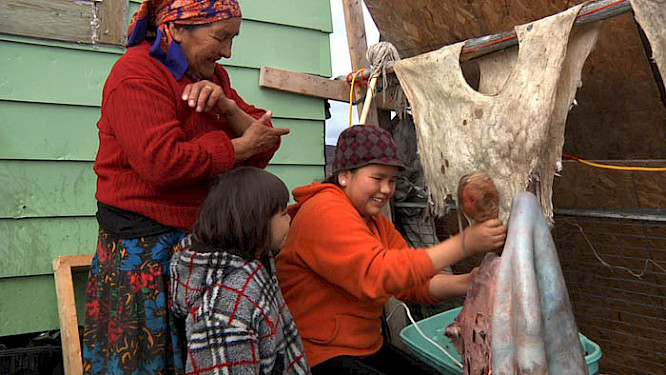
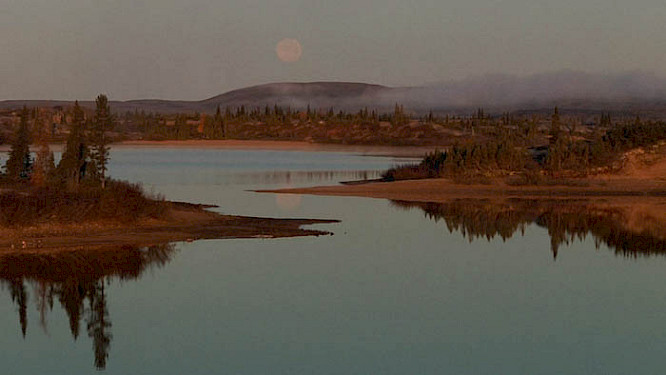
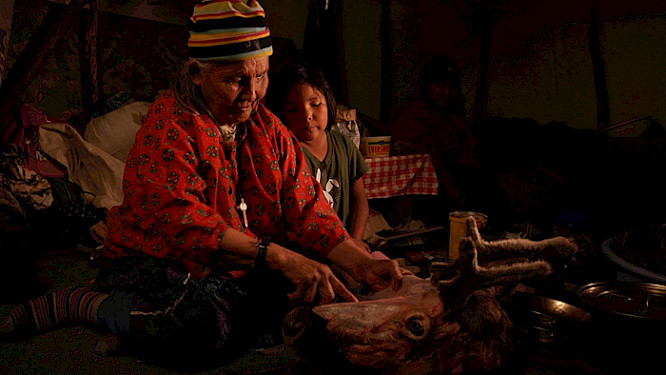
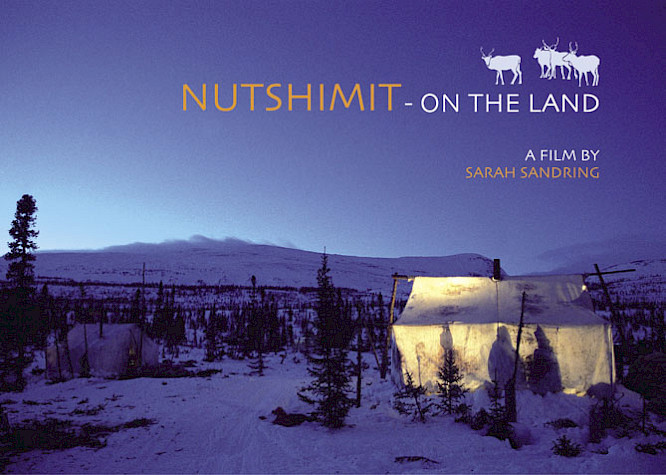
    NUTSHIMIT – on the land tells the present-day story of one of the last semi-nomadic hunting people of Canada, the Mushuau Innu of Labrador. The Mushuau Innu themselves commissioned the film for their children and coming generations of Innu to create a visual legacy of their continuing life on the land, which they call Nutshimit. The Innu teenagers Becca, Sage, Todd and Pinip are staying at different hunting camps with their families. Their adventures and conversations with their grandparents weave an intimate and profound portrait of a people whose survival, history and worldview is intertwined with the land, the animals, the plants and the spirit world. Only between the lines, the presence of another, a threatening society becomes tangible. Nutshimit - on the land is part of a greater documentary collaboration and filmmaker exchange with the community of Natuashish, which also created a film training initiative for young Innu.
    Festivals

    2015 Labradorians on Film, Goose Bay, Labrador
    2015 Cinema Politica, St. John’s, Newfoundland
    2014 Tage des Indigenen Films, Rostock
    2013 Native Spirit Film Festival, London
    2012 Female Eye Film Festival, Toronto
    2011 First Nations Festival, Montréal
    2011 London International Documentary Festival, London
    2011 Winnipeg Aboriginal Film Festival, Winnipeg
    2010 Innu Traveling Film Festival, Labrador / Quebec
    2010 Montréal International Documentary Festival, Montréal, Nomination Priz Caméra-stylo
    2010 Planet in Focus, Toronto

    Director’s Statement

    Die Entstehung von “Nutshimit” ist eingebettet in eine dokumentarische Arbeit, die im Jahr 2008 begann und eine Trainingsinitiative für junge Innu-Filmemacher beinhaltet. Dabei wurde eng mit Christine Poker, einer Filmemacherin, die selbst Innu ist, zusammengearbeitet. Ziel ist es, eine Infrastruktur aufzubauen, die es den Innu erlaubt, Film als Ausdrucksmöglichkeit zu verwenden. Dem Team, das aus Kanada, Deutschland, Großbritannien und den USA kam, gelang es, eine persönliche Nähe zu den Protagonisten aufzubauen, die eine große Intimität der Darstellung erlaubte.