Lost in Face

by Valentin Riedl
  • 2019 CORSO Film - and Television Production
  • 2019 CORSO Film - and Television Production
  • 2019 CORSO Film - and Television Production
  • 2019 CORSO Film - and Television Production
  • 2019 CORSO Film - and Television Production
  • 2019 CORSO Film - and Television Production

    Synopsis

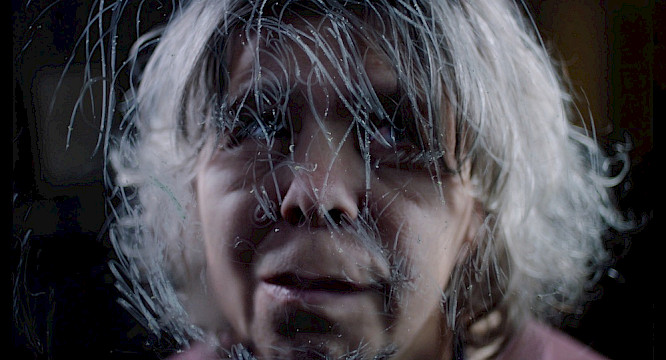
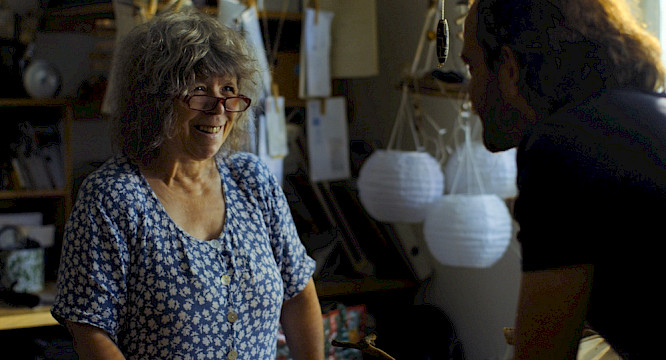
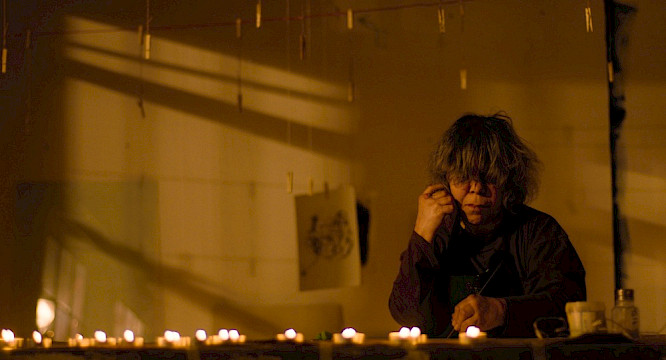
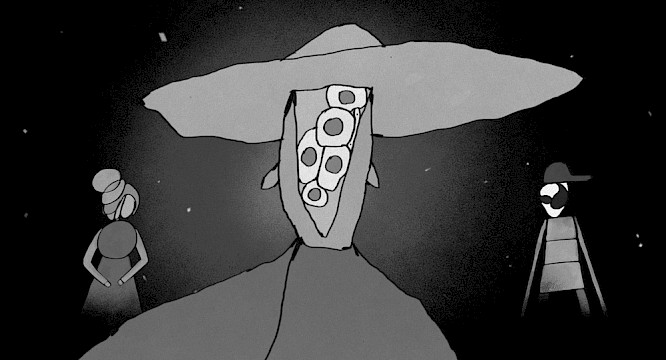
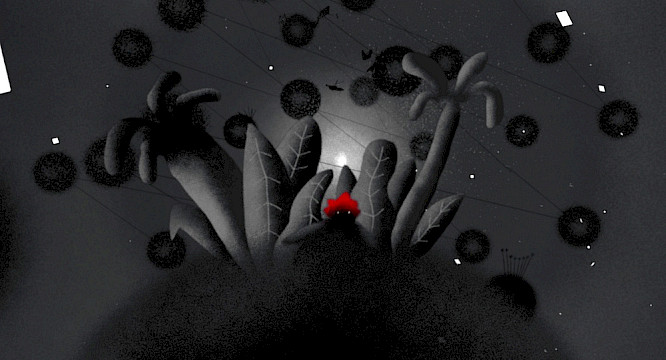
    Carlotta cannot recognize faces, not even her own. For her, human faces are no bastion of trust, but places of fear and confusion. She is one of the 1% of all people whose part of the brain responsible for facial recognition does not work properly. With his film LOST IN FACE, neuroscientist Valentin Riedl travels through Carlotta’s universe, full of anthropomorphic animals, lucid dreams and bumpy false paths. He peels back her charming, idiosyncratic solutions that she employs to be able to join the masses of human conformity, until she one day decides to build a ship and leave her fellow humans. Her never-ending search for answers leads her to art—and thus an avenue to her own face and back to humanity.

    “As a neuroscientist and filmartist, Valentin merges abstract science with the artistic form of film to open a new world to the spectator” Wim Wenders

    Festivals

    2020
    Audience Award Documentary & Best Score for Documentary for Antimo Sorgente – FF Max Ophüls Preis
    Best DoP Documentary for Doro Götz – IFF Dortmund | Cologne
    Best Debut @ German Documentary Film Awards
    Golden Owl Award — Bergen IFF Science Film Competition

    CPH:DOX — section Science Films
    35 DOK.fest Munich
    Filmkunstmesse Leipzig

    Director’s Statement

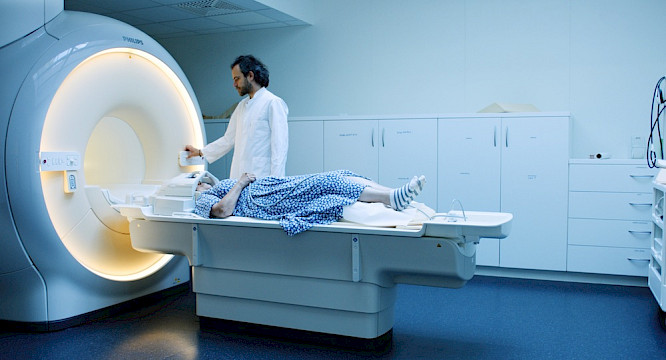
    Roughly five years ago, I came across one of Carlotta’s pictures in a newspaper and it captivated me. As a cerebral researcher, I was blown away by the fact that someone who had never been able to recognize a face, was able to create such an expressive portrait. Over the course of human evolution, the human brain has developed a small area behind our ears that is specialized in processing human faces. For people with prosopagnosia, aka “face blindness,” this area does not work properly. When I first entered Carlotta’s enchanted apartment, I immediately recognized that she had a lot to tell. But it was not until some time after that I would never be able to fully comprehend Carlotta’s mode of perception given her outlined deficits in many aspects of her life. Despite the fact that we are all equipped with similar brains and sensory organs, everyone has their own unique way of looking at the world.