

Everywhere We Are

by Veronika Kaserer
  • Alexander Puschkin
  • Jakob Stark
  • Veronika Kaserer

    Synopsis

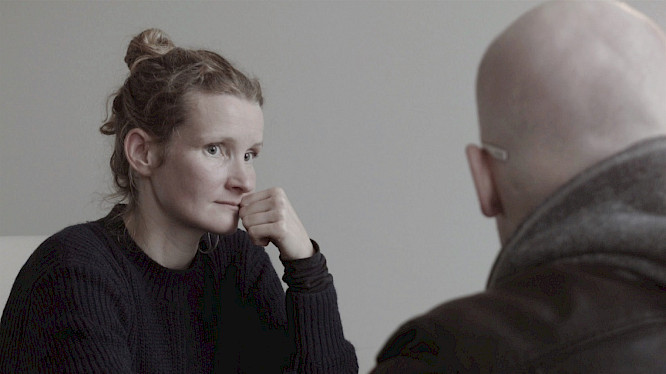
    Heiko, 29, is a fun-loving dance teacher from Berlin. For the past seven years he has battled with a fatal illness. Just when his family and his friends had begun to get used to Heiko’s continued survival in spite of all the prognoses, he receives the diagnosis that he does not have much longer to live. He decides to return to his parents’ house to die. But even now, Heiko and especially his father, Jürgen, refuse to give up hoping for a miracle. His mother, Karin, on the other hand tries to prepare him for what is to come. She would like to tell her son about her own near-death experience but can’t seem to find the right moment. Day and night, so many of Heiko’s friends and relatives come to the house to spend time at his bedside, wanting to be near him again, to cry, but also to laugh together. Heiko’s sister preoccupies herself with the organisational side of things and tries to hold up by keeping her distance. The ways in which all of these people cope with loss and grief are as diverse as they are.

    Festivals

    2018 a.o.
    68th Berlinale Perspective German Cinema, Winner of the Compass-Perspektive-Award
    35th Kassel DokFest

    LOLA@Berlinale - shortlisted for German Film Award Documentary 2019

    68th Berlinale Perspective German Cinema, Winner of the Compass-Perspektive-Award
    Jury Statement: Veronika Kaserer has made a film about grief, which at the same reminds us that life is worth living. With an astonishing closeness, unconventional montage, and many surprising moments, she portrays the last weeks and days of Heiko Lekutat, a 29-year-old Berlin dance instructor, and, most notably, his wonderful, big-hearted family. Does the film cause us pain because the family’s sorrow distresses us so, or do we suffer because we feel that the great intimacy to those grieving oversteps a line and in doing so impinges on our own sense of well-being? The editing constantly flashes back and forth between “before” and “after” Heiko’s death. Is it legitimate to disrupt the process of dying in this way in order to arouse, on an abstract level, empathy for the psychological and emotional process of grieving? The fact that a film triggers fierce sentiments and debates is a fine quality. We congratulate director, producer, and camerawoman Veronika Kaserer.

    Cast and Crew

    Director

    Veronika Kaserer

    Producer

    Veronika Kaserer, Jan Zabeil

    Score

    Tom Werner, Uwe Bossenz

    Sound

    Tobias Festag

    Editor

    Kathrin Dietzel

    DoP

    Veronika Kaserer, Jan Zabeil, Jakob Stark

    Sound Design

    Tobias Festag