Films

We are updating this film database for 30 years - so have fun exploring!

You can create your very own catalogue, sorted by your personalized search criteria.
Therefore, you only have to choose your filters and download the emerging pdf.

Loading...
624 films found. Download PDF (approx. 641 pages)
A DREAM OF REVOLUTION

2024, 95 min
by Petra Hoffmann

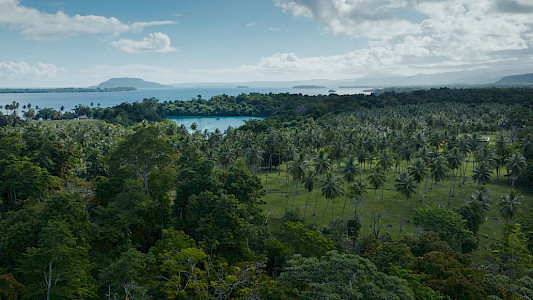
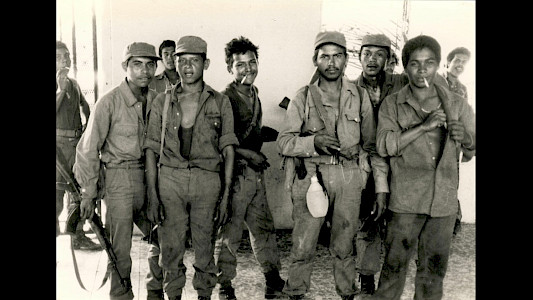
On July 19, 1979, the Sandinista People’s Revolution in Nicaragua overthrew the brutal dictator Somoza and made the world dream. The construction of a new, more social and just society “between the blocks” seemed possible. Tens of thousands from all over the world travel to the small Central American country to support the young government and rebuild the plundered country.From what was then West Germany alone, over 15,000 supporters made their way to the small Central American country. In international brigades, they harvested coffee and cotton, built schools, kindergartens and health centers to rebuild the maltreated country. The purchase of “Nica coffee” becomes a symbol of international solidarity with the country. The Contra, which is supported by Somoza supporters and the USA, attempts to overthrow the revolution and restore the old balance of power. The civil war costs the lives of 50,000 Nicarguans and German “reconstruction helpers” are also kidnapped and killed by the Contra in the 1980s.And then the unbelievable happens: in April 2018, students protested against the former revolutionary hero and current president Daniel Ortega. Over 400 people were shot dead by paramilitaries. The country sinks into a bloodbath. Ortega’s international supporters are also increasingly being targeted. They have been collecting money for projects in Nicaragua for 45 years. Today, they fear for their lives and are fleeing the country. Those who remain no longer dare to raise their voices against the former revolutionary hero.

A Dream of Revolution

A FIDAI FILM

2024, 78 min
by Kamal Aljafari

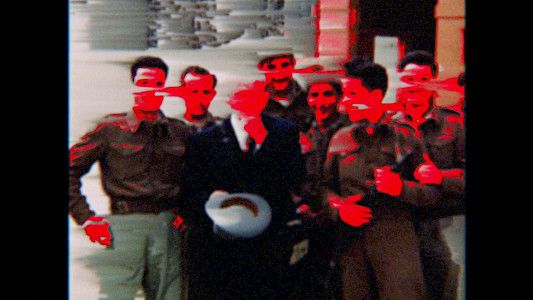
During the military intervention in Lebanon in the summer of 1982, the IDF seized the archive collection of photos and film from the Palestine Research Center in Beirut. Kamal Aljafari reclaims these images, which have been stored by the Israeli army and Ministry of Defense, thwarting this attempt to erase a people deprived of their visual memory. Reel B75-92 shows scenes of orange-picking in Qalandia in 1957, which, according to the Hebrew description, are images of “terrorists”… They come from a collection of films and photos that were kept at the Palestine Research Centre in Beirut, until it was looted by the Israeli Army during the invasion of Southern Lebanon in 1982, and transferred to the archives of the Hebrew state's army and Ministry of Defense. It was only in the 2010s that academic circles - in Tel Aviv, in particular - began to question the aims of this systematic plundering of the entire Palestinian visual memory, which became war booty in part renamed for ideological reasons: the occupying power de facto ensuring control of the captured material. In A Fidai Film, Kamal Aljafari(An Unusual Summer, VdR 2020) turns this primordial plundering against those who perpetrated it. By revitalizing these lost images through his vibrant editing process, he unleashes the subversive power of a counter-narrative that has been erased over the decades, portraying life in Palestine before and after 1948 - particularly during the British mandate of the 1920s-1930s, when the tangible signs of future spoliation, humiliation and violence were already apparent. The Palestinian filmmaker thus meditates with a unique space-time depth of field on the fate of images produced by a people doubly dispossessed, both of its land, and of its history. [55 VdR catalogue, Emmanuel Chicon]

A Fidai Film

BERLIN EVICTION

Germany 2024, 92 min
by Johannes Blume

Berlin is teetering on the edge of complete gentrification. The punk movement is fading, and the remaining left autonomous and anti-fascist spaces are facing an existential threat. Gentrification jeopardizes their very existence, eradicating the once vast diversity in Berlin’s urban landscape.The capitalistic structures driving gentrification prioritize individual wealth and financial growth, undermining the importance of solidarity. The squatter scene — or the heritage of it — is the antidote. House communities live in and share what would normally be considered personal possessions: the kitchen, the bathroom, the living room — everything is communal. Activities and conflicts are resolved through consensus, and interaction with others is inevitable. Living in a house community is a full-time commitment, a synthesis of people, work, materials, and history.BERLIN EVICTION aims to rediscover the relevant values of the subculture for today’s society. We engage with people who have a rich history and are willing to speak candidly on camera, free from masks and control. We explore places and individuals that have repeatedly captured the attention of the national and international press due to their fight against the system and eviction, such as Rigaer Straße, Liebig 34, Syndikat, Drugstore, and many more. The imminent evictions of Potse and Köpi Wagenplatz, both iconic symbols of the autonomous and punk scene, serve as the pivotal narrative structure of the film, emphasizing the scene’s ongoing struggle throughout the years.MAX OPHÜLS PRIZE: BEST FILM MUSIC"Quotation from the film: "We had our time and now it's over." Music plays a very important role in this film, it is an expression of protest, anger, sadness and transports the content of the film. With a convincing interweaving of original music and film score, the film tells of the almost lost struggle for freedom beyond conventions and beyond capitalist constraints." say the members of the jury Jide Tom Akinleminu, Wolf-Maximilian Liebich, Andrina Mrancikar

Berlin Eviction