Films

We are updating this film database for 30 years - so have fun exploring!

You can create your very own catalogue, sorted by your personalized search criteria.
Therefore, you only have to choose your filters and download the emerging pdf.

Loading...
239 films found. Download PDF (approx. 246 pages)
POL POT DANCING

2024, 99 min
by Enrique Sánchez Lansch

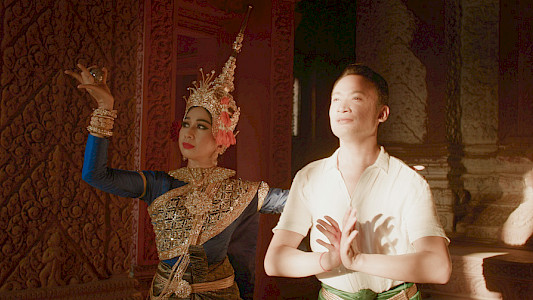
A star dancer at the Cambodian royal court lovingly raises her husband's little brother as her own son. Decades later, as a forced labourer under the Khmer Rouge, she discovers that her foster son is Pol Pot.Chea Samy was an outstanding soloist in the royal dance ensemble at the Cambodian Royal Palace in the 1930s. But she was also Pol Pot’s foster mother. After marrying Pol’s older brother, a low-level official at the royal court, she looked after the boy as if he were her own. They lost contact when he disappeared into the underground after his graduation. In 1975, like millions of other Cambodians, she was driven to the rice fields. Only after three years of forced labour did she learn that Pol Pot was the boy she had raised decades before. As one of only few dancers, she managed to survive his reign and returned to Phnom Penh as a dance teacher, thus preserving knowledge of the traditional dance. One of her first pupils was Sophiline Cheam, now a successful choreographer. Her ensemble incorporates events from Cambodia’s past in its dance routines. The starting point is a curious fact about Pol Pot’s career, which few Cambodians know about: the connection between Pol Pot and classical Cambodian dance. Artists and intellectuals, in particular, fell victim to the brutal rule of the Khmer Rouge, whose leader ironically spent a crucial part of his childhood in the royal palace and gained access to higher education thanks to this dance.

Pol Pot Dancing

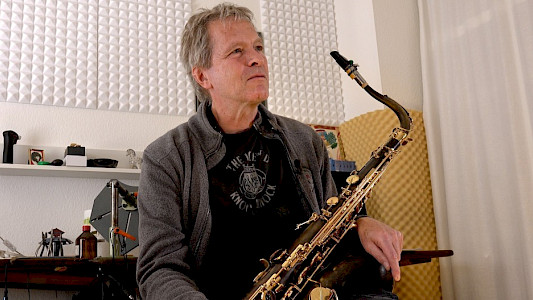
TALKING TO YOU. CHRISTOPH LAUER (SAX)

Germany 2023, 92 min
by Lucie Herrmann

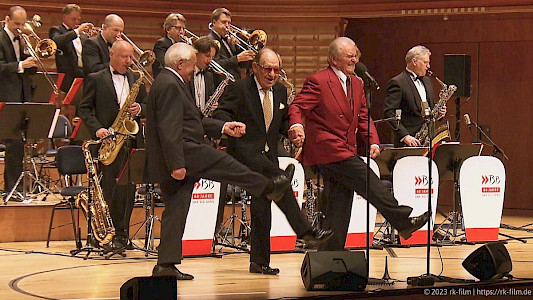
A film about the love of jazz, but also about the love of the saxophone, that magical instrument. "I tell something about myself by playing and putting together sounds. That's my story," says Christof Lauer. He is one of the great jazz saxophonists in Europe, was a member of Albert Mangelsdorff's quintet and the United Jazz + Rock Ensemble. He was a soloist in the NDR Big Band in Hamburg for 25 years and has also been a soloist in the jazz ensemble of the Hessischer Rundfunk since 1970.How can the magic emanating from the tenor or soprano saxophone be explained? Who actually makes these instruments? And how did Christof Lauer manage to rekindle his love of jazz over decades? TALKING TO YOU penetrates the musical cosmos of an idiosyncratic musician who rejects any routine and persistently works on new forms. The main thing is that: "it has to be intense"."At last, here is a music portrait that takes its subject seriously and doesn't fade out individual pieces after just a few seconds. Lucie Herrmann, who already created a memorial to the Frankfurt 'trombone world champion' Albert Mangelsdorff with the portrait 'Oh Horn!', and her great camera and editing partner Bert Schmidt have not only succeeded in creating a hymn to one of the most important advocates of contemporary improvisation art with 'Talking To You'. This film is much more than a portrait of a musician. It is a passionate declaration of love for jazz."(Peter Kemper, FAZ, April 21, 2023)

Talking to You

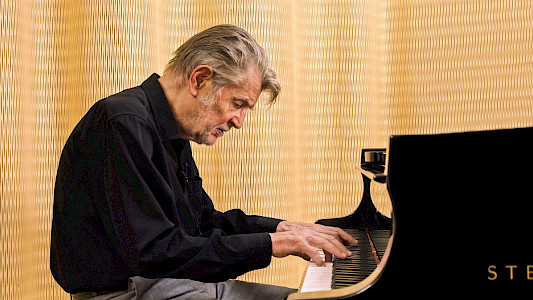
TASTENARBEITER – ALEXANDER VON SCHLIPPENBACH

Germany 2023, 106 min
by Tilman Urbach

Alexander von Schlippenbach is a free jazz hero from Berlin who experienced total freedom in music from the 1960s on. The film follows him to the present day and also considers the political background of European free jazz in the spirit of optimism of the '68 movement. In the film v. Schlippenbach meets old companions. He travels to a studio in Cologne where he meets up with trumpeter Manfred Schoof. As they play together they reminisce about the 60s, when jazz was free of any entertainment attitude. Free Jazz was the expression of a radical social utopia. In Dresden, v. Schlippenbach meets the percussionist Günter 'Baby' Sommer and talks about the numerous concerts the two free jazzers played together in the GDR, where they used to be celebrated like pop stars. Here thousands of fans understood the FreeJazz as an expression of freedom. In Borken the label boss Jost Gebers shows his FMP archive and discovers photos and band recordings from Schlippenbach's early days. Also in the scene Gebers makes v. Schlippenbach more clear as a person. The camera observes Alexander v. Schlippenbach not only at home, where he lives in Moabit with his wife, jazz pianist Aki Takase, but also on tour in Munich. Nevertheless, the film TASTENARBEITER – ALEXANDER VON SCHLIPPENBACHis neither a pure music film nor a concert film, but rather concentrates on the biographical breaks and disappointments in life, but also on his spirit of optimism that happend to v. Schlippenbach.

Tastenarbeiter – Alexander von Schlippenbach

VIENNA CALLING

2023, 83 min
by Philipp Jedicke

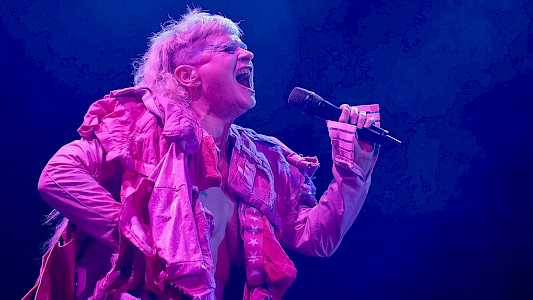
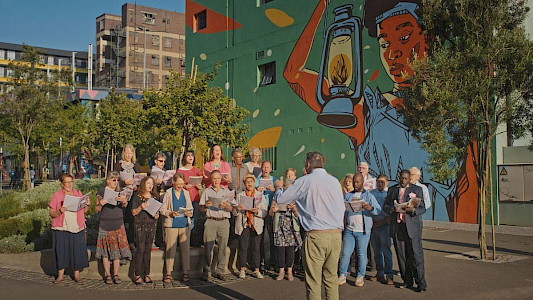
Vienna, the former music capital of Europe, has become increasingly relevant again. With the wry approach that is typical of this city, the young underground music scene there romanticizes the raw and rabid. Hedonist and nihilist at the same time, the young Viennese artists embody the opposite of self-optimization. They are unadjusted, eccentric characters – and they are filling concert halls not only in Austria, but also in Germany and Switzerland. VIENNA CALLING starts with the aim of being a music documentary. But increasingly, the true protagonist emerges as the city of Vienna itself. Like a flâneur, the camera saunters by day and night through the lanes, bars and casual joints of Vienna, taking diversions, becoming lost only to find its way again. The strolling rhythm is instigated by the music, performed by Viennese artists and their famous charm or "Schmäh". Part documentary, part staged, interwoven with musical performances, the project gradually reveals itself as a mosaic of eccentricity. VIENNA CALLING digs deep into the catacombs of Viennese culture far from the mainstream. With its many performances and semi-fictional scenes, VIENNA CALLING is not a music documentary in the classic sense of the word, but rather a docu-musical. The film provides a stage for Viennese artists like the Turkish-Austrian duo EsRAP, who are first generation immigrants, non-binary rap artist Kerosin95, radical feminist authors Stefanie Sargnagel and Lydia Haider, songwriters Voodoo Ju?rgens and Der Nino aus Wien, and many more. VIENNA CALLING is a poetic approximation to the underground scene of an old European metropolis that experiences the current cultural changes and conflicts of our time. Viennese artists take the room they need for their art in a city that becomes increasingly gentrified. VIENNA CALLING is an homage to daring artists, it is about the hardships of creating art and art's need for space and independence.With: Voodoo Jürgens, Nino Aus Wien, EsRap, Gutlauninger, Kerosin95, Buntspecht a.o.

Vienna Calling

AN OPEN MIND

2022, 101 min
by Peter Nestler

The Film presents artists of the Sinti and Roma who shape the trauma of persecution and very personal experiences in their works. They use a wide variety of forms of expression and means, but what they all have in common is an open view.  Peter Nestler succeeds in making this tangible by meeting them without cultural fixations and at eye level.Gitta Martl and her daughter Nicole Sevik read short texts in memory of the Sinti and Roma incarcerated in the Upper Austrian 'gypsy detention camp' in Weyer. All that remains of these people is a series of 32 colour slides. Dr Alois Staufer photographed them in the spring of 1941. Six months later, the detainees were deported to Poland, where they were executed. Author Ludwig Laher dedicated almost 20 years of painstaking research into meticulously reconstructing the victims’ and perpetrators’ lives. Ceija Stojka was an Austrian author, painter, dancer, activist and survivor of the Nazi concentration camps in Auschwitz, Ravensbrück and Bergen-Belsen. Her pictures are exhibited in museums and galleries all over the world and can be seen at this year’s documenta fifteen. Ceija Stojka created her own forms of expression, moulded memories and traumas into a picturesque oratory lest these peoples be forgotten. Movie-maker Karin Berger accompanied Ceija Stojka’s creations as a friend and mentor for two and a half decades. She commemorates this exceptional woman, also in her two documentaries “Ceija Stojka - Portrait of a Rom” (1999) und “The Green Green Grass Beneath” (2005).Young author and Roma activist Samuel Mago says, “For my generation, Ceija Stojka is a huge idol.” Lita Cabellut spent her childhood under dire conditions in Aragon, Spain. At the age of 12, she was adopted by an aristocratic Catalan family, moved to the Netherlands in 1980, studied at the Gerrit Rietveld Academy in Amsterdam and has since been living in The Hague. As a painter she uses a contemporary fresco technique, designed opera scenography and costumes, such as for “Karl V.” at the Bavarian State Opera. She talks about her work as an art director for Carmen Chaplin’s film about the presumably Roma background of her world-famous grandfather. In the last few years, some things have taken a turn for the better for artists from this minority group in terms of cultural self-assertion. For example, the “Kai Dikhas” gallery and foundation, headed by Moritz Pankok, has organized over a hundred exhibitions and runs a continuous forum.The Roma and Sinti Philharmonics gather musicians from all over Europe for concerts. These have included spectacular premieres, such as the “Requiem for Auschwitz” by Roger Moreno-Rathgeb. Conducted by Riccardo M Sahiti, the philharmonic orchestra took to the stage with performance artist Iva Bittová, cymbalist László Rácz and violin virtuoso Roby Lakatos at the Morgenland Festival in Osnabrück in autumn 2021. Jovan Nikolić tells poetic short stories about his childhood in a Yugoslav family of musicians. “Die Träne” (The Teardrop) is a tragicomic miniature about the memorial service for his deceased father, where they placed a saxophone to the dead man’s lips for the last time.The artists of this minority group avail themselves of various different forms and means of expression, but what they all have in common is an open mind.

An Open Mind