Films

We are updating this film database for 30 years - so have fun exploring!

You can create your very own catalogue, sorted by your personalized search criteria.
Therefore, you only have to choose your filters and download the emerging pdf.

Loading...
343 films found. Download PDF (approx. 353 pages)
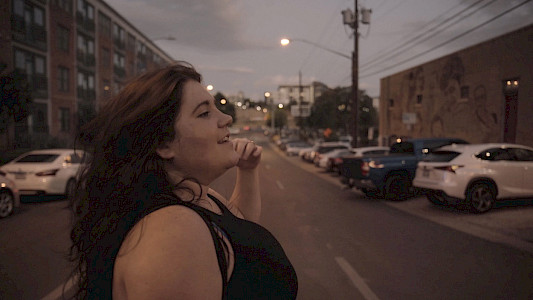
MAMA MICRA

Germany 2024, 24 min
by Rebecca Blöcher

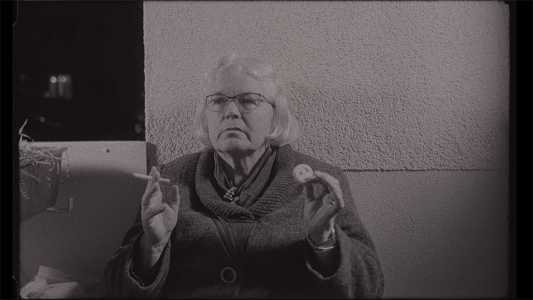
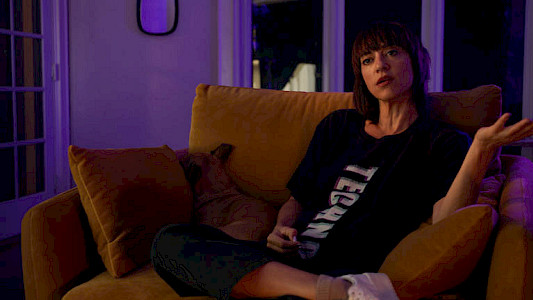
My mother has led a very unorthodox life, which has taken her both to palaces and under bridges. She lived in her small car for over 10 years until she could no longer walk and the car gave up right after that. [Rebecca Blöcher]The mother of animation director Rebecca Blöcher didn’t want to live an ordinary life. She wanted 'something more,' she explains in this stop-motion film. The people around her didn’t understand—in a letter written in 1968, a girlfriend criticizes her for going out on her own and making men jealous, while advising her to dress in a more “feminine” way and to join a cooking course. Blöcher’s mother brushed aside the advice. Years later still, she divorced her husband and stepped into the big wide world. In Mama Micra the mother is a figure made of felt who recalls, in her own voice, her powerful urge to find freedom: “I was a real vagabond,” she explains. She traveled to Syria and Beirut, and envied the nomads in the desert. During the last 10 years of her life she lived in a Nissan Micra, washing in the morning in hotel bathrooms and sneaking into breakfast rooms to eat. Her freedom came at a cost. She lost contact with her daughter, who counterpoints her mother’s account with her own recollections. But no harm is irreparable in this affectionate film. [IDFA]The jury: “The filmmaker’s personal and family story, particularly her mother’s life, unfolds through a narrative enriched by diverse animation techniques. These vividly reimagined moments beyond old photographs bring untold realities to life. Themes of personal freedom, aging, and abandonment are poignantly explored, forging a deep emotional connection with viewers. Through the visual magic of animation, the filmmaker delicately portrays her inner world, preserving the bonds of affection and memory, even in the face of absence.”

Mama Micra

PETRA KELLY – ACT NOW!

2024, 104 min
by Doris Metz

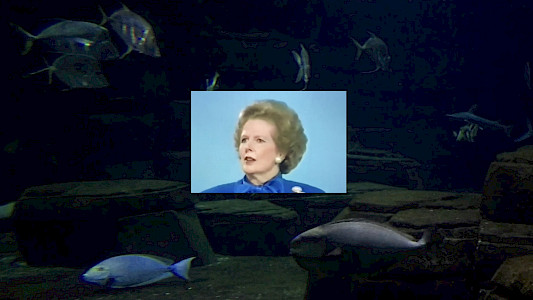
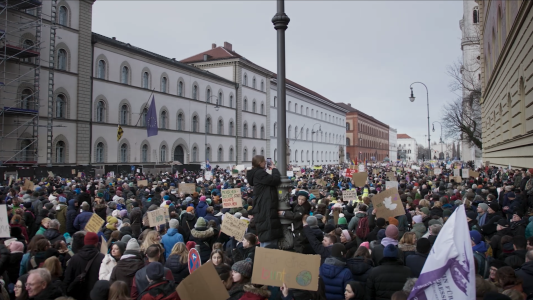
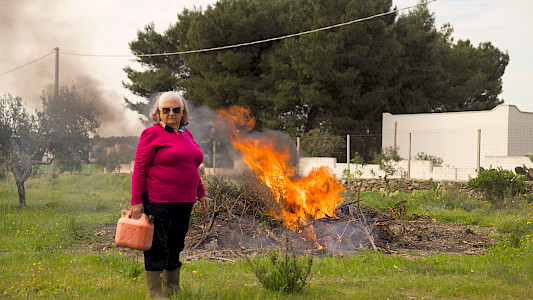
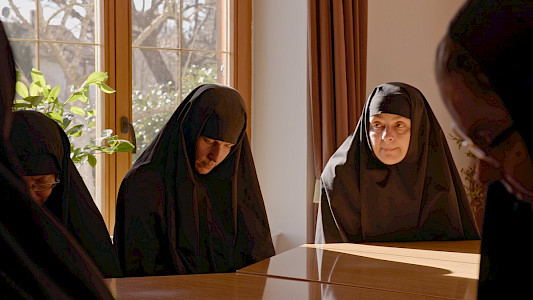
Petra Kelly was one of the most influential political personalities of the 20th century, a figurehead of the peace movement and co-founder of the first green party to find success. Her life was one of achievements, its end a tragedy.Petra Kelly was one of the most influential political figures of the 20th century. In 1980, she co-founded the German Green Party, the world’s first green party to rise to prominence. She fought relentlessly for radical social change, disarmament and a society at one with nature. For Kelly, environment, peace and human rights issues were one. At the age of 44, she was murdered by her long-time friend and political companion. Raised by her mother and grandmother, she grew up in 1960s America and campaigned for Robert Kennedy’s election in the months before his assassination. Petra Kelly was convinced that a single person could change the world. Influenced by the American civil rights movement and Martin Luther King’s concept of “civil disobedience”, she campaigned to protect the environment and ban uranium mining, demonstrating solidarity with the peace movements in both the East and West. Today, her spiritual legacy is continued by many young climate activists. The issues that concerned her are more topical today than ever before. Close friends and companions talk about Kelly’s personal and political life for the first time. With previously unseen international film footage, the film paints a picture of a sensitive, unwavering woman who let no one -stand in her way. [NEW DOCS catalogue]

Petra Kelly – ACT NOW!

REPRODUCTION

Germany 2024, 111 min
by Katharina Pethke

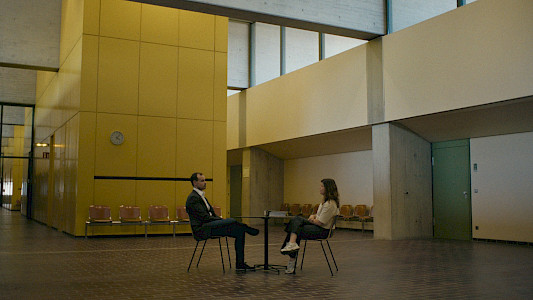
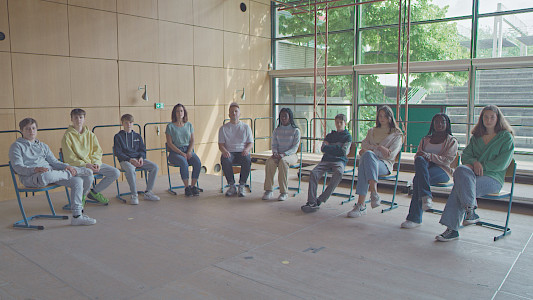
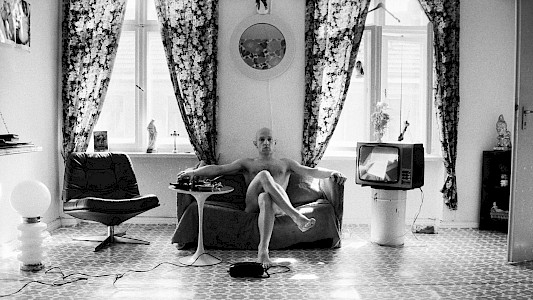
The ensemble of buildings that makes up the maternity clinic and art school in Hamburg where the director taught is the starting point for this sober interrogation of how motherhood and career can be combined based on three generations of German women.How much does a place reveal about its history? How much can forbears and their descendants know about one another? And how much continuity is contained within progress? When Katharina Pethke became a professor at Hamburg’s University of Fine Arts, it set in motion a process of reflection and research. Before, she had studied there, and so too had her mother and grandmother. Each of the women believed they were breaking new ground and yet, consciously or unconsciously, through stance or in protest, continued to carry on a legacy. This essay film examines the three generations caught between social determination and artistic ambition, self-will and motherhood, production and reproduction. The university building and its sole sculpture by a woman artist purchased by urban planner Fritz Schumacher, “Frauenschicksal” (Women’s Fate), become a mirror as well as showcase for enduring ambivalences. A virtuosic and astute work from an established filmmaker, Reproduktion explores questions of feminine and artistic identity through the lens of Pethke’s personal experience, interweaving her family biography with the architectural history of the art and media campus. [74 BERLINALE – Forum]

Reproduction

RIEFENSTAHL

Germany 2024, 115 min
by Andres Veiel

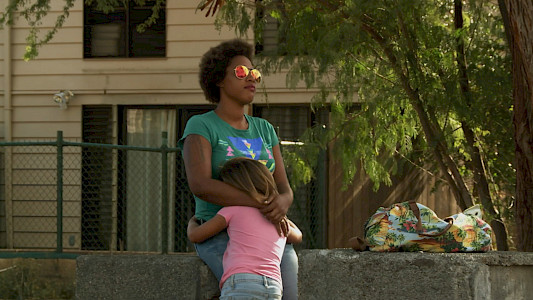
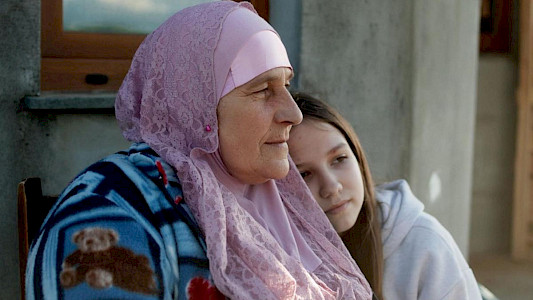
A captivating insight into the private estate of Leni Riefenstahl, who became world-famous with her Nazi propaganda film TRIUMPH OF THE WILL but kept denying any closer ties to the regime.Leni Riefenstahl is considered one of the most controversial women of the 20th century as an artist and a Nazi propagandist. Her films TRIUMPH OF THE WILL and OLYMPIA stand for perfectly staged body worship and the celebration of the superior and victorious. At the same time, these images project contempt for the imperfect and weak. Riefenstahl’s aesthetics are more present than ever today - but is that also true for their implied message? The film examines this question using documents from Riefenstahl's estate, including private films, photos, recordings and letters. It uncovers fragments of her biography and places them in an extended historical context. How could Riefenstahl become the Reich's preeminent filmmaker and keep denying any closer ties to Hitler and Goebbels? During her long life after the fall of Nazism, she remained unapologetic, managing to control and shape her legacy. In personal documents, she mourns her "murdered ideals". Riefenstahl represents many postwar Germans who, in letters and recorded telephone calls from her estate, dream of an organizing hand that will finally clean up the "shit-hole state". Then, her work would also experience a renaissance, in a generation or two this time could come - what if they are right?

RIEFENSTAHL