


Germany 2024, 115 minby Andres Veiel
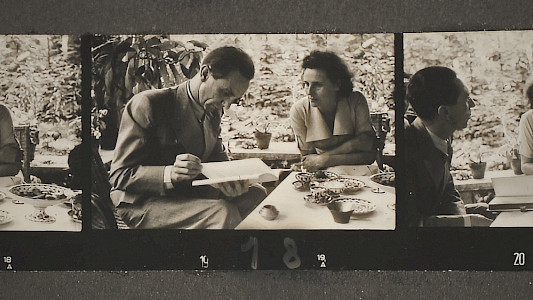
A captivating insight into the private estate of Leni Riefenstahl, who became world-famous with her Nazi propaganda film TRIUMPH OF THE WILL but kept denying any closer ties to the regime.Leni Riefenstahl is considered one of the most controversial women of the 20th century as an artist and a Nazi propagandist. Her films TRIUMPH OF THE WILL and OLYMPIA stand for perfectly staged body worship and the celebration of the superior and victorious. At the same time, these images project contempt for the imperfect and weak. Riefenstahl’s aesthetics are more present than ever today - but is that also true for their implied message? The film examines this question using documents from Riefenstahl's estate, including private films, photos, recordings and letters. It uncovers fragments of her biography and places them in an extended historical context. How could Riefenstahl become the Reich's preeminent filmmaker and keep denying any closer ties to Hitler and Goebbels? During her long life after the fall of Nazism, she remained unapologetic, managing to control and shape her legacy. In personal documents, she mourns her "murdered ideals". Riefenstahl represents many postwar Germans who, in letters and recorded telephone calls from her estate, dream of an organizing hand that will finally clean up the "shit-hole state". Then, her work would also experience a renaissance, in a generation or two this time could come - what if they are right?
RIEFENSTAHL
Germany 2023, 52 minby Tom Ockers, Ulrich Stein
Cryptocurrencies polarise – are they the future of money or a dangerous bubble? We explore the shifting global financial architecture. Who are the profiteers and victims, supporters and critics of digital currencies?Bitcoin has developed into a global digital currency that is challenging the existing financial system. The international popularity and rapid increase in the value of Bitcoin have encouraged many to join the sweepstakes. The president of El Salvador has even made crypto his country’s official currency. Most governments, however, have adopted a strong stance against cryptocurrencies that are not regulated by states. The European Central Bank, for example, is predicting Bitcoin's imminent demise. At the same time, however, the ECB recognises the need for a digital currency in a global internet world. It is likely we will soon see the introduction of the digital euro, which can be used as a means of payment via a smartphone and works like a cryptocurrency. But how exactly does a cryptocurrency work? And what are its risks and benefits? This documentary shows how cryptocurrencies are currently causing a shift in the global financial architecture and introduces the profiteers and victims, and the supporters and critics of the new digital currencies.
Cryptocurrencies – The Future of Money
Germany 2021, 52 minby Kai Christiansen
John F. Kennedy is known as a charismatic and popular U.S. President. What is behind the political pop star who first inspired the U.S. and then half the globe in the early 1960s? The film returns to his early years as an adventurous student in the 1930s and recounts his life through his travels across the Atlantic. We get to know a different Kennedy. One who flirts a lot, is inspired by cultural heritage and begins to think about political contexts during his travels. A young man looking for his way in life.
JFK’s Love For Europe
Germany 2021, 53 minby Christian Bettges
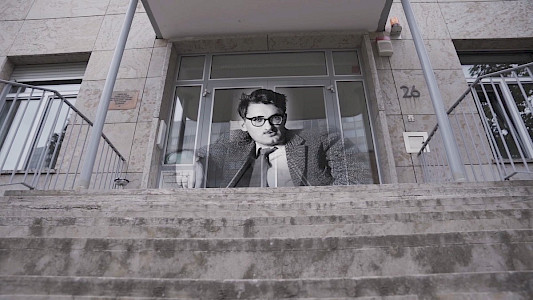
Jürgen Habermas's thoughts and journalistic interventions have shaped important discussions in Germany and in European politics. Philosophers, politicians and journalists provide an introduction to his central ideas, putting them in a contemporary historical context. From the student unrest of the 1960s and the new social movements of the late 1970s to German reunification and Habermas's surprising move to the philosophy of religion, the documentary traces the transformation of a protagonist of Western, Soviet-critical Marxism into a mastermind of German and European democracy.With Joschka Fischer, Frank-Walter Steinmeier, Gérard Raulet, Micha Brumlik, Katia Genel a.o.
Habermas – Philosopher and European
Germany 2021, 104 minby Michael Richter
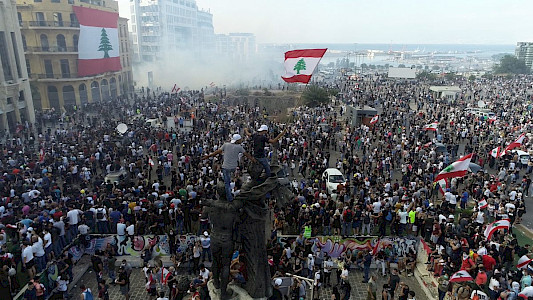
Ten years after the Arabellion, we tell the whole story of the uprisings, from the viewpoint of the protagonists. How did it all start and what is life like today in Tunisia, Libya and Egypt?On 10 December 2010, the Tunisian street vendor Mohamed Bouazizi set himself on fire out of despair at his hopeless living conditions. His fate moved hundreds of thousands of mostly young people to take to the streets to protest against the regime. The protests not only ousted the elderly dictator Ben Ali but also sparked a series of uprisings that rocked the Arab world. A new era of democracy, dubbed the “Arabellion” or “Arab Spring”, seemed to be dawning that would sweep the entrenched authoritarian structures onto the rubbish heap of history. Taking stock ten years later, however, the aftermath of those momentous events is sobering. All across the Arab region, the old regimes have been restored, wars have broken out and people are fleeing their homelands. And yet the Arabellion was not in vain, because pressure for reform is as great as ever. We give a comprehensive overview of developments, looking for similarities between the 2011 uprisings and the current unrest in Lebanon and Iraq. The Arabellion is recounted from today’s vantage point and through the eyes of the protagonists on the ground. What is life like today in Tunisia, Libya and Egypt, ten years later?
Arabellion - Ten Years Later
2020, 55 minby Nadja Frenz
Are Islam and our modern view of women mutually exclusive? We talk to female scholars of Islam, authors and artists about Islamic feminism.Can feminism be Islamic? The role of women in Islam is a constant subject of controversy. Is the headscarf really a symbol of oppression? Does the Qur'an allow men to tell women what to do, to beat them? Does our modern view of women conflict with the texts of the Qur'an? Must a woman therefore decide whether she wants to be a devout Muslim or a self-determined feminist? This film offers female scholars of Islam the opportunity to express their view that it is not Islam or the Qur'an that is misogynistic, but certain interpretations and patriarchal traditions. They call for a gender-sensitive interpretation of the Qur'an and try to reconcile religion and feminism. Other women's rights activists, such as Zineb El Rhazoui, the former Charlie Hebdo columnist, vehemently reject their religious backgrounds and consider Islam to be unreformable. We take a closer look at the discourse and come up with some surprising insights – beyond common prejudices. Islam and women – a relationship that needs to be redefined after hundreds of years of male interpretation.
Women of Islam
Bitte aktivieren Sie Javascript, um auf unsere Website zugreifen zu können.