

Germany 2023, 52 minby Marion Schmidt
Throughout the western world, interest in the work of Black artists has increased significantly. How do they understand their work? Will museums be receptive to their art? Will they radically change our view of art history?With their portraits in the National Gallery, Michelle and Barack Obama have shaken up the world of art. Not only are they the first Black presidential couple to be represented at the gallery, but for the first time ever, a Black male and a Black female artist were commissioned to do the paintings: Kehinde Wiley and Amy Sherald. The Obamas have paved the way for a new generation of artists who have made portraiture their own and are now being championed. Throughout the western world, interest in the work of Black artists has increased significantly. In what way can representations of Black people in art contribute towards their emancipation and desire for equality? Jerrell Gibbs from Baltimore paints portraits that challenge typical clichés about Black men. Shannon T. Lewis, a Canadian of Caribbean descent, wants to make the representation of Black people ubiquitous and create beauty out of something historically abhorrent. The Kenyan-British painter Michael Armitage tells emotionally charged stories from East Africa, allowing his in-depth knowledge of European art history to shine through. How do these artists understand their work? Will museums, portrait galleries and other institutions be receptive to their art? Will they radically change our view of art history?
YES WE CAN – Contemporary Black Art
Germany 2023, 225 minby Sibylle Smolka, Detlev Konnerth, Katja Runge
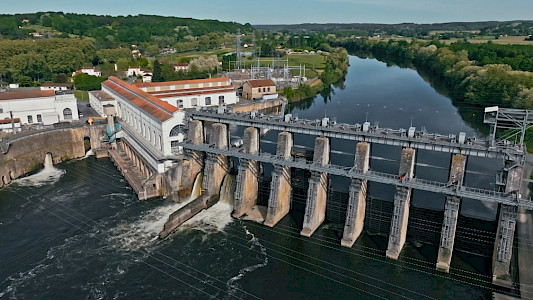
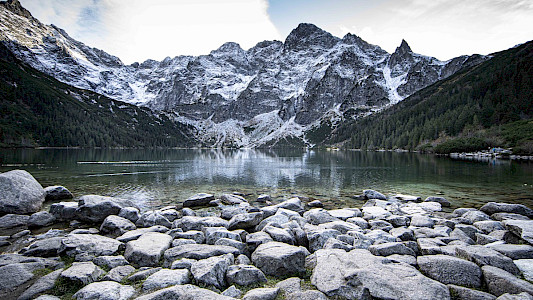
Breathtaking canyons, lakes and rivers: from the Tatra Mountains via the Dordogne to the Danube Delta, this series explores extraordinary, still unspoilt corners of Europe where water plays a central role.Where the elements of water and earth meet, the forces of nature are unleashed in a dramatic way. Spectacular landscapes and extraordinary habitats are created for plants and wildlife. And the energies they release have a magnetic effect on man. Often, though, it’s a case of love at second sight. As travel destinations, inland bodies of water have always been overshadowed by coastal shores. But this appears to be changing. The environmentally conscious and especially younger people are becoming increasingly interested in these intact landscapes in the heart of Europe. Once they have discovered the magic of these unspoilt regions, they soon want more. This series takes us to little-known areas of untouched natural beauty where water plays a central role: breathtaking canyons, lakes, rivers and landforms whose rich fauna and flora leave a lasting impression on us. Because of the biodiversity of these exceptional regions, some are already protected as national parks, UNESCO World Natural Heritage Sites or biosphere reserves. The series introduces us to five especially stunning landscapes in Europe. Far from the usual tourist trails, we explore unique spots in Poland, Slovakia, Romania, France, Montenegro and Germany.
Europe's Unique Water Landscapes
Germany 2023, 24 minby Therese Koppe
Mariella lives in Berlin with her family of seven. Her father was trained in kung fu martial arts at the Chinese Shaolin monastery. Today he runs the Berlin-Schöneberg kung fu school and prepares her and her sisters for the next tournament. This has been part of Mariella’s life for many years. But the nervousness before each competition never really gets better. [66 DOK Leipzig, Lina Dinkla]
The Daughter of the Shaolin Master
Germany 2022, 52 minby Lars Barthel, Marian Kiss
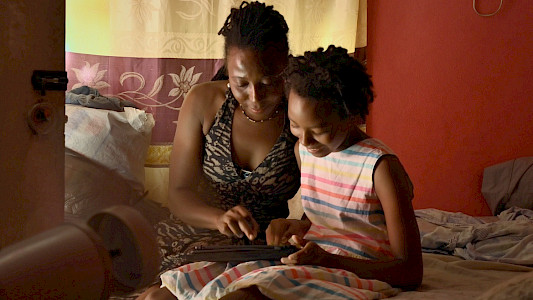
Rasta Gracie dreams of owning her own store to help her support her daughters. The film offers an insight into the everyday life of a feisty Rasta woman and her friends, the healers.Gracie and her Rasta friends, Quaco and Robert, live in eastern Jamaica, at the foot of the Blue Mountains. Gracie is a larger-than-life Rasta woman who loves to rap. She lives in a village with just 400 inhabitants with her ten-year-old daughter Anna. Her elder daughter lives with her mother-in-law in Kingston. Gracie doesn't have enough money to support both children. She's a street trader. Every week, she travels in an overcrowded truck to the market in Kingston, laden with bananas and coconuts and whatever else is in season. She buys her goods on credit from local farmers. The profit she makes pays for the bare essentials. But Gracie follows her grandmother's motto: "Help yourself and help will come to you". Gracie's friends Quaco and Robert also call themselves "grandma's sons". As kids, they used to scour the "rainforest pharmacy" for medicinal plants with their grandmothers. Rasta Quaco is one of the "top two" healers, says Robert. When he's not travelling with Quaco, Robert drives a taxi and also helps Gracie, who is looking for cheap building materials. Gracie's big dream is to build a small store next to her house. She hopes it will earn her enough money to bring home her older daughter Selassia.
Rasta Gracie and Jamaica's Healers
Germany 2022, 45 minby Sibylle Smolka
The Goral people of the Tatra Mountains in southern Poland lead a very traditional lifestyle. Living mainly from tourism today, they are still firmly committed to passing on their customs to the next generation.The Tatra Mountains in southern Poland were once a wilderness of forests and rocky outcrops. Hundreds of years ago, bandits and nomads from the Balkans hid there or looked for new pastures for their animals. Their descendants call themselves Gorals, or highlanders. For a long time, they led an isolated existence cut off from the rest of the world, preserving their own traditions and customs. Today, tourism is their main source of income. It makes life easier, but in the modern world, the Gorals’ folk art – their music, ancient chants and unique handicrafts – is in danger of disappearing altogether. Wojtek is a herdsman, known as "Baca" in Poland. He spends the summer in the mountains, herding a flock of 1500 sheep with his helpers and turning his milk into "oscypek", a smoked cheese known all over Poland. Bartosz comes from a long line of Gorals and is now passing on the traditions to his four children. A folk costume maker offers us an insight into his artistic craft, raftsmen show us an old transport route and Goral women share with us some of their culinary traditions. Will they be the last to speak the typical dialect and know about true Goral life? Or will they pass on their centuries-old traditions to the next generation?
The Gorals of Poland’s Tatra Mountains
Germany 2022, 208 minby Marion Schmidt, Sven Rech, Grit Lederer, Inga Wolfram
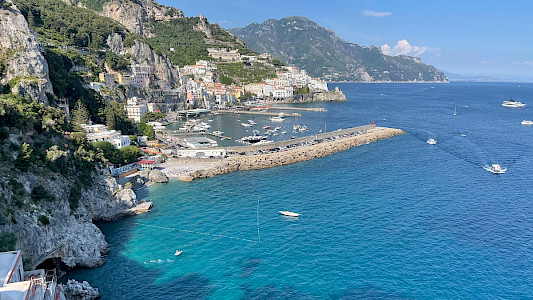
Mankind’s greatest buildings, cultural landscapes and areas of natural beauty must be preserved for the future. On the 50th anniversary of the UNESCO World Heritage Convention, we visit four World Heritage Sites in Europe.In 2022, UNESCO celebrates the 50th anniversary of its World Heritage Convention – the idea of a global heritage that belongs to all peoples and must therefore be protected by the world community. Its mission is to preserve the world’s most beautiful and valuable buildings, cultural landscapes, monuments and areas of outstanding natural beauty for generations to come. This agreement has been ratified by 197 states. The international World Heritage Committee is responsible for deciding what is of outstanding value to humanity. To be included on the World Heritage List, a site must be of exceptional universal significance and of irreplaceable value. Starting out as a short list of twelve 'treasures' from seven countries, it now includes over one thousand cultural and natural sites worldwide that are considered worthy of protection. We introduce four very different World Heritage Sites in Europe: Arles, the Amalfi Coast, Tallinn and Aachen Cathedral. Sensual, visually powerful and told from today's perspective, each part in the series illustrates just how decisively these cultural assets still shape our cultural memory and determine our perspectives today.
UNESCO World Heritage - Treasures for Eternity
2022, 45 minby Sibylle Smolka
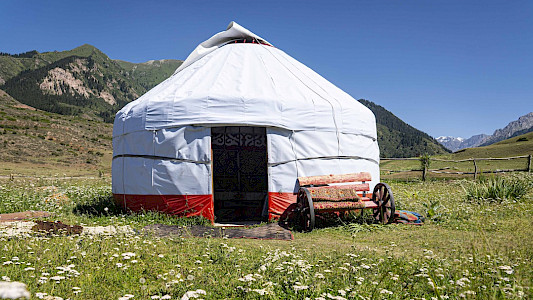
Summer on the mountain pastures – we find out about the traditional family life of Kyrgyz nomad children and we accompany them to the yurt school, where they are introduced to the modern world and Kyrgyz traditions.Many families in northern Kyrgyzstan are spending summers on mountain pastures again just like their ancestors. They breed animals – especially horses – and live in yurts. For the children, this is a special time. With no school for three months, they can enjoy the spectacular, unspoilt mountain scenery and learn about traditional nomadic life. But the girls and boys have to help their parents a lot with household chores and with the animals, so their holidays are not always fun. Some time ago, a yurt school was set up in the mountains, where children can meet, learn and play together during the summer. Instead of going on holiday, Jenya Sharjeva, the head of the village kindergarten, visits the nomad children at the school every day. She wants to improve their educational opportunities with learning and play activities, while also incorporating customs and the children’s families. We find out about the traditional nomadic life on the mountain pastures, accompany 12-year-old Alihan and his father to the famous horse market in Karakol, and we’re there when teacher Jenya introduces her charges to the modern world and Kyrgyz traditions in the yurt school.
Kyrgyzstan - The Nomad Yurt School
Germany 2021, 52 minby Katrin Kramer, Marion Schmidt
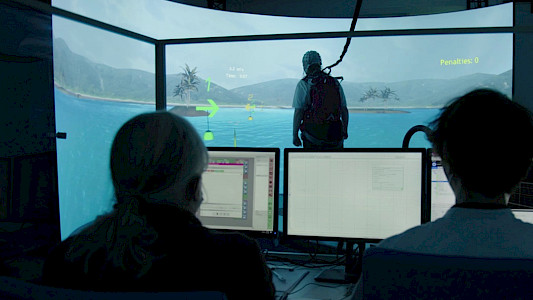
Can the human brain really handle several tasks at once? The film exposes the myth about effective multitasking and takes a scientific look at its feasibility in the real world.Multitasking is a challenge and a myth at the same time. The multitude of tasks that have to be carried out in an increasingly complex working world and constant real-time communication are a challenge to the human brain and its limited attention capacity. What has science found out about this subject and how can we make our work and living environments brain-friendly? From their different perspectives, all scientists reach more or less the same conclusion: that humans are capable of multitasking only to a limited extent. Trying to perform multiple tasks simultaneously is detrimental – also on a long-term basis – to our brain, our performance capacity and our health. Various studies carried out in very different sectors show that economic capacities are also wasted by multitasking and up to a quarter of turnover is lost. The film exposes the myth about effective multitasking and, supported by scientific research, examines its feasibility in the real world to find ways of coping better with the complex tasks we face in our private and professional lives.
Multitasking
Germany 2021, 52 minby Andre Hörmann
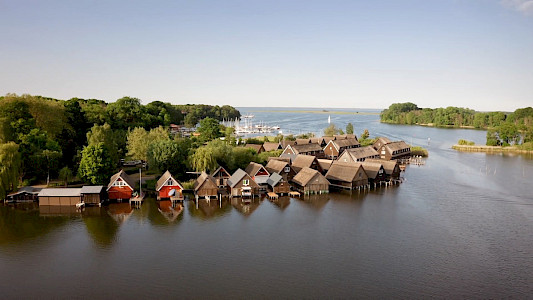
The Mecklenburg Lake District, north of Berlin, is Europe's largest area of interconnected lakes. A voyage of discovery along Germany's most beautiful waterways.The Mecklenburg Lake Plateau is Europe’s largest area of interconnected lakes and waterways. The “Land of a Thousand Lakes”, as it is known, is a region of superlatives: Müritz is the largest lake located entirely within Germany and the heart of the region, the Feldberg lakes are famous for their crystal-clear water, and Tollensesee is considered the most stunning lake in the region. Müritz National Park is home to sea eagles, storks and wolves, and its beech forest has been designated a World Heritage Site. Thousands of cranes stop to rest in the unspoilt moorland every year on their long journey south. Magnificent country estates, medieval inland port towns and rustic villages with their colourful boathouses bear witness to centuries of waterfront culture. Shepherds, farmers and fishermen live in harmony with the stunning natural environment which they do their utmost to preserve. Artists come here to find inspiration for their work. The wild, sparsely populated region stretches from the source of the river Havel between Berlin and Rostock, to the Peene Delta at Lake Kummerow, the Amazon of the north. From here, you can follow the current all the way to the Baltic Sea. A voyage of discovery along Germany's most beautiful waterways.
The Land of a Thousand Lakes
Germany 2020, 25 minby Katja Fedulova
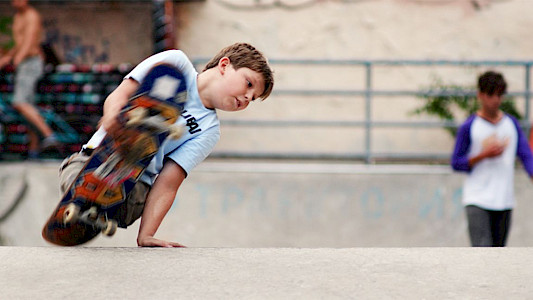
Maxim is 11 years old and lives in Russia. Like many other young boys and girls at his age, he is a passionate skateboarder. He spends every free minute with his skateboard because he has a plan: When he’s grown up he wants to take part in the Paralympic Games.When Maxim was two years old he lost both his legs in a fire. His mother gave him up for adoption. The entire country learned about Maxim’s fate. Reports about him were all over Russian media. Finally a Russian/American couple from St. Petersburg came forward and wanted to adopt Maxim. And so Maxim got a new family and learned to laugh again.
Maxim – The Greatest
Germany 2020, 52 minby Inga Wolfram
Artists, designers, architects and dancers – Moscow has risen to the status of Russia’s cultural capital in recent years. We introduce some of its most prominent gures and institutions. In recent years Moscow has emancipated itself to become Russia’s cultural capital. Self- confident and critical in confronting its own history and culture, and yet tolerant and open to new things. "Moscow is not a city. Moscow is energy," says the young local architect Boris Bernaskoni. Igor Schelkovski, a sculptor and painter, returned from exile in Paris a few years ago to live and work in his hometown of Moscow. And the painter Alexandra Paperno is back again from America. Both are now successfully exhibiting their works in city galleries. Alisa Joffe, a young artist who has not only conquered Moscow but meanwhile made a name for herself worldwide, is setting up a show at Triumph, a renowned private gallery. The Garage Gallery is attracting attention with exhibitions on current themes and the famous state-run Tretyakov Gallery is showing not only amazing Russian avant-garde treasures but also Soviet-era art – a museum that is a veritable cultural event. We introduce Moscow artists, designers and dancers to shed light on this latest chapter in the city’s art history. Moscow’s cultural scene dazzles these days with its splendid diversity. (NEW DOCS)
Moscow - Art and the City
Germany 2020, 43 minby Julia Csabai, Marian Kiss
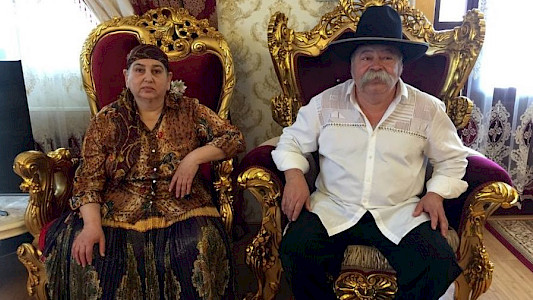
They are considered the aristocrats among the Roma – the Gabor community. More than 1,000 live in the village of Karácsonyfalva in Transylvania, still holding on to their ancient traditions. The village of Karácsonyfalva in the legendary Transylvania region of Romania is the centre of the Gabor community, home to over 1,000 members of the ethnic group. The men wear big black hats, their wives long skirts. Largely shielded from the outside world, they have held on to their customs and rituals for 500 years. This film offers a first glimpse of their intriguing and colourful world. The men travel all over Europe as traders. The women raise the children. Considered the aristocrats among the Roma, most Gabor are Adventists. They have their own laws applying to all areas of life, and disputes are settled within the community. Even the local police rely on the village chiefs in cases of conflict. Weddings are the most important celebrations for the Gabor, for they form the glue holding the community together. Girls are taken out of school at the age of 11 and married at 14. The boys progress from the school desk to the “school of life” at the age of 14. We witness here the marriage of 14-year-old Mundra to 16-year-old Bobby and also get to know other Gabor families. Poverty and wealth collide here at close quarters, and yet the Gabor maintain a close-knit community – caught up between tradition and the pressure for change in a globalised world.
Transylvania - The Closed World of the Gabor
2020, 86 minby Andre Hörmann
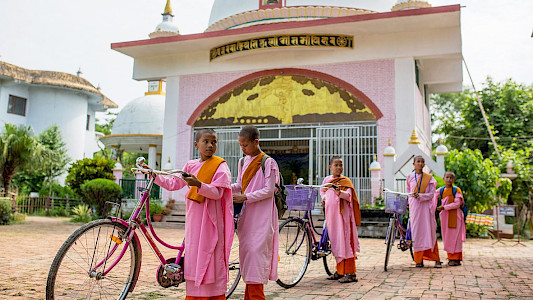
A land of ancient cultures, diverse peoples and religions, and an eventful history between tradition and modernity. A journey to discover Nepal’s natural beauty and the people who live in this remote setting.Nepal – A land where primeval forests meet mountain deserts, with both tropical regions and icy peaks. One of the poorest countries in the world and yet a magical, mystical place, realm of the gods and a spiritual paradise. A country of ancient cultures, many peoples, multiple religions and an eventful history, caught up between tradition and modernity. We cross the country from east to west on the Mahendra Highway, passing through the world’s highest mountains, the Himalayas. In the first part we start in the east, in the lower Himalayas on the border to India, a scenic hilly landscape where we visit the tea plantations of Ilam. Via Janakpur we continue to Chitwan National Park and finally to Mount Everest and the fertile Kathmandu Valley. The second part takes us from the Hindu pilgrimage site of Muktinath via the original villages of the former Mustang kingdom to Pokhara and Phewa Lake and onward to the spectacular trekking routes in the Annapurna area and to Bardia National Park. Wonders of nature alternate with cultural sites, pilgrimage sites with busy bazaars, Buddhist with Hindu sanctuaries. A journey to discover Nepal’s natural beauty and the people who make their lives in this harsh and remote setting.
Nepal - So Close to Heaven
2019, 45 minby Andre Hörmann
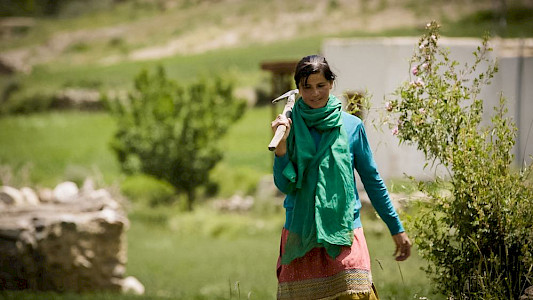
In a small village in Pakistan, in the middle of the Karakorum, one of the world’s highest mountains, women have started training as mountain guides for the first time. We accompany them on their way up.Shimshal is a small village 3100 metres high up in the Karakorum, one of the world’s highest mountain ranges, in northern Pakistan near the border with China. Known among climbers as the 'village of mountaineers', there is an average of at least one mountain guide, climber or porter in each household – occupations that were previously the preserve of men. But for a number of years, climber Qudrat Ali has been training women as mountain guides for the first time at the Mountaineering School. A great opportunity for women from Shimshal to earn an income and significantly improve their own lives and those of their families. But first of all, they have to complete a challenging course which trains not only their mountaineering skills, but team leadership, conflict management and decision-making skills in extreme situations. The final examination then involves climbing the 5300-metre-high Shifkteen Sar. But their mission is greater than any mountain. If they manage to conquer the peaks of the highest mountains in the Karakorum, every woman in Pakistan can take her life into her own hands. We accompany a group of young women on their way up and into a new life.
Daughters of the Karakorum
2019, 156 minby Alessandro Melazzini, Inga Wolfram, Elke Werry
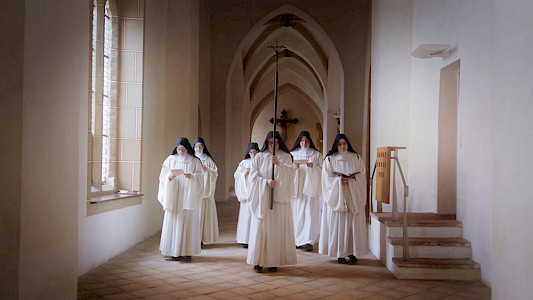
ITALYUsing the example of five monasteries, the film explores the artistic and cultural heritage of the Cistercian order in Italy. It shows how the materials of the Po Valley can be found in the Chiaravalle Milanese Abbey and how the art of the famous painter and builder Giotto was able to penetrate the usually stark rooms of a Cistercian church. In the buildings of the big abbeys of Lazio, influences of Burgundy are mixed with the traditions of local craftsmen. But the film also focuses on the monks representing the order today and regular visitors who try to leave their every day life behind and find some peace and quiet.FRANCEThe Cistercian order was founded in 1098 in Burgundy, France. Starting with the initial abbey, Cîteaux Abbey, the order soon became a Europe-wide active Christian order with a very strict set of rules. In search of spiritual renewal the Cistercians created architectural masterpieces, which became the vanguards of gothic architecture. Their abbeys are fixed points of reference in our European cultural landscape and reflect the history of a religious movement that still exists today. The film will focus on Pontigny Abbey, La Trappe Abbey in Normandy and the world heritage site Fontenay.GERMANYWithin 200 years the Cistercians founded 650 abbeys worldwide. In the twelfth century alone they founded 91 abbeys for men and 15 abbeys for women only on the territory that is modern day Germany. During the Middle Ages joining an Abbey could have been seen as an emancipatory act for women, as it was a way to avoid the rule of men. Women’s abbeys were also the only places at the time, where girls had the opportunity to learn to read and write. The film is exploring Cistercian history in Germany and focuses on, amongst others, the three still active abbeys: Waldsassen Abbey in Bavaria, St. Marienstern Abbey in Saxony and Wienhausen Abbey in Lower Saxony.
In the Footsteps of the Cistercians
Germany 2018, 52 minby Sibylle Smolka
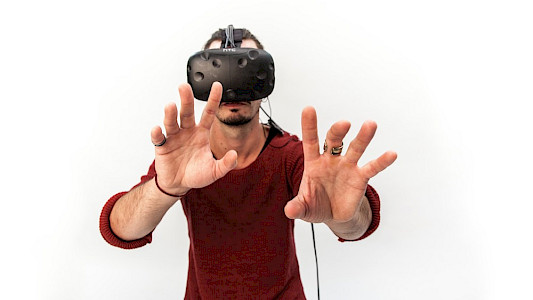
What do love and partnership mean in the digital age and what does the future hold? Will sex robots be the better partners? A scientific review of the most interpersonal of all relationships.The digital revolution has also profoundly changed our understanding of desire and love. New technical developments and inventions promise one thing above all else: optimisation. Today, love is a project in which everyone strives to achieve the best for themselves, and eroticism has become an adventure playground for adults. Entire industries are working to generate desire, to bring people together and to improve relationships. The market for pornography, sex toys, potency pills and erotic literature is booming. VR technology promises completely new sexual experiences, and teenagers and young adults today experience eroticism in a completely new way. But at the same time, it’s becoming increasingly difficult to find a long-term partner. Although most Germans still believe in true love, new relationships last an average of less than three years in the age of the internet. Will sex robots be the better partners in future? The first sex dolls with artificial intelligence are due to be launched on the market in 2018. We find out what’s new on the market and ask sociologists, scientists and couples therapists how these developments will impact our society and what they mean for the future of love, sex and partnerships.
Sex and Love 3.0
Bitte aktivieren Sie Javascript, um auf unsere Website zugreifen zu können.