Germany 2022, 105 minby Markus Weinberg, Steffi Rostoski
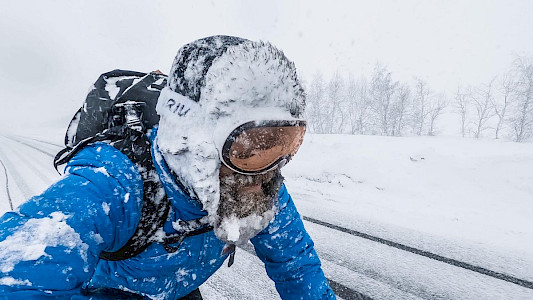
The multiple world record holder and extreme athlete Jonas Deichmann plunges into his next adventure – the most spectacular and longest triathlon ever attempted, from Munich to Munich around the world. The journey – a 120 times Ironman distance – will take him to his physical and mental limits. 460km swimming, 21.000km on bike, 5.000KM running. Jonas begins his journey in the midst of the pandemic: travel routes are closed overnight; border crossings become a feat of strength, presenting him with unforeseen challenges. On top of that, he grapples with the impact of humanity's ecological footprint in nature and the way climate change affects our planet earth. [35 IDFA Docs for Sale]
Jonas Deichmann – The Man They Called Forrest Gump Aleman
2021, 92 minby Steffen Krones
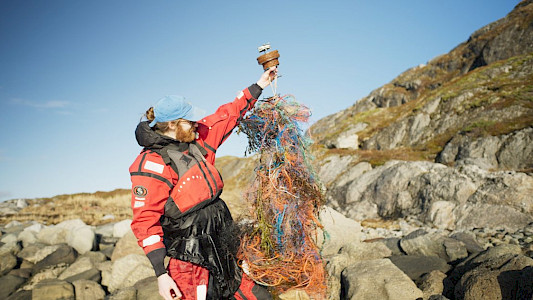
Our oceans are drowning in plastic waste that often arrives there via European rivers. To find out more, Steffen Krones builds a GPS buoy to follow the plastic waste’s journey to Lofoten.A German beer bottle, washed ashore on one of Norway’s remotest islands on the Lofoten archipelago in the Arctic Ocean. How did it get here? Did it really come from Germany? Or did a thirsty tourist down the beer and dispose of the bottle in the sea? Passionate about Norway’s unique scenery, film-maker Steffen Krones is keen to get to the bottom of the matter. Are rivers in Central Europe connected to the Arctic Sea? Can waste really travel so far? His personal curiosity turns into a scientific research project. Together with engineers and well-known scientists, Steffen wants to trace the journey of plastic waste from his home city of Dresden. They build GPS buoys which they launch on the river Elbe. Steffen’s friend Kris follows the experiment from Norway. Will the buoys really wash ashore somewhere in the Arctic? Will GPS data confirm suspicions that there are links between German rivers and the Arctic Circle? The film takes us on a scientific adventure down the river Elbe across the North Sea to Norway and shows us that we are part of a cycle in which every one of us has the power to make changes.
The North Drift
Germany 2019, 67 minby Markus Weinberg
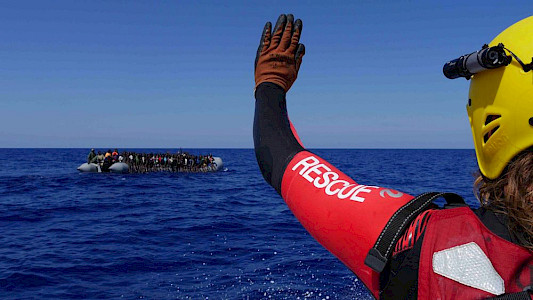
Their purpose: to save refugees from drowning. For this, Axel Steier and his team from the Dresden sea-rescue NGO “Mission Lifeline” have worked tirelessly for years to collect donations. Together with two Spanish NGO’s, they finally manage to buy their own ship and set off to the Mediterranean. In his hometown Dresden, Axel’s idea finds many friends but just as many enemies. And then, the truth at sea – oil leakage, refugee boats sinking before their eyes, even gunfire by Libyan militia. For two years, we accompanied Axel and his team with our camera – even onto the ship just off the Libyan coast, where the struggle to save people from certain death ultimately also turns into a fight for the European idea. (Aug&Ohr)
Mission Lifeline
Germany 2019, 81 minby Robert Dobe, Omar Shalash
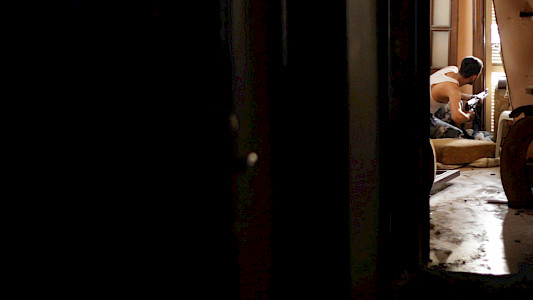
When Tamer Alawam was killed by a grenade in 2012, he left over 300 hours of film footage of the Syrian Revolution – images, which were meant to show Syria from inside. Overwhelmed by the flood of these images and driven by feelings of grief, responsibility and powerlessness, two young filmmakers and friends of Tamer in far away Germany start their own search for answers. While one of them meets with Tamer's companions to find out more about the motivations of his friend, the other begins collecting reactions in German society towards the war in Syria. A documentary about humanity, responsibility and the difficulties of finding the right way of action.
Starting with Fragments
Bitte aktivieren Sie Javascript, um auf unsere Website zugreifen zu können.