
2023, 103 minby Mark Michel
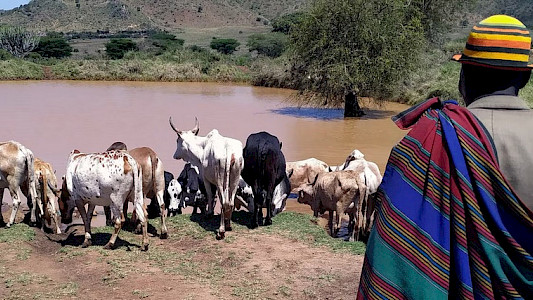
HERDERS – GUARDIANS OF THE EARTH follows five herders and their families in Peru, Kyrgyzstan, Uganda, India and Germany throughout the seasons. For months they trek through changing landscapes with their herds, living only from what nature provides. It is a life far from the romantic picture we have, a life under harsh conditions, in direct contact with nature and its extreme elements – birth, death, storm and sun, rain and drought are fundamental parts of their lives. HERDERS tells the story of their struggles for survival. Their animals are partners, even friends.HERDERS – GUARDIANS OF THE EARTH is a graceful and moving meditation on a disappearing life form. Tender and unsentimental at the same time. In landscapes of remarkable size and beauty, the film portrays the lives of the often invisible and marginalised pastoralist cultures that exist throughout the world. The film captures the beauty and hardship of this dying way of life, explores the deep and ancient union between people and animals, and tells of a way of food production and a way of life that gives more back to the nature and to humanity than what it takes away. There is a wisdom in the ancient practices of nomadic pastoralism that deserves to be preserved and protected. Time for a tribute. And a chance to rethink.
Herders
Germany 2022, 83 minby Rudolph Herzog
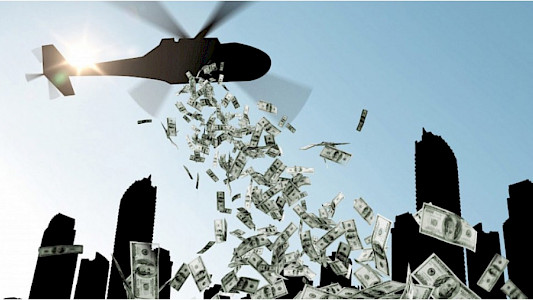
The world is addicted to debt. On the one hand you have states, companies and private individuals who can’t get enough of the sweet drug of money, using it to finance generous tax giveaways, loss-making business operations and overpriced real estate. On the other side are the creditors, who are no less hungry for interest-bearing securities.
300 Trillion – The Debt Trap
Germany 2021, 85 minby Laura Brandt-Reichwald
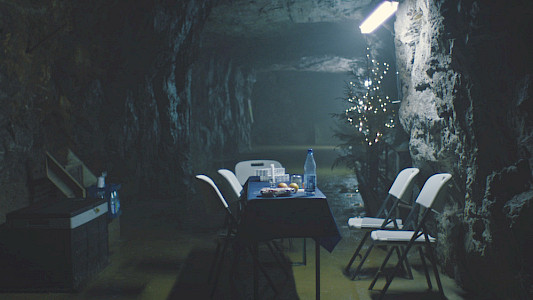
STOLLEN is an intimate portrait of the Erzgebirge, a mountainous region in eastern Germany, forever shaped by centuries of mining. 30 years since the closing of the last uranium mines, its people discuss their uncertain future as the character of their home oscillates between old traditions and a new fassade as a Christmas Wonderland.
STOLLEN
Germany 2019, 76 minby Tom Fröhlich
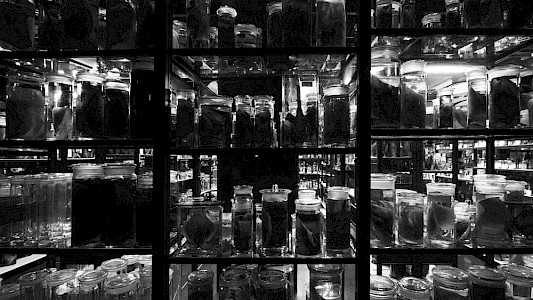
Six people reveal their interpretation of the perfect black and explain their search for it.The story begins with a view through a vast telescope in the Thuringian Forest. Dr Eike Günther, an astrophysicist specializing in discovering Earth-like planets, is on nightshift. But he’ll never find perfect black in the real universe as it only exists as a definition on paper.Gerhard Wiesbeck is a tattoo artist. Getting a tattoo is a moment when the mask comes off, a moment of love, he says – and returns to the totally black pattern he is producing on his client’s back. His speciality is to colour bodies completely black.Even in the depths of the ocean where light cannot penetrate, life still exists. The aphotic or ‘midnight’ zone is explored by marine biologists like Professor Antje Boetius. The black depths are her home.Can you hear black? There are a handful of synaesthetes who associate colours with sounds. Perceiving colours as feelings is a rare phenomenon; hearing colours is almost unique. But Katja Krüger has this ability. And being a musician, she can make these sounds audible, even if she’s the only one who can feel them.If you dedicate your life to death, you’re surrounded by black. But that’s a popular misconception, says Dorothea Stockmar, artist and formerly part of the hospice movement. Everything in life is colourful – including mourning and death. Perfect black is far more important than life or death, for by giving everything a shape it enables us to see things.What is perfect black? The answer might be that it doesn’t exist. The six protagonists’ search for meaning is a metaphor for all the moments in which we think we know the answer.
Perfect Black
Germany 2016, 60 minby Winfried Oelsner
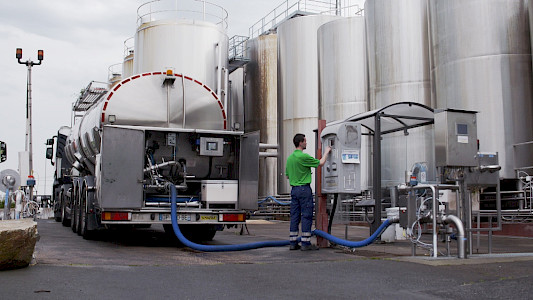
MILK is something everyone grew up with 'to grow big and strong'. Everyone knows this. No wonder, for milk's healthy image is carefully nurtured by the milk industry. We all know adverts extolling milk's virtues as natural product full of nutrients. Moreover, milk is supported by the state, recommending daily consumption of dairy products.But, is milk really healthy? Or does it sometimes have the opposite effect? Can it still be classed as a natural product? Milk's long-standing clean image is starting to tarnish. Dairy products are now among the most controversial foodstuffs – and their detractors are growing louder. A heated, emotional debate has been seething between supporters and opponents for years. As a result, consumers are increasingly wary.In search of clarity, we visit scientists, doctors, dairy farmers and insiders from the milk industry across Europe. Who's behind the opinions for and against milk? Whom should we believe? And where's the proof?We set out on a journey searching for answers to these questions.
Milk - Facts, Figures and Beliefs
2016, 52 minby John A. Kantara
Modern veganism for those who want it all is the new lifestyle of the younger generation. Gourmet restaurants in Paris now serve vegan haute cuisine, vegan supermarkets are opening up in German cities, celebrities and bloggers are sharing new recipes for vegan cakes and biscuits on the Internet. In the US veganism has become a major trend. And a million dollar business.But as well as being a fashionable strain of vegetarianism, veganism is also a new, highly profitable area for research and business. Countless ways of replacing milk, cheese, eggs and meat with a vegan trompe l’oeil are entering the markets. Biotech start ups in California are setting out to create milk and meat in their labs. But are these substitutes from the laboratory really a healthier choice? How green and sustainable are these new products? Is being vegan morally superior? John Kantara, a meat eater andfood lover, will explore the very idea of a vegan diet, the ethics and motivations of the movement behind it as well as possible hazards for our health and the role of the businesses – from established industry to start-ups in vegan market segments.
GOOD – BETTER – VEGAN?
Israel, Germany 2022, 90 minby Rotem Gross
A man lies unconscious in the intensive care unit. The doctors give him 4 hours to live, his wife kisses him goodbye, his father-in-law goes over his insurance policy and plans to get rid of the family dog. 44 hours later, Gil Avni (33) astonishingly wakes up recounting every single minute of it all. A story of a man fighting for his life against those who love him, yet think of him as dead.
44 Hours
Germany 2022, 85 minby Elwira Niewiera, Piotr Rosolowski
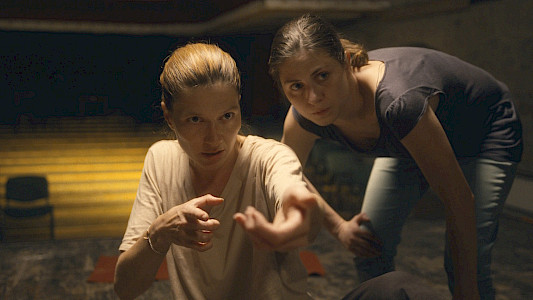
The Hamlet Syndrome depicts the young Ukrainian generation scarred by war and political breakthroughs. The film's starting point is the preparation for a play based on the motifs of Shakespeare's Hamlet, which, combined with an intense glimpse into the lives of the characters, creates a powerful portrait of a generation having to confront their war trauma and tackle the painful past, which now after the Russia's invasion of Ukraine becomes their present and future alike.
The Hamlet Syndrome
Denmark, Germany 2021, 94 minby Louise Detlefsen
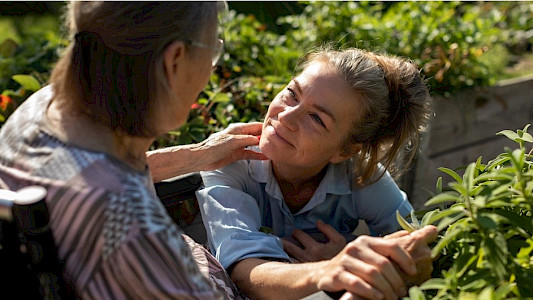
Cake and bubbly instead of medicated immobilisation: IT IS NOT OVER YET portrays a controversial new treatment of people with dementia. They have named it 'care treatment': hugs, touch, talking, humour, eye contact and the joy of community are the prescription.At the small retirement home Dagmarsminde, the founding nurse May Bjerre Eiby has no interest in specific dementia diagnoses or medicine, since neither is improving the quality of life for the 11 residents. Instead, May and her staff have developed a new kind of treatment inspired by the methods that Florence Nightingale introduced 150 years ago. The goal is to inspire a complete change in the way people with dementia are treated in the healthcare system, shifting from medicine to care.
It is not over yet
Israel, Germany 2017, 86 minby Rina Castelnuovo, Tamir Elterman
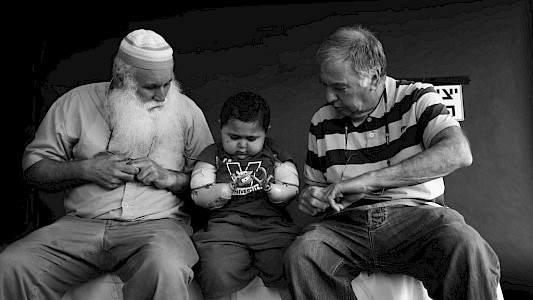
Muhi, a brave and spirited Palestinian boy, has lived in an Israeli hospital for seven years. With a rare disease and life threatening outbreaks that left both his arms and legs amputated, he cannot return to his family in Gaza where the shattered healthcare system is unable to treat his condition. Watched over by his grandfather Abu Naim and a volunteer Israeli humanitarian Buma Inbar, Muhi has just begun to understand the rules and conflict that divide his world. His updated visa status “Generally Temporary” strikes a particularly poignant note.
Muhi – Generally Temporary
CEO: Jürgen Kleinig cell: +49 179 7389468
Bitte aktivieren Sie Javascript, um auf unsere Website zugreifen zu können.