Germany 2015, 90 minby Stefan Eberlein
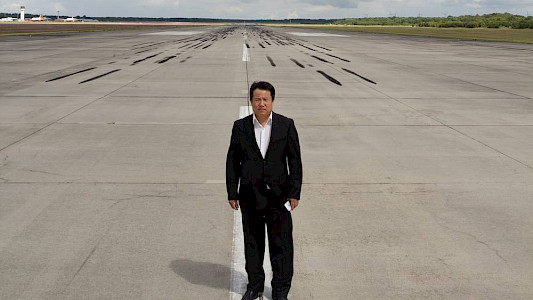
A Chinese investor buys the regional airport of Parchim in provincial north Germany to turn it into a hub for international cargo and passenger transport. Sheer megalomania or enviable drive and enthusiasm?In 2007 Chinese investor Jonathan Pang bought an old military airport in Mecklenburg-Vorpommern, northern Germany. In the small town of Parchim, he wants to create an international hub for air cargo transport between China, Europe and Africa. Mr Pang plans no less than to reroute international commodity flows and turn Parchim into a new centre of globalisation. But is this idea compatible with the north German provinces? The unemployment rate is high, the airport has laid idle for 17 years. A container on stilts acts as a temporary control tower, the runway is crumbling and staff speak no English. While Jonathan Pang’s German adviser Werner Knan gets increasingly bogged down by German bureaucracy, Mr Pang travels the world and with unfailing optimism endeavours to win the support of others for his undertaking. The filmmakers accompanied the investor over a period of seven years, encountering wealthy Chinese entrepreneurs, a German district administrator, a networking member of parliament and finally visiting Mr. Pangs home town in the remote Chinese province of Henan. Will he succeed in turning Parchim into a new centre of global trade?
Parchim International
Germany 2013, 86 minby Eva Wolf
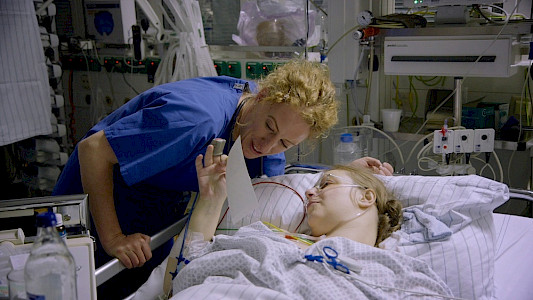
This documentry allows an insight into the mental and emotional challenges the staff of an intensive care unit is facing on a daily basis, dealing with decisions that have far reaching consequences for their patients. Often it is the staff of the intensive care unit - the doctors and nurses - that are confronted with difficult ethical questions that their patients haven't yet had to consider. We regret, at this time, the film is only availiable in german Questions with no easy answers. How do we want to die, and how do we want to live?
Intensive Care
Germany 2010, 95 minby Eva Wolf
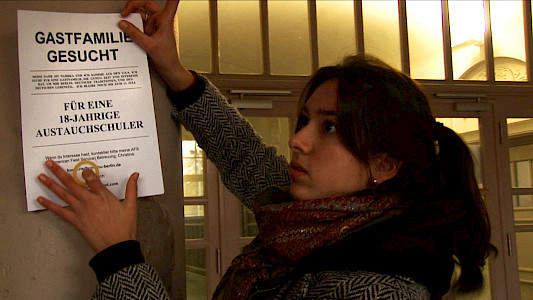
Different countries, different customs. Every year, young people from all over the world go to a foreign country to familiarise themselves with an alien culture. What they experience there is sometimes funny and sometimes tragic. But it is always about finding one’s own borders and about finding a place for oneself among foreign people and their patterns of behaviour: what should be understood without having to say it, when people live together? What can be seen as normal behaviour, and what borders on being weird? 12 Months Germany accompanies four exchange students from three different continents living with their German host families allows us to share in their frustrations, their conflicts and in their successes while living in this foreign country. Kwasi from Ghana was sent by his mother on this journey into the unknown, but in the beginning, he is bored to death from dawn to dusk in the provincial East German countryside. Nairika from the USA is looking for real family life, something that she cannot get from her hard working single-parent host mother in Berlin-Neukölln. Constanza from Chile cannot find a way to communicate with her host family despite the fact that they always have a dictionary at hand. And Eduardo from Venezuela, who now lives in Hamburg-Ottensen, is supposed to start reading real German books instead of just the sports section of the newspaper. The film’s director Eva Wolf accompanies these four protagonists through their exchange year in Germany and through their ups and downs with their host families, she shows that conflict can result in real understanding and closeness, not just alienation. Her film is about the tensions that sometimes arise from cultural differences and sometimes just from the fact that human beings are simply different - everywhere in the world. We do not only find different customs in different countries, but also sometimes in the house next door.
12 Month Germany
Germany 2009, 58 minby Beatrice Möller
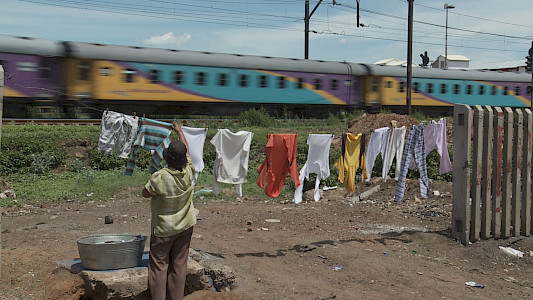
In the new South Africa everyone is equal: Blacks, Whites, Indians and Coloureds. On a train journey on the Shosholoza Express they encounter fragments of their past. Twenty years after the end of apartheid rule, everything has changed but nothing is as it should be. Travelling through modern cities, dilapidated townships and vast open spaces, the film tells a story of inner boundaries, prejudices still not overcome, unfulfilled hopes and simmering conflicts. Everyone is travelling on the same train, but not in the same compartment.
Shosholoza Express
Bitte aktivieren Sie Javascript, um auf unsere Website zugreifen zu können.