Germany 2023, 45 minby Daniela Pulverer
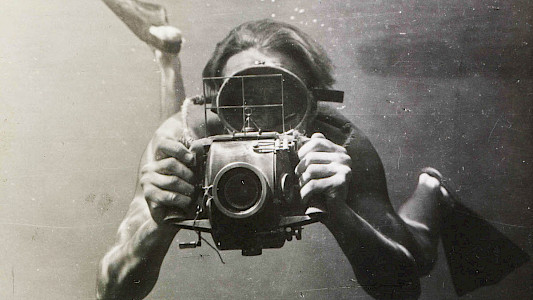
We owe the first spectacular underwater photographs to Austrian zoologist Hans Hass, who introduced the general public to the underwater world for the first time in the 1940s. Who was this adventurer and film-maker?Hans Hass was one of the inventors of underwater photography in the 1940s. His colour photos of coral reefs and fearsome sharks introduced the underwater world to a wide audience for the first time. In his 1949 film “Menschen und Haie” (Humans and Sharks), he portrayed sharks as harmless sea creatures rather than clichéd man-eating monsters. A trip to the French Riviera as a young man sparked Hass’ enthusiasm for the underwater world. He made himself an underwater camera and observed sea animals in their natural environment as a free-swimming diver. This was a radical new approach to marine research that allowed completely new observations to be made. But how did a young man from Vienna end up making a groundbreaking career for himself as a diver, film-maker and zoologist – at the beginning of World War II at that? And what role did Hass’ wife Lotte play – the first woman to take on the male-dominated underwater world? The documentary offers some fascinating insights into Hans Hass’ life and work. Producing over 70 films and inventing numerous technologies, Hass paved the way for all underwater film-makers who followed him.
Hans Hass – Pioneer of the Deep
Germany 2022, 52 minby Anna Pflüger
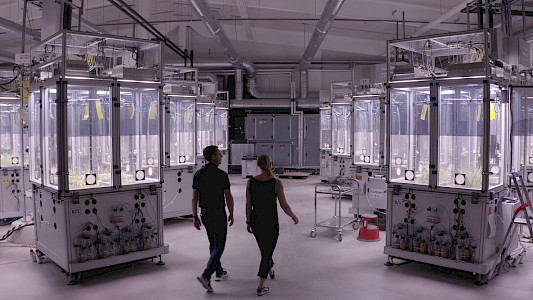
What is soil made of, how does it come about? And how can we use and preserve it as sustainably as possible? A scientific look below the surface of the earth provides the latest findings on the DNA of soil.Our soil is the basis for food production, habitat for humans and animals, it manages water resources and protects our groundwater. Soil is also of key importance to climate protection. But how does soil actually come about? What is it made of and why is our soil a threatened resource? We meet one of its most important inhabitants, sometimes known as an "ecosystem engineer", the earthworm. The earthworm guides us through the film and takes us to different locations. In Scotland, a government project is dedicated to rewilding moorland. This is an important step in the fight against climate change – moorlands are terrestrial ecosystems that store vast amounts of carbon. In Leipzig, scientists are investigating the impact of climate change and soil usage on soil health. High up in the mountains in Kaunertal, Austria, specially developed seeds with microbacteria are being used to combat erosion. These projects have one thing in common: they want to understand soil better and protect and preserve soil for as long as possible. It takes thousands of years for one metre of organic humus to develop. This makes soil a non-renewable resource – one that is under threat.
The DNA of Soil
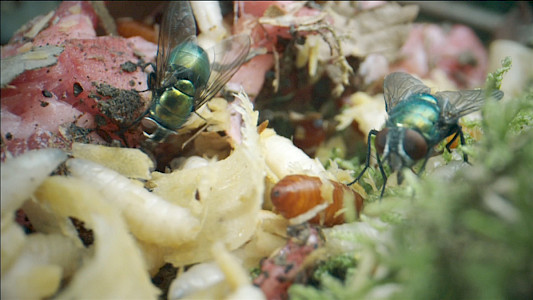
They are the unsung heroes of crime investigation – forensic scientists. We meet Europe’s leading experts in forensics. We learn about the newest methods in their profession and take a closer look at their most exciting cases.We take a closer look at the ones working behind the scenes when it comes to solving major crimes. Here, in high tech laboratories in the cellars of Europe’s Universities, hospitals and forensic institutes, is where they work on their crucial share in figuring out what has happened at a crime scene. They are forensic scientists, the unsung heroes of crime investigation. They did not choose a job in the area of criminal investigations. First and foremost, they are scientists. A great interest in their topic is what brought them to where they are today. Like the forensic entomologist Jens Amendt in Frankfurt, Germany, who was fascinated by insects and decided to study them. It was years into his professional career before he became a specialist in forensic entomology. Botanist Martina Weber in Vienna followed her teacher into the field of forensic pollen analysis, and just recently solved a case regarding the time of the eruption of Vesuvius in Pompeji some 2000 years ago. Lorna Dawson from the James Hutton Institute in Aberdeen solved a murder by following the traces of soil on the suspect's car and boots. Philippe Esperanca in Marseille even developed a new mixture to make wiped away traces of blood visible again. Professionalism and curiosity, and the eagerness to unravel whatever mystery is put in front of them, is what makes scientists so great at what they do. Whenever a capital crime happens, forensic experts of different fields get to work with the traces left behind at the crime scene. The results of their investigations, put together like the pieces of a jigsaw puzzle, are the ones that help investigators figure out how and when exactly a crime went down. For this documentary, we meet Europe’s leading experts in forensics. We learn about the newest methods in their profession, what made them choose their path, how they became involved with law enforcement, and we take a closer look at their most exciting cases.
Pollen and Insects - Forensic Science and its new Techniques
2022, 43 minby Anna Pflüger
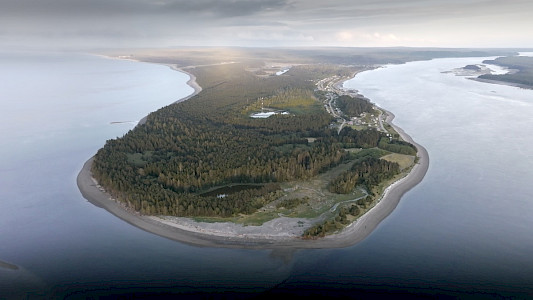
Haida Gwaii, an archipelago off the west coast of Canada, is home to Skil Jaadee and her family. They live in harmony with nature and have made it their mission to save their language and preserve their history.The islands of Haida Gwaiis off the coast of British Columbia, Canada are home to black bears and many other wild animals. The shores are lined with dense, mossy forests, and totem poles rise 53 metres high into the sky. These monuments record the history and stories of the Haida people in pictures. The Haida pass on their traditions not through written words but through spoken language. But very few people master the language because the generation that still speaks Haida fluently is slowly dying out – and their language is also at risk of disappearing. But their songs, dances and traditions are being revived again. Their importance and value have been recognised just in time. Skil Jaadee White has made it her mission to save the language from extinction and preserve her ancestors’ past. The 27-year-old lives with her family in Old Masset in northwest Haida Gwaii. Her father Christian White is one of the most famous Haida carvers. The documentary offers a glimpse into the life of Skil Jaadee and her family and the Haida’s sustainable lifestyle against the stunning backdrop of the archipelago. A uniquely beautiful part of the world.
The Haida in Canada
2019, 45 minby Sabiha Sumar
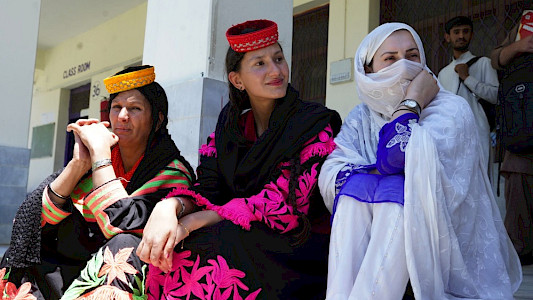
Around 4,000 Kalash people still live in the secluded valleys of the Himalayas in Northern Pakistan. A journey into a world seemingly almost untouched by modernity.At the foot of the Himalayas on the Pakistani border with Afghanistan live the last representatives of the millennium-old culture of the Kalash people. Only about 4,000 of them still live in the valleys of the Himalaya Mountains. Legend has it that the Kalash are descendants of Greek troops who settled in the Hindu Kush during the campaigns of Alexander the Great, but this theory remains controversial. DNA researchers assume an Afghan origin, but, their western appearance points to a European lineage for the Kalash. Throughout history, most of these people have undergone forced conversion or been killed. Only in the Pakistani province of Khyber Pakhtunkhwa has a fraction of the ethnic group survived, maintaining a polytheistic faith and a highly traditional way of life, far away from the modernity of the big cities. And the young generation are often faced with having to choose one of these two very paths: tradition or modernity. Many have to juggle between the will to preserve their culture and religion and the opportunity to strike out in new directions away from the limited perspectives of their home villages. How do the Kalash view the future of their traditions? Will they be able to sustain them?
The Culture of the Kalash
Germany 2019, 52 minby Anna Pflüger, Jennifer Gesslein
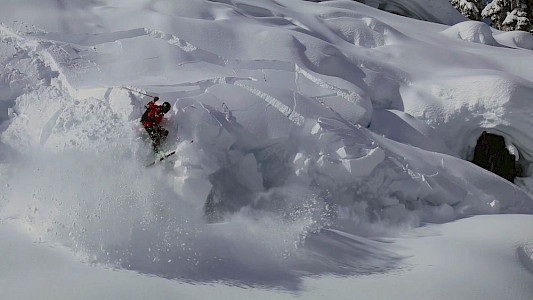
It’s impossible to stop and still difficult to forecast avalanches. We spend a winter season following scientists, snow profilers and trainers as they go about their work in the Alps.It doesn’t matter whether they’re snowshoeing or skiing, up to 100 people are killed by avalanches in Alpine countries every year. Stopping the rolling masses of snow is impossible and it’s still difficult, although not impossible, to forecast avalanches. At the world’s largest centre for avalanche research − the Institute for Snow and Avalanche Research (SLF) in Davos − scientists are investigating the conditions that cause snowpacks to break and the impact climate change is having on the formation and nature of avalanches. In the course of a winter season in Switzerland, Austria, France and Germany, we meet scientists who have dedicated their lives to the study of avalanches and snow using the latest techniques, snow profilers who assess the risk of avalanches every day, and trainers who train winter sports enthusiasts. Researchers from various countries come together to take part in a large-scale experiment, a controlled avalanche blasting on SLF’s test site. They want to better understand the causes of uncontrolled snowslides. But will there be enough snow for the blast? The experiment can only take place if sufficient snow has fallen. We follow the researchers as they prepare for the test.
The Science of Avalanches
Bitte aktivieren Sie Javascript, um auf unsere Website zugreifen zu können.