
Germany 2024, 109 minby Alexandra Sell
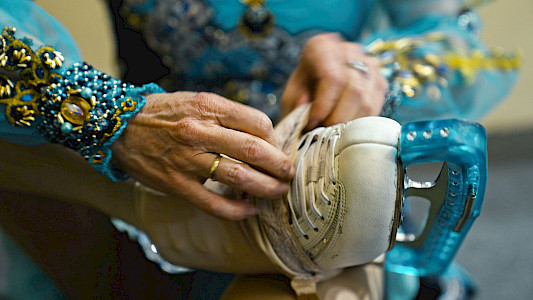
Back in the swinging 60s young Linda from the streets of South London skipped school for the ice disco and was discovered on the spot, becoming a three-time British Champion in pair skating. Half a lifetime and two cruel twists of fate later, Linda returns onto the ice aged 70 – when nothing less than her life is at stake.Alexandra Sell’s touching documentary ICE AGED follows six men and women from all over the world for the best part of three years, tracing their dedication to training at local ice rinks up to the big performance at the World Hobby Figure Skating Championships at Oberstdorf in Bavaria.ICE AGED shows that the dream of skating is a battle-cry against the march of old age and the glorification of youth. Our well-aged heroes go beyond their limits for that all-important moment. On our way through their years and their tears, we witness deep pain, intense joy and unbreakable courage which takes our breath away.With: Elena Rickmann, Sissy Krick, Roland Suckale, Toos van Urk, Nadia Colbourne, Linda Bernard, David Marzell
Ice Aged
2023, 90 minby Moritz Springer
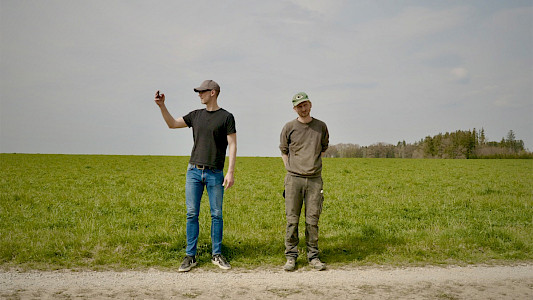
Far beyond merely offering an alternative model for agriculture, a collective of potato-growers straddles the line between an inspiring vision and sobering reality.Over a period of nine years, this documentary observes the Kartoffelkombinat, a collective of potato-growers in Munich, on its way to becoming Germany’s largest agricultural cooperative. The efforts of the organization’s two founders have been in service of a grander vision: finding an alternative to the capitalist mode of production. But the road there is rocky, and suddenly the project is on the verge of failure. [40 FFMUC]
The Combine
Germany 2023, 92 minby Grit Lemke
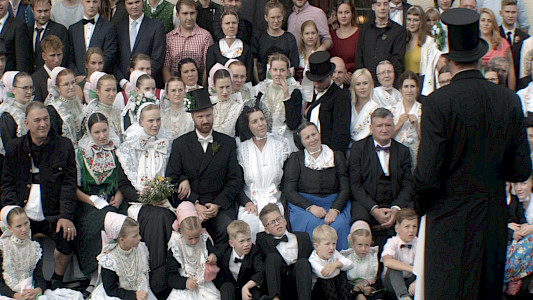
What makes us who we are? In search of her own roots, the director explores an indigenous people in Germany: the Sorbs, the smallest Slavic people. Their language and culture are severely threatened by centuries of oppression. But a new generation no longer wants to accept this: They are committed to self-determination, come to terms with the trauma of losing their villages because of lignite mining or redefine being Sorbian as alternative, anti-fascist and feminist. And the German Anna becomes a Sorbian Hanka. Metaphorical images of nature, poetic reflections of a first-person narrator and archaic but experimental Sorbian music in the first ever film about Sorbs.
We call her Hanka
Germany 2019, 79 minby Annekatrin Hendel
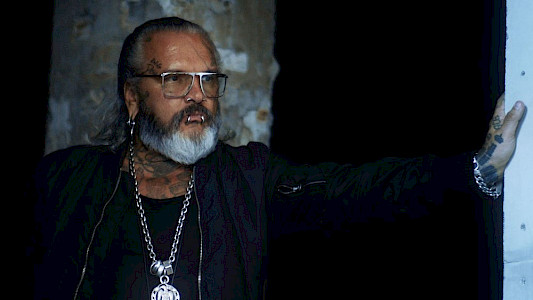
Sven Marquardt might be the most famous bouncer worldwide. But beside standing in front of the legendary techno club Berghain in Berlin, he is also a well-known and skilled photographer. Long before the Berlin Wall came down, Marquardt portrayed the subcultural East-Berlin scene. His black and white photography illustrates it as voluptuous, laid-back, dirty and existential. Even if shot by daylight, his work is permeated by darkness, ecstasy and night.with: Sven Marquardt, Dominique Hollenstein und Robert Paris
Beauty and Decay – Sven Marquardt
Austria, Germany 2019, 90 minby Elsa Kremser, Levin Peter
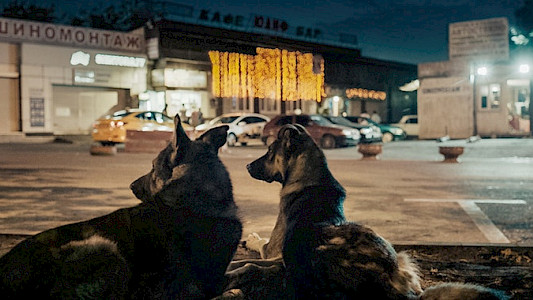
SPACE DOGS embarks on a quest after the street dog Laika who was the first living being sent into space, where she burned out. A legend says that today her ghost is wandering through the Russian capital. The hybrid-documentary SPACE DOGS takes this myth as its starting point and proceeds by following Laika’s traces. They lead into the story of Soviet space travels and street dogs that live in today’s Moscow. This film is a magical journey across our earthly borders and tells a so far unknown story of Moscow stray dogs – from ascent into space to the life on the surface of the earth.
Space Dogs
Germany 2018, 103 minby Annekatrin Hendel
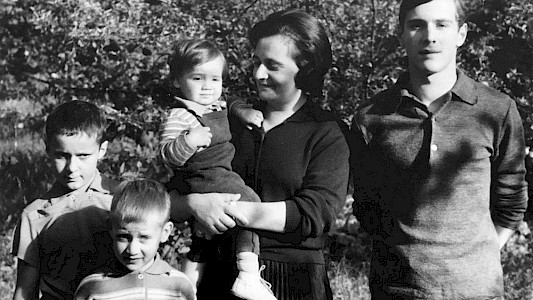
A perfect GDR functionary-family who, post 1945, lived the German dream of constructing socialism in the Soviet occupied zone: the passionate anti-fascist Horst Brasch, his wife, and their four children. Then, in 1968, eldest son Thomas was imprisoned for subversive agitation, thereby putting an end to his father's career. Thomas Brasch, the talented young poet and filmmaker, pursued a successful career in the West and two of his films competed at Cannes. The "Enfant terrible" died in 2001, and, like Fassbinder, he and his films have been almost forgotten in Germany.https://www.familie-brasch-film.de/https://vimeo.com/277414238Filmfest München
The Brasch Family
Germany 2017, 79 minby Annekatrin Hendel
Take your broken heart, make it into art.Annekatrin Hendel (VATERLANDSVERRÄTER, ANDERSON, FASSBINDER) paints an intimate picture ofher friend, costume designer, singer, painter, and photographer Ines Rastig (1965–2016).Hendel takes on script, directing, cinematography, and sound herself. The footage is shot in January 2016 in a singular hotel room with a view of the Baltic Sea; two months after Ines Rastig was diagnosed with lung cancer and four months before her death.A film about contradictions: the narrowness of the room and the vastness of the ocean, the dying body and the creative energy, the physical closeness and the escape to the internet. A dialog on a par with a stubborn and feisty artist, who, in her last years, communicated with the world mainly virtually.
FIVE STARS
Germany 2017, 90 minby Martin Farkas
“After all, these are not good memories, fun memories. And really, that time is buried.” Between 30 April and 4 May 1945, several hundred civilians commited mass suicide in the Pomeranian town of Demmin. There was desperation between the ideological void and the fear of the Red Army. Whole families drowned, hanged or poisoned themselves. The nervousness of the old citizens of Demmin whom Martin Farkas visits is still noticeable: not a hand that stays motionless during the interview – they are rubbed against skirts or twitch all over the place. One inhabitant describes the perfection of the city before the war and the “tinkering” that began after it was over and is still going on today. “Tinkering” is not a bad term for what is going on in Demmin and what Farkas is looking to illustrate in his film. There are the right wing extremists who abuse the consequences of that mass hysteria as an occasion for an annual funeral march on 8 May, the anniversary of the German surrender. There are the citizens of Demmin who turn away, part disgusted, part indifferent. There are counter-rallies and a few mostly contemporary witnesses, who open up about their memories for the first time after 70 years. (Carolin Weidner, DOK Leipzig)
Living in Demmin
Germany 2016, 82 minby Andreas Wilcke
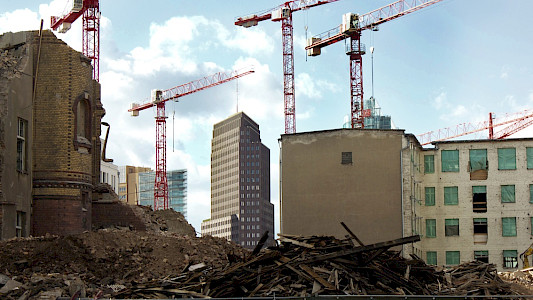
Berlin is changing. From London to New York it is considered "the place to be". And Berlin is cheap compared to other European capitals. Everybody wants to live here and many want to buy a flat to put their money into a save haven with the banksystem in crisis. This is creating a conflict with the original residents. Rents are rising rapidly and neighborhoods are changing drastically.Over a period of 4 years, the author interviewed and accompanied real estate agents and investors during their daily routine and filmed tenants struggling to cope with the situation. He provides the audience with the opportunity to experience the turnaround of a whole city virtually at first hand.
CITY FOR SALE
Germany 2015, 92 minby Annekatrin Hendel
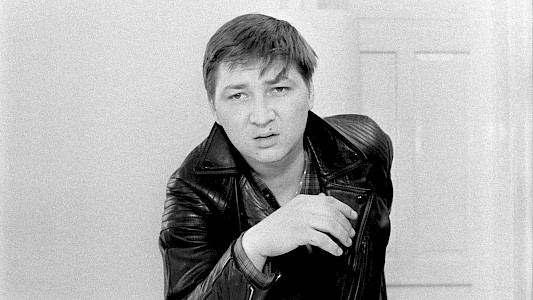
A portrait of the controversial German filmmaker Rainer Werner Fassbinder (1945-1982), who had a unique talent for engaging with the German soul.The German filmmaker Rainer Werner Fassbinder stirred up a lot of controversy with his cult films. Renowned and reviled, he worked like a man obsessed on his oeuvre of 42 feature films, a long-running TV series and 26 plays – until his sudden death at the age of just 37. The provocative filmmaker would have turned 70 in 2015. In this biopic, actors and friends look back at his life and work. Fassbinder’s reputation was cemented by films such as The Marriage of Maria Braun, Effi Briest and the TV series Berlin Alexanderplatz. He had an unerring talent for engaging the soul of post-war Germany with his daring treatment of themes such as emancipation, sexuality and xenophobia.His play Der Müll, die Stadt und der Tod (1975) plays with anti-Semitic sentiment, and decades later it is still provoking heated discussion. His films likewise refused to acknowledge taboos, and he often included his own personal experiences of love, homosexuality and drug use in them. Candid interviews with his favorite actors and colleagues sketch an impression of a multifaceted, determined genius, while scenes from his films and previously unpublished autobiographical audio clips, drawings and animations impressively illustrate just how closely interrelated Fassbinder’s life and work were. (IDFA)Acknowledgment to R. W. Fassbinder Foundation. for the disposal of the image for press relations.
FASSBINDER
Germany 2014, 90 minby Annekatrin Hendel
He was the charismatic pop star of East Berlin’s oppositional literary scene in Prenzlauer Berg in the eighties, a close acquaintance of Christa Wolf, Franz Fühmann and Heiner Müller. He was also a zealous informer working for the GDR’s secret police: Sascha Anderson, born 1953. Twenty years on, the pain he inflicted on friends and colleagues is as deep-seated as ever and the finely woven web of lies, half-truths and legends he unfurled around him still raises tempers. Annekatrin Hendel sits Sascha Anderson down before a camera to ask him what prompted him to act as he did and discover what he thinks about it today. What convinced him to denounce others? What caused him to gamble with his own life? Does he feel remorse or the need to atone? The film questions Anderson’s one-time companions such as ceramicist Wilfriede Maaß, who separated from her husband on his account, former university classmates Lars Barthel and Thomas Plenert, poet and anarchist Bert Papenfuß as well as Roland Jahn, now Federal Commissioner of the Stasi Archive. Making use of these fragments of memories the film creates a document of an era bound by trust and betrayal which persists to the present day.
ANDERSON
Germany 2013, 79 minby Josephine Links
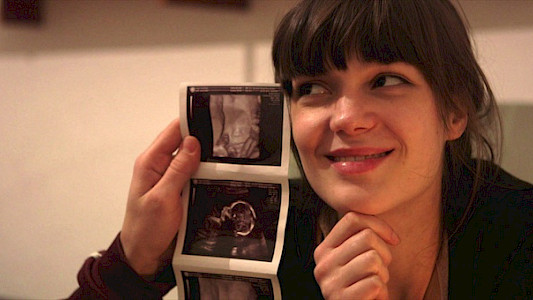
How much truth does a human need? Where did the Enlightenment take us? It became the driving force of modern life and thought. Of science, too. Today, thanks to technology, we can look inside ourselves, and even into the life that succeeds us, that is, into unborn life. Germany leads the world in prenatal diagnostics – human-becoming in the maternal body; a series of ultrasound photos, regular prophylactic medical examinations, of prenatal preparatory courses, yet also ending at times in late abortions. Am Anfang/In the Beginning is a calm examination of this much-discussed and controversial field of medical research. It is an intimate film about happiness and love, about the secret of human-becoming that pregnancy remains even in an era of total surveillance. The director interviewed women and doctors and filmed their lives. The resulting material presents a non-judgemental view of expectations of starting a family, and also depicts the tragedy of decisions that will bring truth to light in their wake, and may indeed represent the first substantial ruptures in the course of a life.
IN THE BEGINNING
Germany 2011, 97 minby Annekatrin Hendel
Once with the Stasi, always with the Stasi? Once you were in the agent controller's grasp you could never escape - that's what they say, anyway. Writer Paul Gratzik was an unofficial informer for the GDR State Security Service for twenty years, broke with them in the 80's and exposed his identity. "Vaterlandsverräter" ("Traitors to the Fatherland") is a portrait of an exceptional man. On one hand it is a psychological profile of one of an extraordinarily paradoxical figure, a "man of extremes": satyr, seducer, radical and hermit. On the other hand it tells a story about the GDR, its critics and the Stasi of the kind that has never been told before in all the 20 years since the end of East Germany.
VATERLANDSVERRAETER
Bitte aktivieren Sie Javascript, um auf unsere Website zugreifen zu können.