
Germany 2018, 30 minby Johanna Jaurich
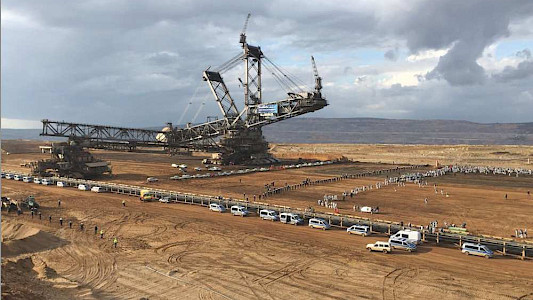
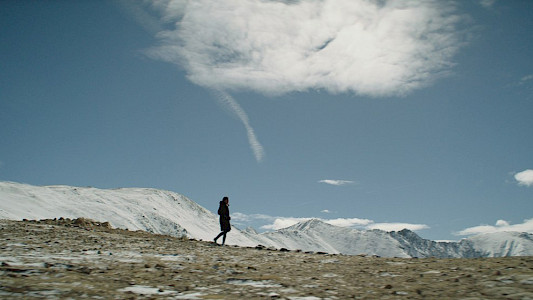
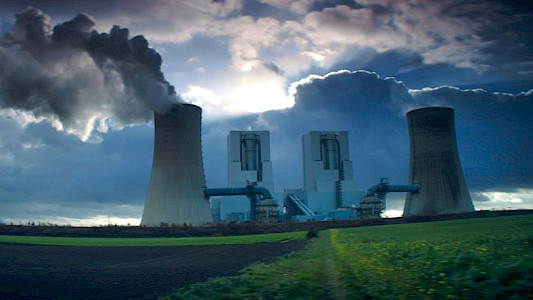
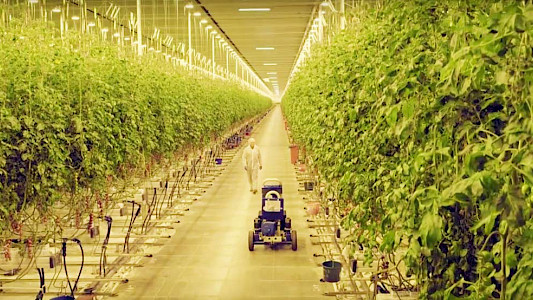
THE FIGHT ABOUT COAL has become a matter of personal concern for three young people, but on completely different sides. Philipp, a young engineer at RWE, has found his dream job in open pit mining. Ruth, a young environmental activist from Leipzig, is committed both professionally and privately to an immediate exit from coal. Anja, a young woman from Spremberg, has always lived from and with coal. The film describes how the debate about coal withdrawal affects personal life and in this way interlocks politics and private life. How do Philipp and his colleagues experience the climate protests in their opencast mine? How does Ruth explain to her younger siblings that she is willing to accept health and legal risks for her commitment? How does Anja deal with the fact that her future is built on a shaky and dangerous foundation?
The Fight About Coal
Germany 2017, 86 minby Carl-A. Fechner
CLIMATE WARRIORS focuses on one key factor: the energy change. The film presents people who act for resistance to strong lobbyists and in human societal realities.Facts, that need fast change to save the environment and keep the human rights in balance in order to keep peace. War and hunger for energy seem dangerously intertwined. Can the struggle to fight for these resources be stopped with renewable energy solutions?This movie shows how the energy revolution can actually be realized.
Climate Warriors
Germany 2016, 90 minby Carl-A. Fechner
This film is about a great vision – and the people turning it into reality: the rebels of our day. The future of the world’s energy lies in decentralised, clean supplies stemming 100% from renewable sources.That is the message of the feature documentary POWER TO CHANGE - the Energy Rebellion.Director Carl-A. Fechner takes his audience on a journey through a country where hundreds of thousands of people are fighting for the energy revolution. Full of passion and hope, they accept setbacks and celebrate success. But POWER TO CHANGE looks further afield: The film brings home to us why people in Ukraine fight with all they have left for a democratic energy system.POWER TO CHANGE is the story of transition to a future that dispenses with fossil fuels and nuclear energy – told through portraits of the people making it happen. It is touching, moving, surprising and informative. With a great accompanying score and shot in lavish Cinemascope, the film has a clear message for its audience: Let’s fight together - for a world that is sustainable and just!
POWER TO CHANGE - The Energy Rebellion
2014, 45 minby Irja Martens
Who does really decide how our cities develop? Travelling to London, Madrid and Hamburg, the film tries to find an answer to that question. We discover the concept of the city of London as a profit-oriented business in a global competition with other metropolises. In Hamburg, we follow the reconfiguration of a troubled city district within the framework of the 2013 IBA.But we also experience how citizens develop an original artist’s district on their own. Just 20 km from the centre of Madrid, an illegally-constructed urban district has appeared, managed by the citizens. Authorities tolerated this situation for decades. But in the past few years, the area has gained in economic value due to the growth of the city. The result: houses are demolished; families are thrown out onto the street.
City of the Future - Future of the City
2014, 53 minby Irja Martens
The documentary shows the global struggle for future food markets. Where will we grow our food in future? In the countryside, on the flat roofs of industrial buildings, in communal city gardens or in gigantic industrial zones just outside the city? And what consequences will this have for rural areas and for the slums of cities?The film takes place in Berlin, Amsterdam, Basel and in Indian megacities. As we follow the trace of tomorrow’s food supply, we encounter idealists, visionaries, controversial figures and coolheaded businessmen. The film centres on the confrontation between fundamentally different philosophies: should food production follow the masses into the cities? Or should we change the way we eat and strengthen rural economic circuits? Is it already much too late for that?
Feeding Cities
Germany 2009, 83 minby S. Lauinger, E. Broschkowski
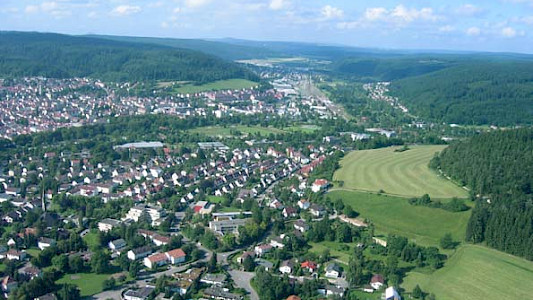
For more than 140 years medical devices have been built in Tuttlingen, a small town in rural Swabia. An extraordinary tradition of craftsmanship, ranging from small family enterprises to large companies with a leading position on the world market. The film portrays a region where much of what has been a defining feature for more than a century is bound to change withing a few years. In the context of global economy, Tuttlingen is closely linked to Sialkot, Pakistan - another centre of medical technology. Sialkotës production facilities are likley to soon be capable of competing for market leadership. The film collects impressions from both places, documenting similarities and differences in the context of globalization.
ON THE CUTTING EDGE
Germany 2010, 83 minby Carl-A. Fechner
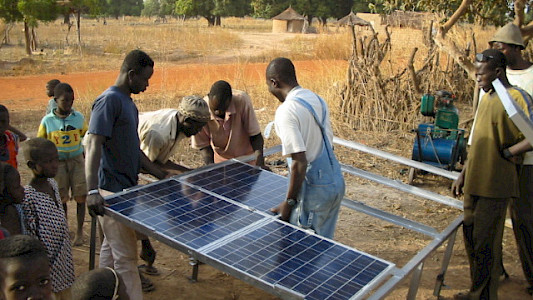
"The 4th Revolution – Energy Autonomy", with fascinating images from countries all over the world, describes the development of the most crucial revolution in the history of humanity. A revolution that involves the rapid conversion of our energy supply to 100 percent renewable energies. The way for it is being paved by eight protagonists from different cultural backgrounds. Their projects include energy production, mobility, energy efficiency, solar architecture, energy storage, supplying the Third World with electric power, and fighting poverty... They all made up their minds long ago, seeing themselves as pioneers in the instigation of global change. ENERGY AUTONOMY. The fascinating concept of a solar world society - and it can be very rapidly realized.
THE 4th REVOLUTION - Energy Autonomy
Germany 2016, 81 minby Irja von Bernstorff
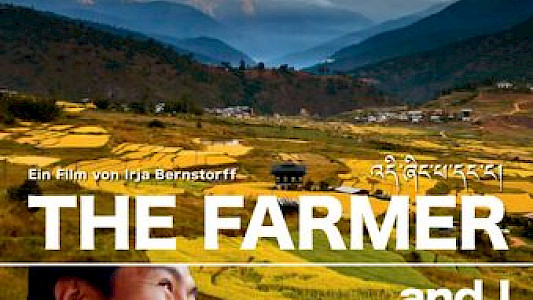
Cultural barriers and tensions arise between German filmmaker Irja and Bhutanese farmer Sangaywhen they team up to create a fictional yet educational TV series to encourage the new generation tocreate value in rural areas instead of emigrating to the big cities. Their differences mirror Bhutan’shardships implementing sustainable growth after centuries of isolation. Both, individuals and country,must find a way to collaborate if they are to keep their identity but join the world scene.
THE FARMER and I
Bitte aktivieren Sie Javascript, um auf unsere Website zugreifen zu können.