
Germany 2024, 90 minby Andreas Pichler
Steel giant Thyssen Krupp in Germany and cargo ship operator Maersk in Denmark are investing huge sums of money with public support to convert their huge and dirty energy consumption to ‘green’. Hydrogen plays a central role in this. At the same time, countries in Africa such as Morocco and Namibia are gearing up to become giga-suppliers of the new energy source. But does it all make sense? Why not just produce green steel in Africa? And what's the story behind the blue hydrogen that is supposed to come from Norway via pipeline? The film follows pioneers on breathtaking projects and shows that the energy transition is more complicated than expected and holds many surprises in store.
Hydrogen – Revolution or Illusion?
Germany 2023, 82 minby David Spaeth
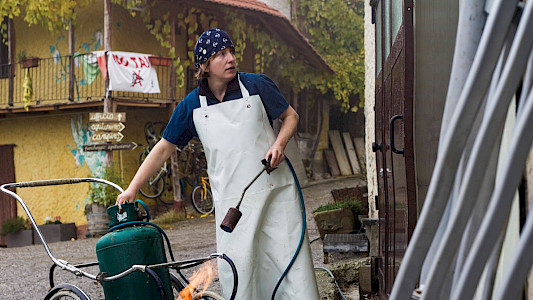
"Imagine you go to heaven and a pig opens the gates." the master butcher demands of his apprentice. At first glance it seems macabre, at a second one profound. Upon longer contemplation it tells the story of an existential drama. Meat-eating humans have managed to suppress the fact that they eat animals. The film follows those who face the facts - those who do the killing. What do they repress, what do they feel, what do they dream about? For the protagonists, these questions mean everything – motivation, bitter truth and at the same time Pandora's box, which one better keeps closed.
Us and the Animal – A Slaughterhouse Melodrama
Germany 2022, 106 minby Luzia Schmid
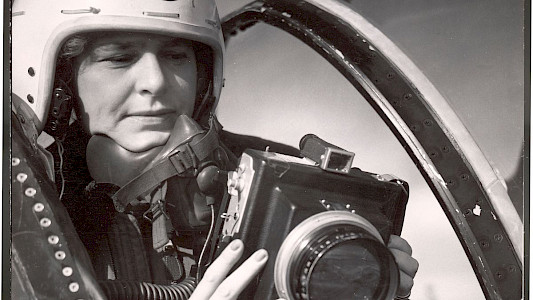
At the end of World War II, for the first time in history, women journalists are allowed to report directly from the front. Their accounts show a female subtext which forever changes our perception of war.When towards the end of 1943 the British government accredits almost 500 reporters and photographers to cover the Normandy invasion, there is not a single woman among them. The Americans, however, are more progressive. Convinced of the influence of their leading magazines, they give female journalists press credentials for the first time in history. On their way along and through the frontlines of WWII, war reporters Martha Gellhorn, Margret Bourke-White and Lee Miller repeatedly meet in press offices and bombed-out cities like Cologne, Leipzig or Munich. They witness the liberation of the Ravensbrück, Buchenwald and Dachau concentration camps. Committed to the cause for which their country has entered the war, they shape the still young genre of photojournalism with personal reports and photographs. Their style added a personal touch to war reporting. It is through their eyes that we see defeated and liberated Germany. For the first time in history war reporting has a "female subtext" which forever changes our perception of war as the "father of all things". Trained To See - Three Women and the War is the first documentary about this phenomenon: war from a new perspective. [NEW DOCS]
Trained to See – Three Women and the War
2021, 98 minby Valentin Thurn
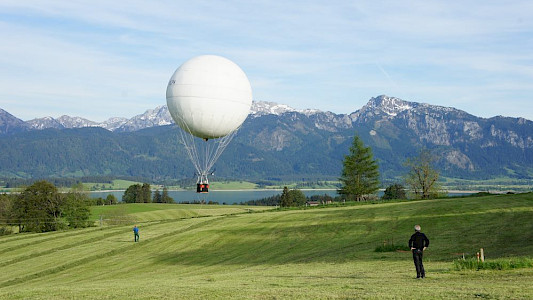
To realize your dream sometimes you have to make a cut and leave your hamsterwheel. Van Bo builds 'Tiny Houses' to create cheap housing. Carl-Heinrich invented a zeppelin transporting heavy payloads float through the air and got bankrupt – but still continued. Line does not want her children to go to school. Joy builds floating islands out of trash. And Günther dreams to be one of the first persons to colonize Mars. Director Valentin Thurn accompanies five people searching for alternatives. What makes them able to take their dreams seriously and keep faith?
Dream On! Yearning for Change
Germany 2019, 89 minby Andreas Pichler
Alcohol: No substance seems so familiar to us and is so incredibly diverse in its effect. It's available everywhere and this particular molecule has the power to affect all 200 billion neurons of our brain in completely different ways. But hardly anyone calls it a drug despite its psychoactive and cell-destroying effect. Why do we tolerate the death of 3 million people every year? What role does the alcohol industry play with an annual turnover of 1.2 trillion EUR in this on-going concealment? The film has no intention to point a moral finger but will change the drinking habits of the viewer.
ALCOHOL – The Magic Potion
Germany 2018, 60 minby Britta Schoening
Helene (18) lives in solidarity with 400 refugees in the occupied Hotel City Plaza in Athens and takes a tough stance against the border closings in Europe. Ingrid (24) is a follower of the right-wing Identities Movement in Vienna which propagates against mass immigration and Islamization. Aicha (18) is a Muslim Poetry Slammer in the club “I,Slam” and broaches the everyday discrimination in her hometown of Berlin in her texts. All three women are searching for identity and belonging and find it in respectively different extremes.
#resistance
Germany 2009, 58 minby Werner Koehne, André Schäfer
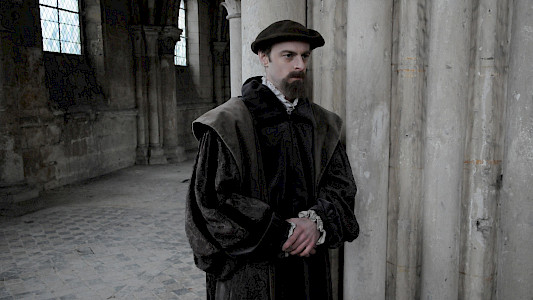
No other person has had quite as much influence on modernity as John Calvin, one of Europe's greatest reformers of the 16th century. 500 years span between his lifetime and ours. Today he has been seemingly forgotten by many, while most of those who do remember him regard him as a character shrouded by clichés. One paints him as a homourless spoil sport, while another one sets him up to be the inventor of sadomasochistic Christianity. Beyond his ever-changing image in history one thing remains: this industrious ascetic has not only presented us with a fundamental component for the reformation, but also greatly influenced our modernway of life, as well as our perception of work ethics and individuality. Who was this John Calvin? And what drove him to develop the doctrine, that would later be called Calvinism and appeal to masses all over the world, even today?
JOHANNES CALVIN - REFORMER AND AGITATOR
Germany, Israel 2008, 89 minby Leon Geller, Marcus Vetter
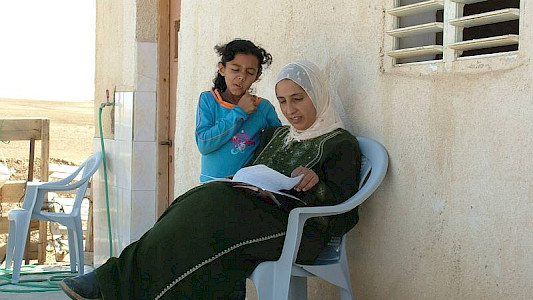
The Heart from Jenin is the story of Ahmed Chatib, a Palestinian boy shot by Israelis whose father decided, within twelve hours, to donate his son’s organs to six Israeli children so as to save their lives.One and a half years have passed since then. What has Ismail al-Chatib, of the Jenin refugee camp, achieved with his peace gesture? To find out how Ismail’s deed changed the life of the recipients’ families, it is necessary to travel throughout Israel, from its northern hills on the Lebanese border, past the contended Holy City of Jerusalem, up to the edge of the Negev Desert in the south of the land.The film is a trip through occupied territory and hearts occupied by prejudice. It leads us to the people who have learnt to overcome their prejudices and to oth-ers who still speak of the misfortune of having to live with the organ of an Arab. It is the story of a humanitarian peace gesture that seemed, for a short instant, to prevail over the insoluble conflict between Israel and Palestine.
THE HEART FROM JENIN
Germany 2008by Andrei Schwartz
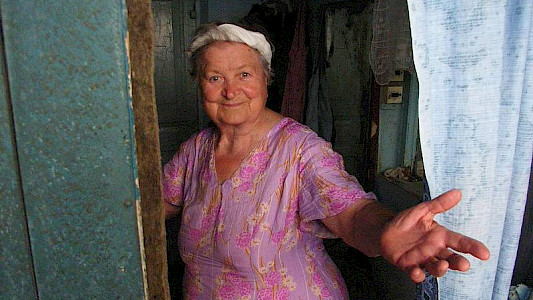
The people on the pier of Sevastopol Bay are a symbol of the inextricable dilemma in which the city finds itself: too impoverished for splendour and glory, and much too alive for the scrap-heap. People such as handsome 14-year-old Push, who finds mopeds much cooler than girl, or shy 13-yearold Nastja, still mourning her lost first love, spend their summer together on the pier. Even 80-year-oldGalina still has a few tears to spare for the bass voice of her erstwhile lover, but not before she completes her morning swim at Apolonovka‘s run-down beach. And then again there‘s wiry, long-distance swimmer Sergej who, despite his 85 years, would certainly never consider neglecting the ‚third point‘ of health - sex. Finally we meet Vova and Andrej on the pier: one a tattooed former prisoner the other a discharged police officer – now working together illegally as divers next to the ships of the Black See Fleet.A summer on Sevastopol‘s pier, a place made fascinating by the encounter between parallel worlds.
THE PIER OF APOLONOVKA
Bitte aktivieren Sie Javascript, um auf unsere Website zugreifen zu können.