
Germany 2024, 93 minby Marc Wiese, Juan Camilo Cruz
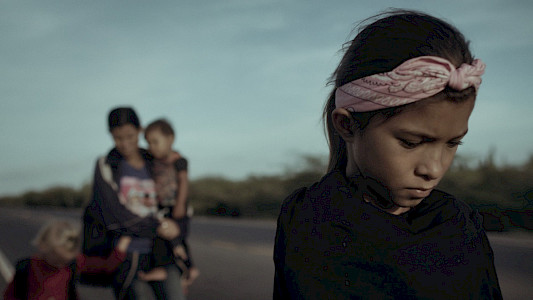
Corruption and mismanagement has turned Venezuela into a failed state. Over six million people have fled in recent years. Around one million children were left behind by their parents. This remarkable film follows two single mothers and their children over several months as they do what it takes to survive.In the barrio Santa Rosa de Agua, health care has collapsed and children are dying from hunger. Carolina has set up a foundation to help feed them. But the barrio is so violent, she’s had to send her own daughter, Victoria, to a children’s home. The home is an oasis in the midst of violence and deprivation but many of the children, who haven’t seen their parents for years, are traumatised. They struggle with feelings of rejection.Most people in the barrio survive by violence, prostitution, begging. “I’ve had to do lots of things for my kids,” confides Kiara. “Selling drugs, stealing, prostituting myself. Everything a woman can do for her children”. Her eldest son, Yorbenis, 14, has already joined a gang and is on the verge of his first kill. Desperate, Kiara decides to leave the country for Colombia. She takes her small children with her while Yorbenis’ remains behind. Now she’s terri!ed that he will be murdered in her absence. She knows he is being hunted by rival gangs, as well as the police….
Venezuela: Country of Lost Children
2023, 85 minby Marcel Mettelsiefen
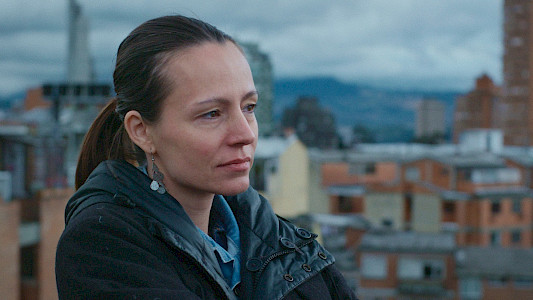
In the early 2000s, 19-year-old Tanja from the Netherlands decides to go to Colombia as an au pair and is immediately confronted with the country's political turmoil. Horrified by the injustice she observes, she joins the largest guerrilla army in the world, FARC, and takes up arms to fight. After years in the dangerous jungle, Tanja becomes a key member of the organization and is eventually assigned as part of the FARC delegation to peace negotiations that lead to the end of the longest civil war in Latin America's history. But now her reunion with her family is held up by an Interpol arrest warrant.
Tanja – Up in Arms
Germany 2022, 93 minby Marc Wiese
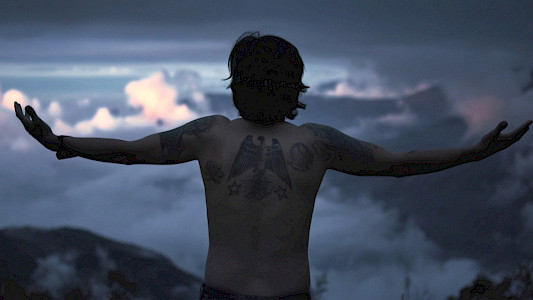
THIS STOLEN COUNTRY OF MINE takes us to Latin America, to a country with immense natural resources, pristine nature and a corrupt leadership: Ecuador.The film follows Paul Jarrin, leader of the indigenous resistance against their homeland's exploitation. Meanwhile, China uses the Ecuadorian government to turn the country into one of its new colonies. When journalist Fernando Villavicencio exposes these plots and gets access to the contracts between China and Ecuador, the government wants him silenced too. Both men are fighting for freedom in this battle against a superpower."...Alva Noto's music subtly lends intense power to the struggle of a mountain village, delicately and precisely accentuating the film's disturbing subject matter – and often bringing us closer than we'd like." [Jury German Documentary Film Music Award]
This Stolen Country of Mine
Germany 2012, 97 minby Florian Opitz
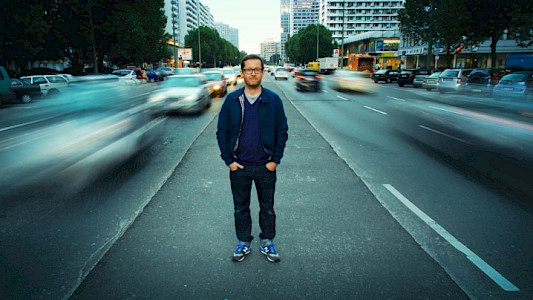
„My experience with time by now is limited to the one feeling – I don’t have enough.“ It’s a paradox. Never before in history we have worked more efficiently. Never before we have saved time with more sophisticated technologies. Anyway, nearly all of us are feeling an increasing pressure of time. It seems that the same technology that has been invented to make our life better and easier, is now enslaving us. Florian Opitz tries to track down the reasons of our shortage of time and for the constant acceleration of our lives. In his search of lost time he not only questions his own hectic lifestile, but also visits several people, to find out how they deal with time. The pacemakers of the constant acceleration of society as well as dropouts. In Speed. In search of lost time step by step he reveals the disturbing picture of a civilisation, that has disposed of all brake systems and, run by autopilot, goes blindly for unlimited and eternal growth, no matter what the consequences are. But Opitz also tries to find the good life. In the nishes of the global capitalism he discovers alternatives to the rat race.
SPEED - IN SEARCH OF LOST TIME
Germany 2011by Bettina Borgfeld, David Bernet
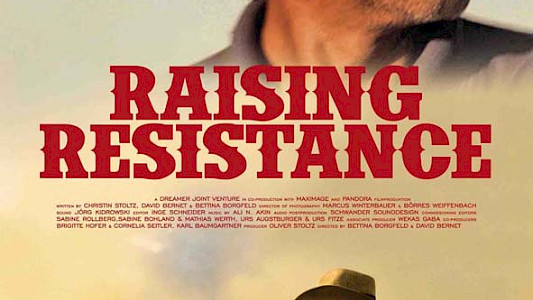
The ground in Paraguay is perfect for the cultivation of soy. In recent years, countless acres of forest have been chopped down to make room for the growing of this protein-rich bean. The land of a farmer named Geronimo is now completely surrounded by soy plantations. These are generously sprayed with pesticides - poison that only the genetically modified soy plants are immune to. Unfortunately, the pesticides spread farther than the boundaries of the soy fields. So not only is there less and less land for the campesinos, or local farmers like Geronimo, but it also becomes impossible for them to cultivate healthy crops themselves. In Raising Resistance, Bettina Borgfeld and David Bernet capture the campesinos as they revolt against the enormous soy business in their country. Led by the ever-friendly Geronimo, they squat a section of farmland, try to stop the spraying of pesticides, and make their voices heard in the media. The filmmakers also give the floor to the large landowners.
Raising Resistance
Germany, Switzerland 2011by Bettina Borgfeld, David Bernet
Germany 2010, 80 minby Ali Samadi Ahadi
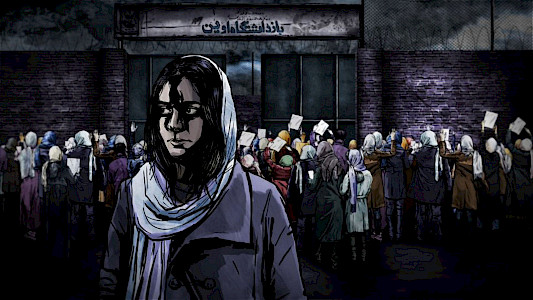
Animated blogs and tweets from Iran form the backbone of this enlightening and sometimes shocking reconstruction of the 2009 Green Revolution. In May of that year, the youthful green-clad crowds were still enraged, and the atmosphere in the stadium where presidential candidate Mousavi held his speech was, according to eyewitnesses, explosive. The desire for change was huge. "It helped me to regain my faith in humanity," one person recalls. Election Day itself was a deception on a massive scale: the supply of ballot papers would suddenly run out, and polling stations were closed for puzzling reasons. This marked the beginning of the dark period in which Mousavi was put under house arrest; Ahmadinejad seized power and demonstrators were shot. The authorities crushed the huge protests that took place under the slogan "Where Is My Vote?", by murdering Neda, the most notorious victim. We see these events onscreen as they were recorded with mobile phones and digital cameras. The blogs and tweets visualized using animation give an insider's view to the true extent of the suppression. One student, for example, ended up in a dark cell with 200 wounded prisoners, some of whom had already died. And another student recalls the day she was released: "I left a small prison only to enter a much bigger one - a prison called Iran."
THE GREEN WAVE
Bitte aktivieren Sie Javascript, um auf unsere Website zugreifen zu können.